

If you’ve ever blamed a bad shot on your paddle, you’re in good company. We’ve all done it.
You rip a forehand from the kitchen, catch it a hair off-center, and the ball floats wide like it’s allergic to the court. You check your grip. You check your swing. And eventually, you think: “Maybe I need a heavier paddle.”
New to pickleball? Start with our best beginner pickleball paddles, picked with lab data and 3,600 player survey responses.
Not sure where you land? Find your paddle first, then come back and read why it scored the way it did.
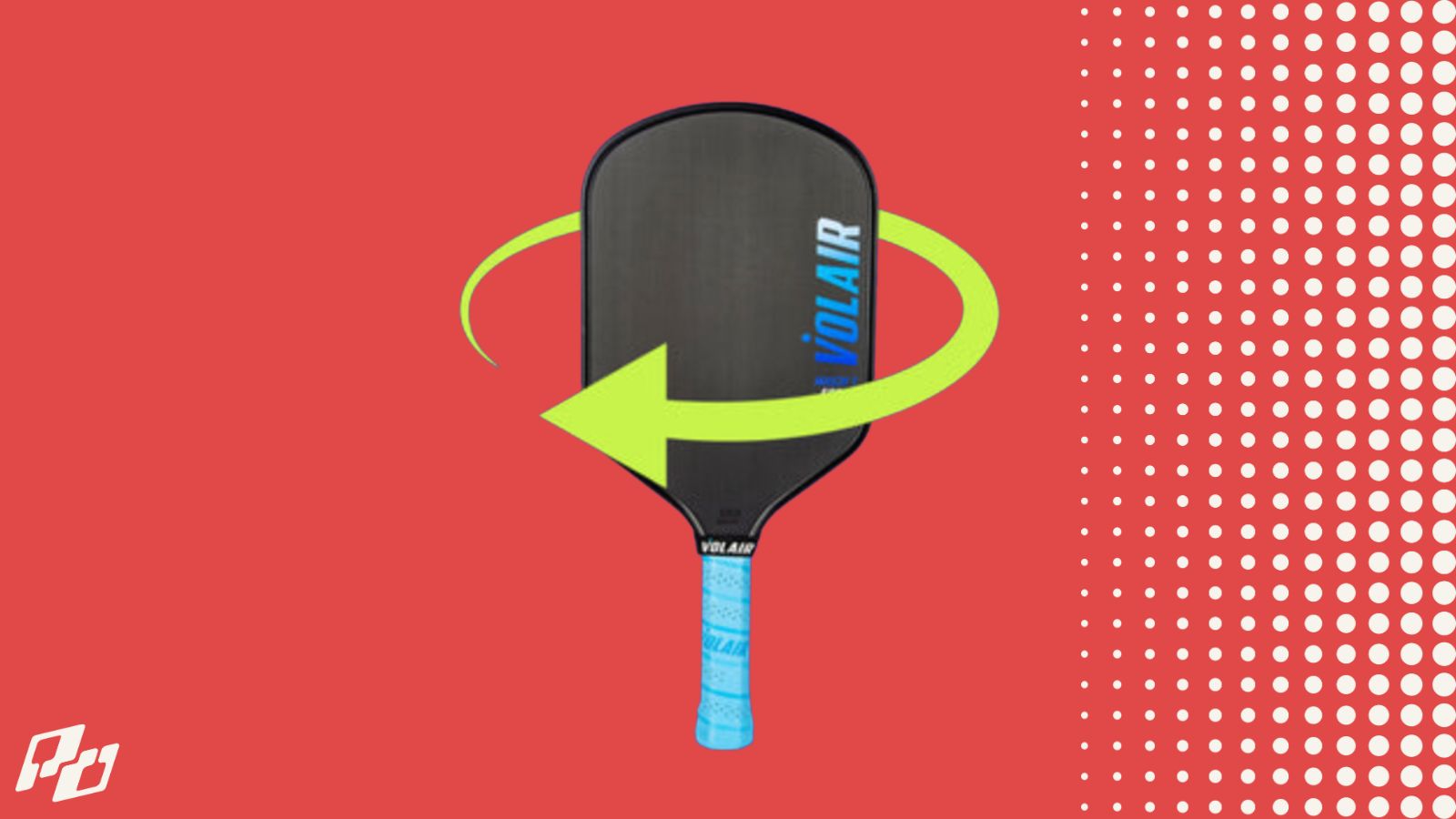
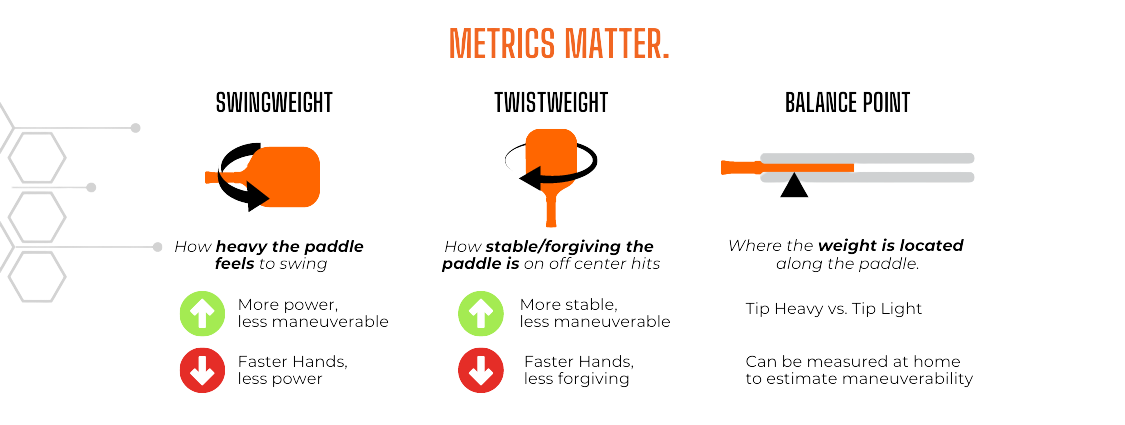
But here’s the thing: it’s not just about how heavy your paddle is. It’s about how it holds its ground when the ball isn’t perfectly in the middle of the face. That, my friends, is twistweight.
And if you care about stability, control, and how much your hand has to fight to keep the paddle straight, twistweight deserves more of your attention than static paddle weight ever will.
Ten questions, three paddles matched to how you play, scored on lab data.
Wait—Twistweight? (Explain it to me like I’m holding a paddle)
Picture this: you’re holding your paddle loosely and I push the edge of the face sideways with my finger.
If it resists my push and stays square, that’s high twistweight—your paddle is stable and won’t twist much on off-center contact.
If it caves in easily, that’s low twistweight—your paddle will twist in your hand when you mishit, sending the ball on a less predictable path.
It’s not about the overall weight on a scale—it’s about how the weight is distributed and how much it resists rotation around the handle axis.
Why Pickleballers Should Care
Every time you hit off the sweet spot—and let’s be real, that’s a lot—your paddle wants to twist. This twisting does three nasty things:
- Kills accuracy – A few degrees of rotation at impact can mean 6–12 inches of error by the time the ball reaches the baseline. That’s the difference between a winner and a ball sailing out.
- Makes you squeeze harder – Lower twistweight forces you to grip tighter to keep the paddle square. More tension = slower hands and faster fatigue.
- Hurts your consistency – The more your paddle wobbles, the less you can trust it in firefights and resets.
Why Twistweight > Paddle Weight
Static weight (the number of ounces) is like a bathroom scale—it tells you how much but not how it moves.
A paddle can weigh 8.0 oz but have terrible twistweight because the mass isn’t in the right places to resist rotation. Meanwhile, another 7.8 oz paddle could feel like a tank on mishits because its weight is concentrated along the edges.
High twistweight often means:
- Bigger sweet spot
- Better forgiveness on blocked drives
- Easier control in hand battles
- Less grip strain over a match
The Physics Without the Boredom
Twistweight is essentially rotational inertia—how much force it takes to rotate the paddle around the handle axis.
- High twistweight = More resistance to twisting = Paddle stays on target more easily.
- Low twistweight = Less resistance = Paddle wobbles on mishits.
It’s why lead tape at 3 and 9 o’clock increases stability—you’re adding mass far from the centerline, boosting rotational resistance without making the paddle feel like a brick in your hand.
How to Tell if a Paddle Has Good Twistweight
Without a lab, here’s how to “feel” it:
- The Edge Press Test – Hold the handle gently, push on the edge of the face. If it twists easily, it’s low twistweight.
- Mishit Drill – Hit balls purposely toward the edges. High twistweight paddles will send them straighter and require less grip correction.
- Firefight Feel – In fast hands exchanges, see if you can block without clamping your grip. If it feels stable, that’s twistweight working for you.
Twistweight Ranges & What They Mean
| Twistweight | Stability Level | What You’ll Notice | Best For |
|---|---|---|---|
| Low (<5.5) | Minimal | Big drop-off on mishits, small sweet spot | Players with elite precision |
| Medium (5.5–6.5) | Balanced | Good mix of forgiveness and maneuverability | All-court players |
| High (6.5+) | Maximum | Feels rock-solid, big sweet spot, very forgiving | Blockers, control-first players |
Pro Tips for Using Twistweight to Your Advantage
1. Match it to your style
Think about where you win points.
If your game is built around fast hands and quick counters at the kitchen, a medium twistweight (around 5.5–6.5) keeps the paddle maneuverable while still forgiving mishits.
If you’re a reset specialist who thrives in soft games and wants maximum forgiveness on blocks and drops, aim for high twistweight (6.5+). The extra stability will help you control pace without clamping down on the grip.
2. Mod it smart
You can increase twistweight without buying a new paddle. Adding lead tape at the 3 and 9 o’clock positions (edges facing the net and baseline) shifts weight away from the centerline, which boosts rotational stability.
Start with small strips (2–3 inches per side) so you can feel the change without overloading swingweight.
Twistweight Tuning Quick Chart
| Goal | Lead Tape Placement | Amount to Start With | Effect on Play |
|---|---|---|---|
| Small Stability Boost | 3 & 9 o’clock | Two 2-inch strips per side (≈ 1–1.5g each) | Slightly steadier on mishits, minimal change in swing speed. |
| Moderate Stability Boost | 3 & 9 o’clock | Two 3–4 inch strips per side (≈ 2–3g each) | Noticeable sweet spot growth, a touch slower in fast hand battles. |
| Maximum Stability Boost | 3 & 9 o’clock | Two 5–6 inch strips per side (≈ 4–5g each) | Big increase in forgiveness, most stable feel, can reduce maneuverability. |
3. Balance matters
While high twistweight sounds appealing, it can make a paddle feel slower to move if your natural swing speed is on the low side. That can hurt quick reactions in hand battles.
Always test how the paddle feels in your actual game situations—blocking drives, resetting from the transition zone, and countering at the kitchen—before committing.
4. Don’t just read specs
A twistweight number is helpful, but it doesn’t tell the whole story. Paddle shape (elongated vs. widebody), core composition (polymer vs. foam-injected), and surface material (carbon fiber vs. fiberglass) all affect how that twistweight feels in play.
Two paddles with identical twistweight ratings can have totally different sweet spots, vibration feedback, and maneuverability.
How to Decide When Specs Match:
- Test in real game scenarios – Don’t just dink; try blocking drives, hitting off-center volleys, and resetting from the midcourt. Notice which feels more stable under pressure.
- Check sweet spot forgiveness – Even with the same twistweight, some paddles give you a larger, more usable sweet spot.
- Consider your priorities – If you like touch and control, pick the one with the more forgiving core and surface feel. If you want more pop, go for the firmer response.
- Trust your hand – Twistweight numbers help narrow the field, but your hand will tell you which paddle feels easier to keep steady without a death grip.
Why I Switched My Obsession from Weight to Twistweight
I used to buy paddles based purely on ounces. 8.3 oz felt “solid,” so I figured it was the key to stability. Then I picked up a 7.9 oz paddle with a high twistweight… and it felt more stable than my heavier one.
In firefights, I wasn’t overgripping. My blocks landed deeper. My resets stayed in. And my forearm didn’t feel like I’d been arm wrestling a bricklayer for two hours.
Now, when someone asks me “What weight paddle should I get?”
I ask back: “What’s its twistweight?”
So, Here’s the Truth
Weight gets all the attention, but twistweight is the quiet MVP of paddle performance. It keeps your paddle face steady, your grip relaxed, and your shots on line—even when you’re not perfect (and who is?).
So next time you shop for a paddle, don’t just step on the scale. Think about how it holds up under pressure. Because ounces don’t win points—control does.

