
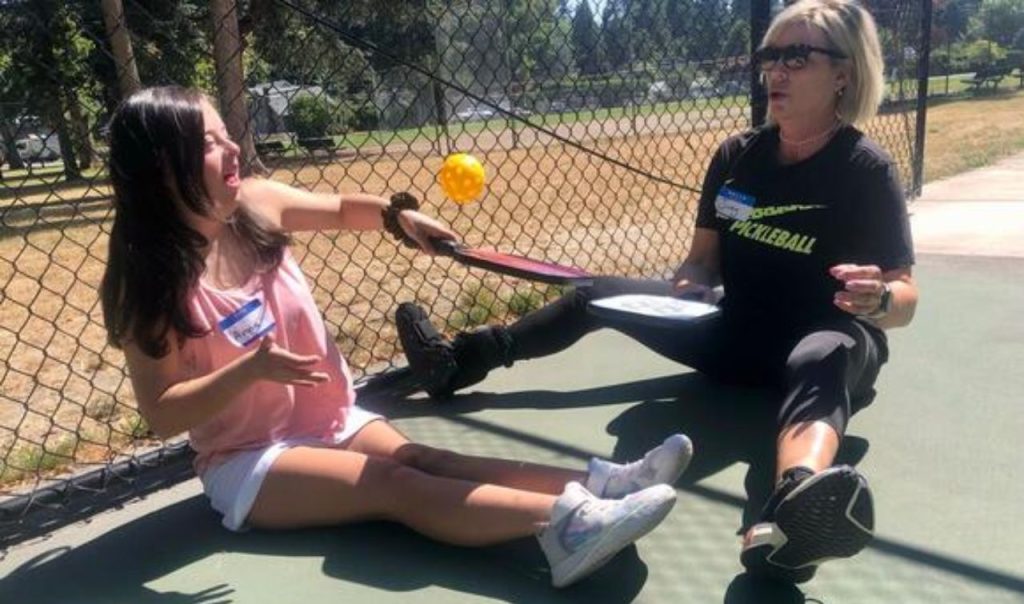
The Lake Oswego and Willamette River pickleball clubs, together with Down Syndrome Network Oregon, teamed up for an unforgettable event when they organized a landmark event at Hammerle Park, West Linn for 16 teenagers with Down syndrome.
Neglect In Outreach Areas
According to event organizers, teenagers with Down syndrome are often overlooked in outreach programs or simply marginalized. These characteristics made them ideal candidates for this event, conceived by Beth Corey and Pat Hogan.
“This event was specifically tailored for the older kids and young adults,” Hogan emphasized to Chris Hockman of Red Line Editorial, Inc. and writing for usapickleball.org. “The Down Syndrome Network mentioned that it’s a challenge to find volunteers for this group, but it was our preference.”
“We specifically wanted to work with the older kids and young adults,” Hogan added. “The Down Syndrome Network said it was harder to find people willing to work with that group, but it was honestly our preference.”
The Pickleball Was A Big Hit
The event attracted 40 volunteers — as Hogan points out, “we could have had even more,” — and the clubs were ready to introduce the youngsters to pickleball.
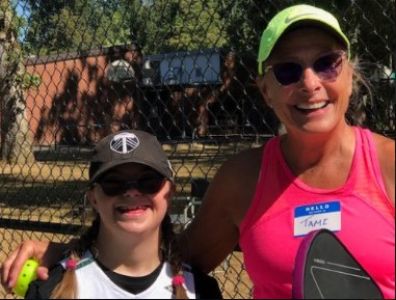
As with teenagers, they were a little reserved about interacting with people they had never met before, particularly adults. However, it didn’t take long before laughter and smiles filled the air, and pickleball became their new favorite sport!
“It was beyond what I thought it could be,” Corey said. “We had 16 kids show up with their parents.
Everyone was willing to help, and the best thing was these kids had a great time. Some of the kids, and the parents, are wondering, ‘So when are we going to do it again?’”
Eager To Join In
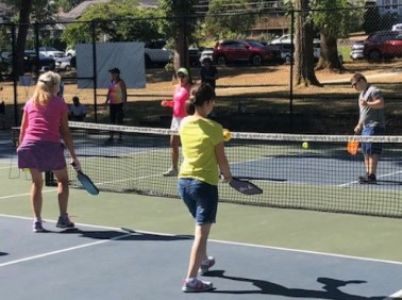
The teenagers demonstrated a keen eagerness to participate and acquire new skills, with the experienced members providing expert guidance on playing pickleball.
Pickleball clubs in Oregon emphasize the significance of community involvement, viewing it as crucial not only for the well-being of the community but also for the advancement of the sport.
This sentiment holds particular weight in Lake Oswego, a suburb of Portland that recently faced the loss of its public pickleball court.
“Had we done this event before the decision, I don’t think we’d have lost our courts,” Hogan said. “We want to be more than just a group of people that get together and play pickleball. We want to be a group that adds value to our community, and we were talking about what kind of things we could do to add value to our community.”
This holds significant importance for Corey and Hogan: it is crucial for them and for both clubs that this not only be a one-time occurrence.
The Lake Oswego and Willamette River clubs have already collaborated with Rolling Hills Community Church, which offers indoor courts, to host the event again as the weather turns the temperatures start to drop and the rain starts to fall.
A Desire To Make The Area A Better Place
The team’s involvement commenced with a meeting to explore outreach possibilities and progressed from there, with numerous members stepping forward to lend a hand.
Corey played a pivotal role, leveraging her personal connections with Down Syndrome Network Oregon to initiate the endeavor.
“I had been involved with the Down Syndrome Network in Lake Oswego,” Corey explained. “Everyone thought it was a great idea and said go for it.
“I have a friend whose daughter has Down syndrome and she hooked me up with Cindy at the Down Syndrome Network, and it just took off.”
The event garnered such a positive reception that it spurred other pickleball clubs to embrace the initiative.
The Oregon clubs, which include members who split their time between Oregon and Arizona, have pledged to introduce this concept to their clubs in the latter state.

The Power Of Pickleball
Corey and Hogan’s enthusiasm about the event is undeniable and reveals their deep appreciation of how pickleball can affect positive change.
Hogan holds a strong conviction that other clubs have the capability and should adopt this model for implementation in their respective communities:
“It begins with contacting your local Down syndrome association, whatever that is in your area,” he said. “They did most of the organizing work as they coordinated the kids and the parents to bring them out, which helped us.
“They were very happy to hear from us; they let us know that it’s normally them reaching out to people for events and not the other way around.”