There’s a quiet truth about pickleball that most players don’t talk about enough: you’re going to miss — a lot. Even the pros do. The real question isn’t if you’ll miss; it’s how.
Because in pickleball, not all misses are created equal.
Some misses move your game forward — they’re part of learning new timing, pressure, or technique. Others just reinforce bad habits and hold you back. The trick is knowing which is which.
That’s the line between a player who keeps plateauing and one who keeps improving.
What the Pros Mean by “A Good Miss”
A “good miss” isn’t a mystical coaching phrase — it’s a performance marker. It means your decision, setup, or contact mechanics were correct, even if the ball didn’t land where you wanted.
Pro coaches often describe it like this:
“If the idea was right and your form supported it, don’t punish yourself for the result.”
Here’s what that looks like in real play:
You see a window down the line and go for a backhand speed-up — your knees are bent, your paddle’s under the ball, and your opponent’s slightly out of position. You clip the tape. Missed point.
That’s not failure. That’s feedback.
You executed a technically sound, strategically appropriate shot. The fact that it didn’t work means your margin or contact point needs refinement — not your entire approach.
That’s a good miss.
What a “Bad Miss” Really Looks Like
Now, the flip side: the miss that teaches you nothing.
Bad misses happen when your form, timing, or intent break down before contact. You weren’t in control of your body or your decision — you just reacted.
Picture this: the ball’s rising fast, you’re flat-footed behind the kitchen, and instead of resetting or blocking, you swat at it like it personally insulted your family. That ball rockets long, and you shake your head, muttering, “I always miss those.”
That’s not a growth miss — that’s muscle confusion.
The technical cues weren’t in place:
- Your center of gravity was too high.
- Your paddle angle wasn’t aligned with the incoming pace.
- You were reacting, not anticipating.
Bad misses reinforce inconsistency because your body learns the wrong pattern.
How to Tell the Difference in Real Time
Most players lump all errors together under “Ugh, I messed up.” But the smarter ones dissect them.
The difference often comes down to three questions:
- Was your body balanced at contact? A good miss usually happens when your posture is stable, even if your aim or spin is off. A bad miss comes from overreaching, lunging, or upright contact.
- Did you make the right read? Did you recognize the ball’s height, speed, and bounce correctly? If you picked a shot that made sense but mis-timed it — good miss. If you ignored the setup (e.g., tried to speed up a ball below the net), bad miss.
- Was your intent strategic or emotional? Were you making a thoughtful play or just venting frustration? Emotion-based decisions are the root of most “why did I hit that?” moments.
Why You Should Chase Good Misses
Most rec players fear mistakes so much that they end up playing small — lobbing safely, resetting endlessly, never testing new shots.
But pros — and the fastest-improving amateurs — chase “good misses.” They see each one as a calibration.
You don’t learn touch by hitting the same dink a thousand times. You learn it by missing long, short, left, and right — until you understand the boundary of success.
Here’s the key: your body learns faster when you fail near the correct technique than when you play it safe. Every time you miss by inches using proper mechanics, your nervous system gets sharper at recalibrating that motion.
That’s why “good misses” are progress — they’re mini-upgrades disguised as errors.
Examples From the Court
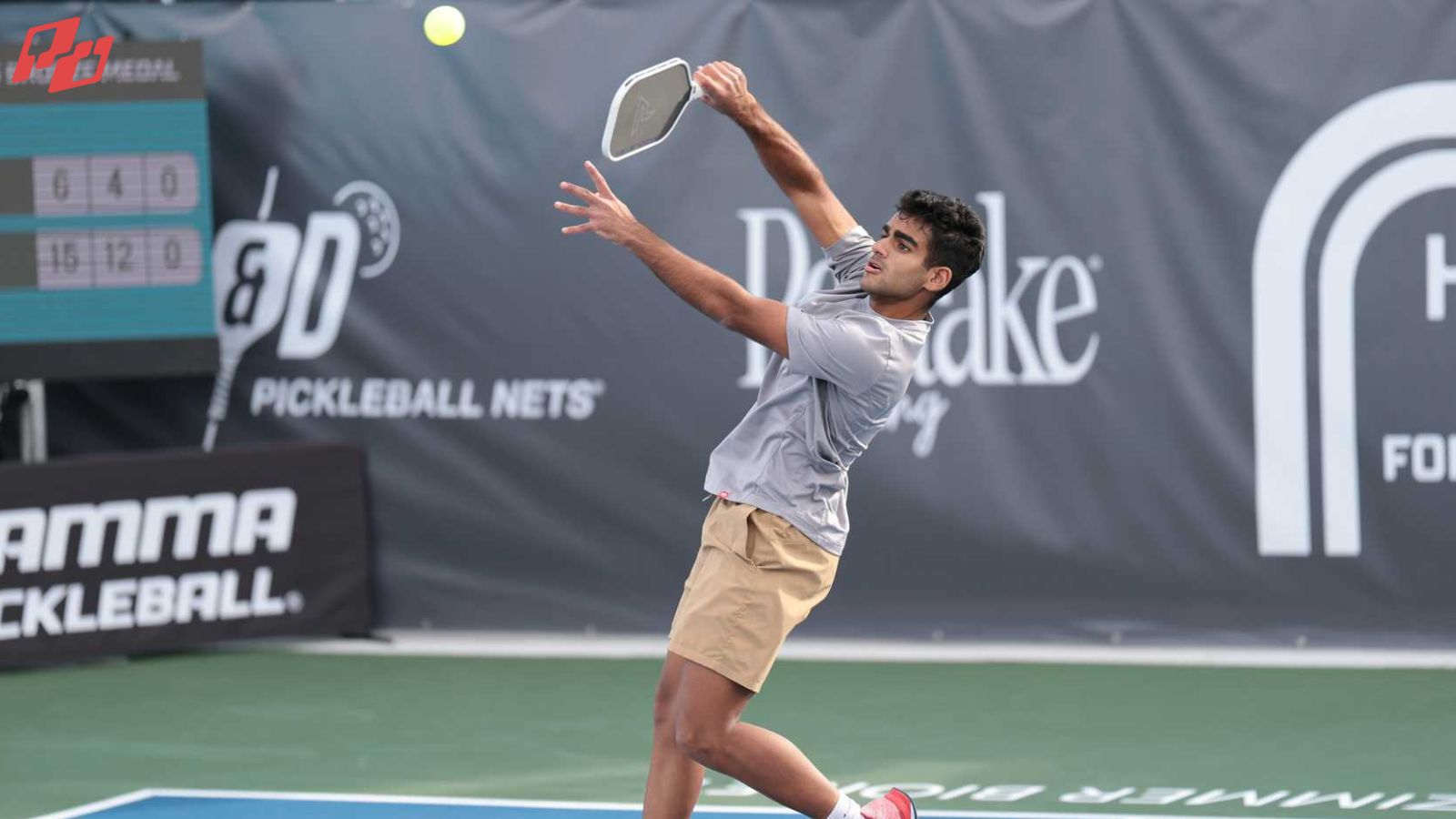
Let’s ground this in real match scenarios — because that’s where the distinction really matters.
Example 1: The Backhand Speed-Up
You finally commit to speeding up off a low dink — right form, right height, but it catches the tape. That’s a good miss. You took initiative, stayed low, and executed the correct mechanics.
Next time, you’ll aim a half-inch higher and nail it.
Example 2: The Reset That Floats
You’re at the kitchen, defending a drive, and try to reset softly into the non-volley zone — but it lands high enough for a putaway. You stayed balanced and used your core, but missed the height margin. Still a good miss.
You’re learning soft hands, not just slapping blocks.
Example 3: The Panic Swing
The ball jumps fast off the bounce, and you swat it upward, hoping for the best. It flies long. You were upright, off-balance, and reacting late. That’s a bad miss. You weren’t in position to win that point anyway.
Next time, you take a breath, stay grounded, and absorb pace instead of fighting it.
The Science Behind a “Good Miss”
Neurologically speaking, your body learns movement patterns through something called error-based adaptation — meaning every “near miss” fine-tunes your motor memory.
Good misses live right in that zone. Your muscles felt what “almost right” felt like. That’s gold for long-term skill retention.
Bad misses, though, don’t build anything. They’re noise — random, uncoordinated input your brain can’t use. That’s why disciplined players improve faster: they’re feeding their nervous system useful data.
So next time your third-shot drop hits the net but felt smooth, celebrate it. Your brain just logged that rep for future success.
What the Pros Say
Players like Riley Newman and Lea Jansen have talked about this concept constantly — that progress comes not from flawless execution, but from “intentional imperfection.”
Riley once said in a coaching session:
“If you’re missing in the right direction, you’re improving. Missing long means you’re getting aggressive. Missing into the net means you’re scared.”
That small shift — from outcome-based frustration to process-based awareness — is what separates competitive growth from endless plateauing.
Turning Good Misses Into Fewer Misses
Learning to categorize misses is only step one. The real secret is converting those “good misses” into consistent winners.
Here’s how to close the gap faster:
- Film yourself. The best players review not the made shots, but the close misses — they tell the real story.
- Drill the margins. Practice shots at 70–80% pace, aiming for “almost” instead of “perfect.” Build precision gradually.
- Adjust your vision. Watch the ball’s path, not its bounce. Many bad misses stem from reading the wrong part of the flight.
- Work on posture. Most recurring misses start from the hips up. A low, stable base fixes 80% of unforced errors.
Learn to Miss Forward
Every rec player wants consistency, but consistency doesn’t mean safety — it means predictability of process.
If you can leave the court after a match and say, “I missed three shots, but they were the right choices,” that’s a victory. That’s growth in motion.
Because the truth is simple:
👉 Good misses build confidence.
👉 Bad misses build frustration.
So the next time you clip the net on a smart shot or sail one a few inches long, smile — you’re not failing. You’re collecting data for your next win.
That’s how real progress in pickleball happens — not by avoiding mistakes, but by mastering the right kind of them.