
If you’re tired of getting bullied in fast hands exchanges, this is for you.
You know the moment: you’re in a neutral dink rally, someone decides to speed it up into your body, and suddenly you’re reacting like someone just threw a cat at your face. Arms flailing. Feet glued. Goodbye rally.
The good news? The problem isn’t your reactions—it’s your system. Fast hands battles aren’t about being quicker. They’re about being organized. Clean mechanics beat fast hands every time. And one shot gives you the cleanest foundation: the forehand counter.
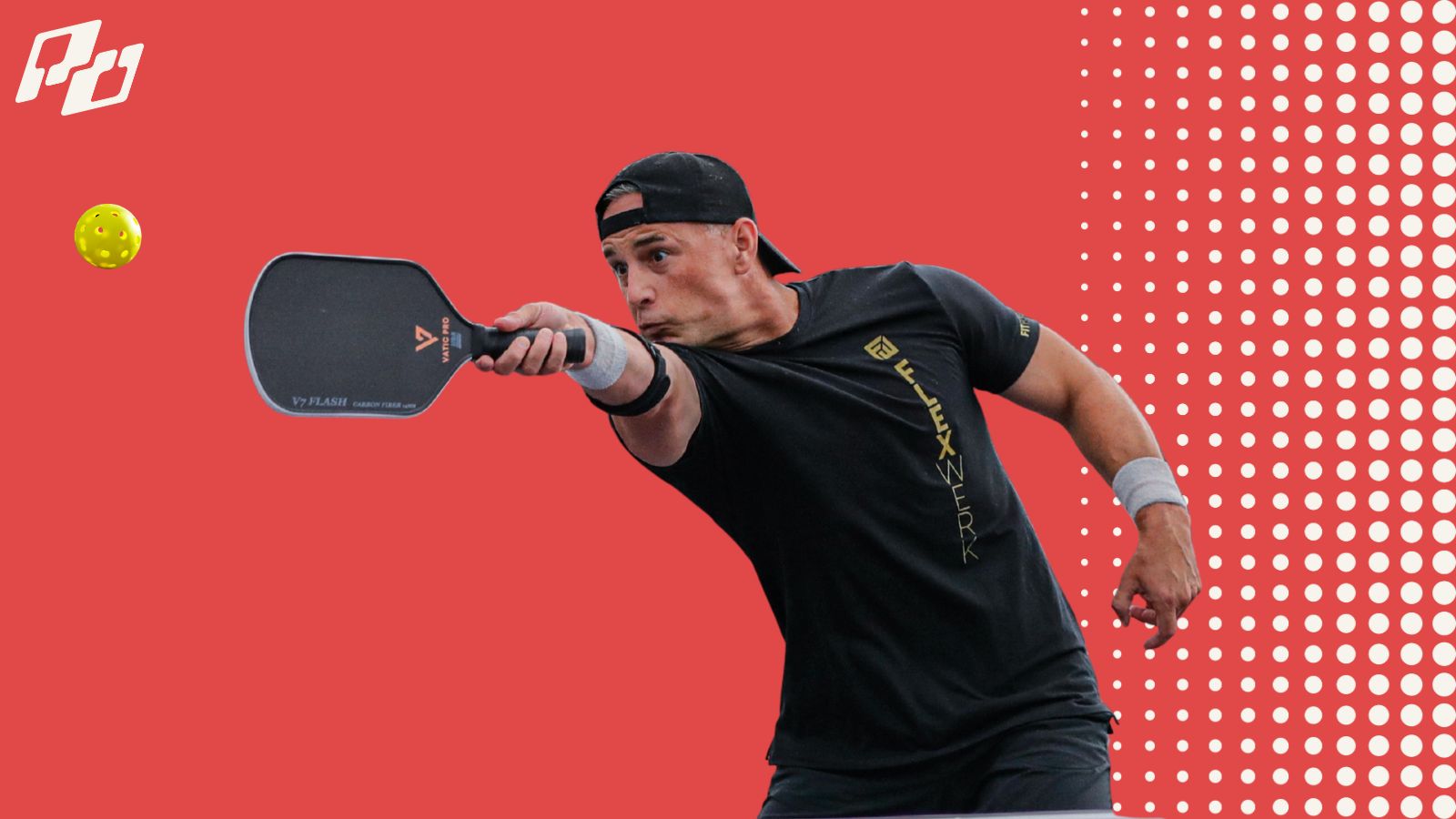
Unlike a backhand block, the forehand counter lets you apply pressure and win the exchange, not just survive it. Done correctly, it’s compact, punchy, and brutally effective—an offensive defensive shot.
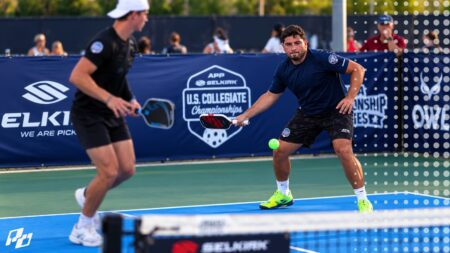
James Ignatowich breaks this down beautifully on Selkirk TV: if you want to counter with your forehand from the right side of the court, you need the right base, the right contact, and a short, violent swing that stays in front of your body. That’s exactly what we’re building here.
Why the Forehand Counter Works
The forehand counter isn’t about power—it’s about clean, efficient contact that uses your opponent’s speed against them. When done well:
- You don’t “swing”—you punch
- You don’t block passively—you drive down and through
- You don’t react late—you control early
This shot gives you two huge advantages:
✅ It instantly neutralizes pressure
✅ It turns defense into offense
If you get only ONE thing from this article, let it be this:
Speed doesn’t win fast hands battles. Structure does.
Build the Base (Before the Swing)
Forget techniques and tips if your foundation is broken. Your stance decides whether your counter is clean or chaotic.
Set up like this:
- Low base: Knees bent, hips down, not tall and stiff
- Wide stance: Slightly wider than shoulders to stay stable
- Weight forward: Nose over toes—never leaning back
- Paddle in front: Ready position at chest height
- Compact shape: Elbows near ribs, paddle in your vision
If you want to use your forehand to counter from the right side, you have to stay low and wide, or you’ll get jammed by anything hit into your body.
No base = no counter.
The Simple Mechanics of a Forehand Counter
Most people overcomplicate this. Let’s make it stupid simple.
✔ No backswing – The paddle never goes behind you. Ever.
✔ Contact out front – You win if you hit the ball early, in front of your body.
✔ Wrist locked – 90° angle, no flicking. Stability = control.
✔ Short punch – Tiny motion. Compact and quick.
✔ Extension – Paddle drives through contact—not a poke, a push.
Think of this shot like a jab in boxing. Compact. Sharp. Efficient. Not a haymaker:
Avoid the #1 Killer: The Scooping Mistake
Most players slice under the ball on their forehand counters. That opens the paddle face, floats the ball high, and hands your opponent an easy kill.
Fix it with one thought:
Punch level. Not up. Forward.
Don’t lift. Don’t carve. Don’t get cute. Hit solid, clean, no nonsense.
Where to Contact the Ball
The forehand counter lives in one place only: just right of center and slightly in front of your lead hip.
If you let it get too close to your body? You’re jammed. Too far away? You’re reaching. Too far back? You’re late.
You’re not reacting to the ball—you’re meeting it.
Footwork Makes or Breaks It
You can’t counter well if you’re reaching. Your feet win the hand battle before your hands do.
Master one rule:
Small step, then punch.
- Ball at your right hip? → Step right and punch
- Ball to body? → Step back half-step to create space
- Ball drives deep? → Lean and shorten punch
- Ball is high? → Duck—it’s going out
Don’t cross your feet. Stay balanced and compact.
Where to Aim Your Counter (Smart Targets Win Points)
Don’t just slap it back. Pick a target with intent. Here’s your priority list:
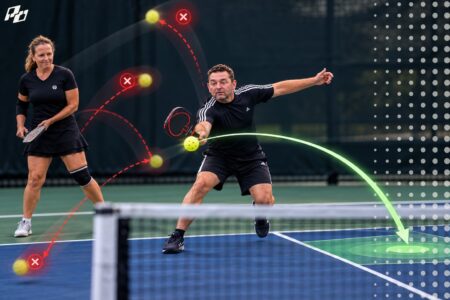
- Right at their dominant-side hip
– Most people can’t handle this; automatic jam-ball. - Into the seam between players
– Perfect in doubles. Causes confusion. - Back behind them
– Great if they lean or poach. - Down feet if they’re moving
– They’ll pop it up or dump it.
Never aim waist-high middle—that’s a gift.
Reading the Speed-Up (Secret to Looking “Fast”)
You don’t need lightning reflexes. You need early recognition. Attacks tell you what’s coming before the paddle even hits.
Watch:
- Their wrist: stiff = drive, loose = flick
- Their shoulder: unload = power coming
- Their eyes: watch if they look at your hip or shoulder
- Sound: drive impacts sound heavier
Anticipate first. React second. Win early.
When Not to Counter
Believe it or not, sometimes attacking is the dumb move. Here’s when to reset instead:
- Ball drops below the net
- You’re late or stretched
- Heavy spin pulls you off balance
- You need to buy time
The best counter-attackers know when not to counter. Don’t turn a defensive ball into a wild slap.
The 3 Forehand Counters You Need
You can’t just punch everything. Level up with these three variations:
| Counter Type | Use When | Result |
|---|---|---|
| Standard punch | Neutral attack | Establish control |
| Redirect | Opponent leans | Take their angle away |
| Counter-rip | High ball | End point now |
Once you add redirection options, you become unpredictable—and lethal.
Common Mistakes (If You Fix These, You Win More)
❌ Backswing
❌ Reaching instead of stepping
❌ Wrist flicking
❌ Standing tall
❌ Paddle dropping
❌ Hitting up instead of through
❌ Watching opponent instead of ball
Fix this checklist one by one. The cleanest counter wins, not the fastest.
Practice Like This (3 Simple Drills)
No fluff. Do these and you’ll feel the difference fast.
1. Punch Wall Drill (Solo): Stand six feet from a wall. Tap volleys with no backswing. 50 reps/day. Focus: compact.
2. Hip Jam Drill (Partner): Partner feeds to your right hip. You step + punch. 30 each side. Focus: footwork + spacing.
3. Redirect Live Drill: Partner speeds at you. Every third counter you redirect behind them. Focus: paddle angle.
The goal isn’t perfection—it’s building repeatable contact.
The Counter Mindset
The forehand counter isn’t a magic move. It’s a weapon built from discipline:
✅ Paddle in front
✅ Wrist locked
✅ Compact punch
✅ Strong base
✅ Intentional targets
✅ Smart footwork
Most players lose fast hands battles before the ball even reaches them—because they panic, over-swing, or retreat. That won’t be you anymore.
The goal isn’t to survive. The goal is to own the exchange.
Fast hands belong to the fearless.
Clean hands belong to the dangerous.