
If you play rec pickleball long enough, this situation is almost guaranteed.
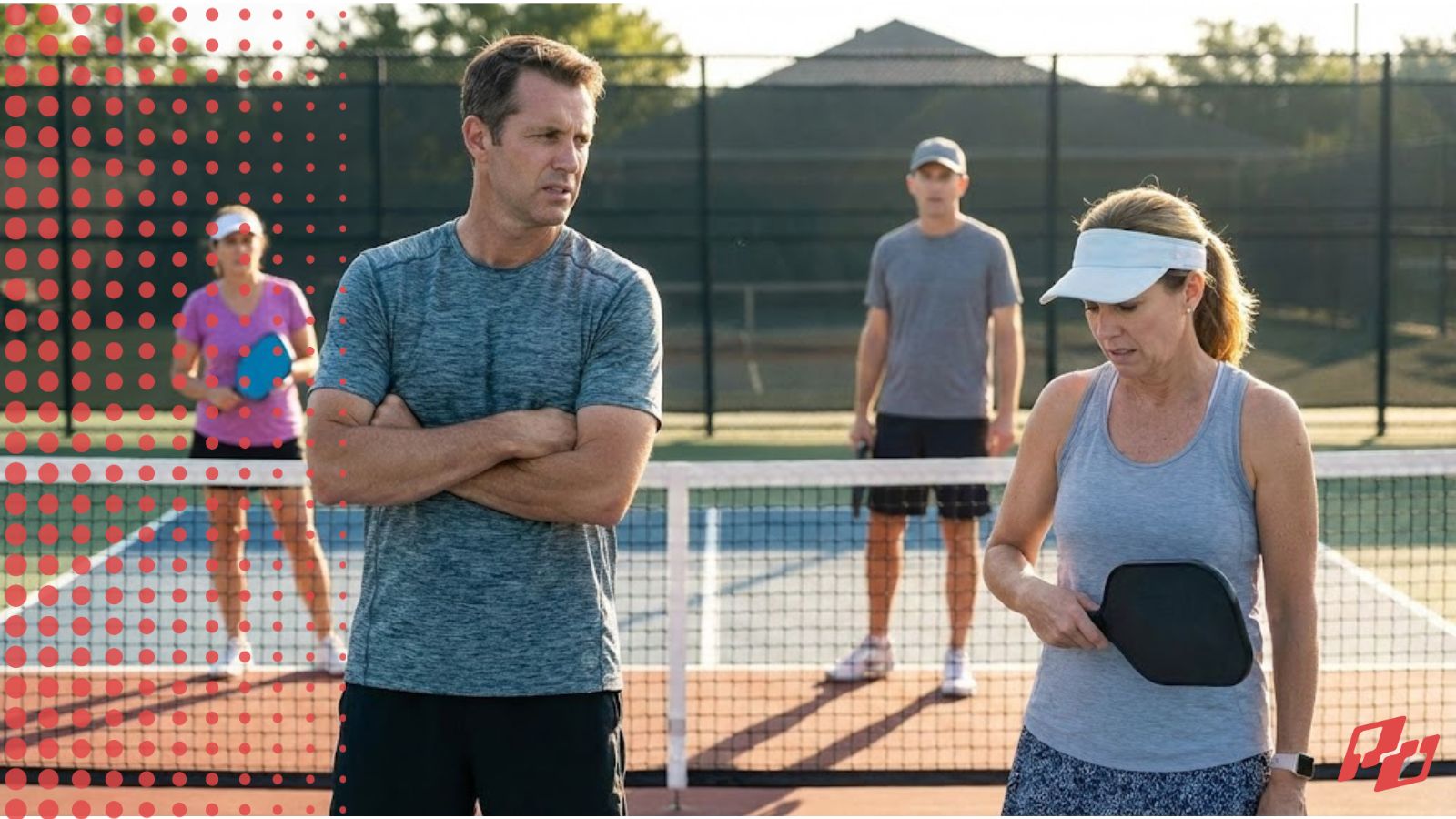
You show up expecting competitive-but-fun games. Instead, you end up sharing a court with someone who treats open play like a must-win trial. They get tight after mistakes. They coach without being asked. They look annoyed when points don’t go their way.
Suddenly, the game feels heavier than it should.
Let’s start with something important and validating: it makes sense if this bothers you. Rec pickleball isn’t just about shots and scores — it’s a shared social space. When one player’s intensity overwhelms everyone else, it changes how the game feels, even if they’re technically “playing hard.”
This article isn’t about shaming competitiveness. It’s about navigating it realistically — with empathy, boundaries, and practical tools that actually work on a real court.
First, let’s clarify the real issue
Competitive energy itself is not the problem.
✅ Healthy competitiveness looks like:
- Playing hard and staying focused
- Resetting quickly after mistakes
- Encouraging partners
- Keeping emotions contained
❌ Unhealthy competitiveness looks like:
- Visible anger toward partners
- Unsolicited coaching or criticism
- Sulking, eye-rolling, or blaming
- Treating open play like a tournament final
Here’s the nuance many rec players miss: most overly intense players aren’t trying to be difficult.
They’re often:
- former competitive athletes who miss structure
- players who tie self-worth to performance
- people using pickleball as stress relief… poorly
- unaware of how their energy lands on others
Understanding this helps you respond with clarity instead of resentment — but it does not mean you have to tolerate bad behavior.
Why this situation feels especially draining in rec play
In leagues or tournaments, the social contract is simple: everyone expects intensity. You show up ready to compete, and no one takes it personally.
Rec play is different — because people arrive for very different reasons, often without saying them out loud.
- One player wants a good workout.
- Another wants easy points and conversation.
- Someone else is there to improve.
- Someone just wants to play without stress after work.
None of those goals are wrong. The exhaustion comes from all of them sharing the same court at the same time.
When expectations don’t match, every point starts to feel loaded. You’re not just choosing shots — you’re constantly wondering how hard is too hard, am I being rude, or am I wasting my own time.
That quiet second-guessing is what drains people.
That’s why boundary-setting matters more in rec pickleball than in almost any other sport. It’s not about being intense or relaxed — it’s about getting everyone on the same page before frustration builds.
What actually helps (with context)
✅ Set expectations early — gently, briefly, clearly
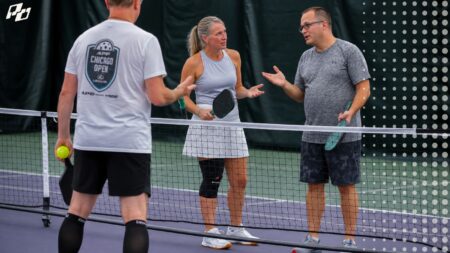
If you know someone has a reputation, one sentence before the game starts can change everything.
Examples:
- “Hey, just a heads-up — I’m here for social rec today. Playing hard, but keeping it light.”
- “I’m working on consistency, so I’m not looking for mid-point coaching.”
Why this works: You’re not correcting them. You’re defining the type of game you’re playing.
Most people adjust when the context is clear.
✅ Use neutral language when tension shows up mid-game
When someone gets sharp, your goal is not to educate them. It’s to stop the emotional spiral. Short, neutral phrases work best.
If they criticize you:
- “Got it. Next point.”
- “I’m good — let’s play.”
If they’re visibly frustrated:
- “Side out. Reset.”
- “We’re fine.”
These phrases:
- don’t invite debate
- don’t escalate
- don’t reward the behavior
Silence also counts as a response.
❌ What not to do in the moment
- Don’t explain your shot choice
- Don’t match their tone
- Don’t defend yourself
That just turns pickleball into a courtroom.
Keep communication tactical, not emotional
One of the most effective ways to protect the vibe is to only talk process.
✅ Helpful, neutral communication:
- “Switch.”
- “Middle’s yours.”
- “Bounce it.”
- “I’ve got line.”
❌ What makes things worse:
- “Why would you hit that?”
- “You can’t miss those.”
Process language keeps the partnership functional — even when personalities don’t match.
When it’s time to opt out (and why that’s healthy)
Here’s something many rec players need permission to hear: You are not obligated to play every game with every person.
Opting out is not rude. It’s self-respect.
Simple exits:
- “I’m going to sit this one out.”
- “I’m rotating courts.”
If asked why:
- “I’m looking for a lighter vibe today.”
- “You’re more intense than what I’m here for.”
No insults. No explanations. Just clarity.
❌ What doesn’t help (even if it’s tempting)
- throwing points to end the game
- playing passive-aggressively
- gossiping afterward
Those spread the tension to everyone else.
If you’re the organizer or part of a regular group
This is where a little structure saves everyone a lot of emotional energy.
Most rec drama doesn’t come from bad intentions — it comes from unclear norms. When nobody knows what kind of play this is supposed to be, people start self-policing, overthinking, or quietly resenting each other.
Healthy groups don’t rely on hints or side-eye. They make expectations boringly clear. What that looks like in practice:
- Separate sessions by intent.
Even a simple label helps: “social open play” vs. “competitive run.” Players can self-select instead of clashing. - Name the tone up front.
Things like: “No coaching unless asked,” “Keep it positive,” or “Competitive play — intensity welcome.” Saying it once out loud does more than correcting people mid-game. - Give intense players a lane.
Instead of asking someone to dial it down, point them somewhere else that fits their energy: leagues, ladders, challenge courts, or specific time slots.
The key is this: boundaries work best when they come from the group, not from one frustrated person mid-rally.
When expectations are shared and stated ahead of time, behavior adjusts naturally — and fewer people walk away feeling embarrassed, judged, or annoyed.
A gentle self-check (for all of us)
If this topic stings a little, that’s normal. Almost everyone who loves improving at pickleball has been that player at some point — especially during a stretch when progress matters a lot.
Intensity usually comes from a good place. You care. You’re invested. You want to play well. But in rec settings, intent and impact don’t always line up.
It helps to pause once in a while and ask:
- Am I offering advice when no one asked for it?
- Does my body language change after a partner’s mistake?
- Am I treating this game like practice… or like a must-win match?
None of these make you a bad partner. They’re signals that your competitive energy might need a different outlet.
Competitive drive is a strength. It just works best when it’s placed in the right container — a league night, a challenge court, or a session where everyone showed up for the same reason.
Self-awareness doesn’t water down your edge. It makes it usable.
What I Wish Someone Had Told Me Earlier
Most rec pickleball tension doesn’t come from rude people. It comes from good people showing up with different expectations and never naming them.
➡️ You don’t need to fix anyone’s personality.
➡️ You don’t need to carry someone else’s frustration.
➡️ And you don’t need to keep putting yourself in situations that quietly drain you.
What does help is getting clearer — with yourself and, when needed, with others.
- Choose courts that match the kind of energy you want that day.
- Speak up early, casually, before resentment builds.
- Give your competitive side a proper outlet so it doesn’t spill into social play.
That’s not being difficult. That’s being intentional.
The healthiest pickleball communities aren’t built on who wins the most points or who hits the hardest ball. They’re built around trust, clarity, and people who make others feel comfortable sharing the court.