
There’s a quiet divide in rec pickleball. Some players believe the soft game is overrated. They’d rather drive hard, speed up early, and keep rallies fast. To them, dinking feels slow, passive, even unnecessary.
Others insist the opposite — that without a soft game, you’re capping your ceiling.
So who’s right?
The reason this question matters isn’t about style. It’s about progression.
A lot of recreational players stall at 3.5. They win plenty of open-play games. They hit the ball hard. They feel competitive. But the moment they step into a match against disciplined 4.0 players, the game feels different. Slower. More controlled. Less chaotic.
And suddenly, the shots that used to win points don’t. That’s the real issue.
This isn’t about whether dinking is “fun” or “boring.” It’s about what happens when your opponents can handle your power — and you don’t have a second plan.
Because you don’t get to decide if the game slows down. Better players do. And once they do, you either have the soft game… or you don’t.
Why Power Works — Until It Doesn’t
At 3.0 and early 3.5, rallies rarely develop structure.
➡️ You drive the third shot.
➡️ They swing hard at the return.
➡️ Someone misses.
➡️ Point over.
There’s no transition reset. No stable kitchen positioning. No controlled exchange. The rally ends before the tactical phase even begins.
That creates the illusion that dinking is unnecessary. And in that specific environment, it might be.
But what’s actually happening isn’t superior strategy. It’s that mistakes are happening too early for structure to matter.
Once opponents stop donating errors under pace and start resetting instead of swinging, your advantage disappears.
➡️ Now your drive comes back clean.
➡️ Now your speed-up gets blocked.
➡️ Now your attack turns into a neutral ball.
And if you don’t have control in neutral situations, you’re exposed.
The 3.5 Plateau: Where Styles Get Tested
This is where many recreational players stall.
At 3.5, players start blocking instead of flinching. They soften instead of swinging. They reset instead of countering every ball.
Your third-shot drive no longer wins outright. It comes back low and neutral. You’re now hitting from midcourt.
If you can’t reset that next ball into the kitchen, you’re stuck defending.
This is the moment where many aggressive players force the issue. They speed up balls from below net height. They attack out of impatience. They try to win the point instead of building it.
Disciplined teams don’t fight that impulse. They wait for it.
And that’s why the jump from 3.5 to 4.0 isn’t about hitting harder. It’s about staying controlled longer.
At 4.0, You Don’t Get a Vote
Once you start playing true 4.0-level teams, the structure of the rally changes.
If a team has:
- A reliable third-shot drop
- A consistent midcourt reset
- Stable positioning at the kitchen
They will bring you forward.
You won’t blast your way through them. You won’t rush them off the line. You won’t overwhelm them with pace.
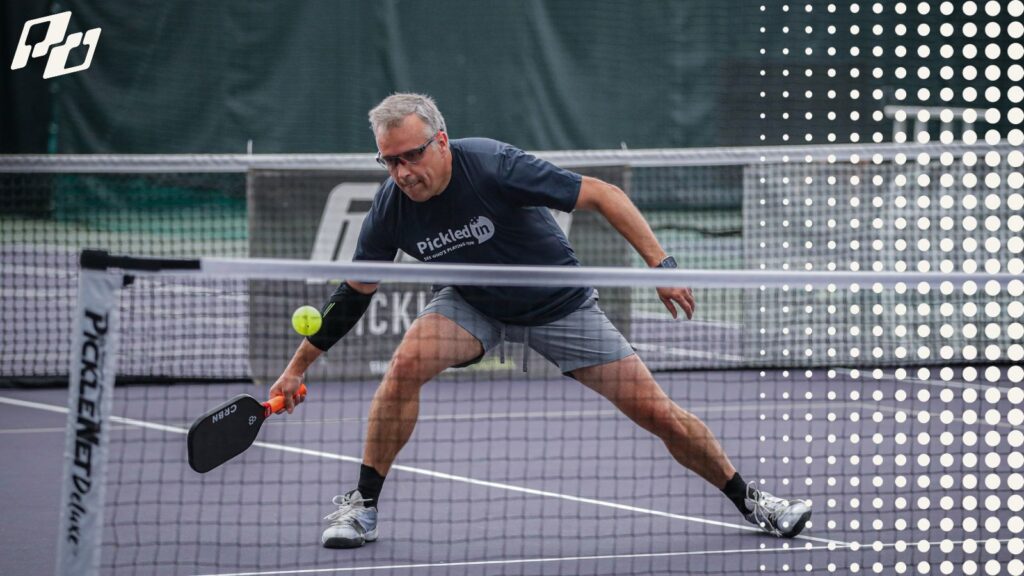
You’ll end up at the kitchen. And once you’re both set there, your choices narrow.
If you attack from below net height, you lose more often than you win. If you speed up without setup, you get countered. If you refuse to soften, you hand over control.
So you dink.
Not because it’s trendy. Not because it looks pretty. But because it’s the highest-percentage option available.
At higher levels, dinking isn’t passive. It’s strategic.
The Myth That “The Game Has Evolved Past Dinking”
Yes, modern pickleball is faster. Speed-ups happen earlier. Hands battles are explosive. Players counter at lightning speed.
But watch closely.
Before those attacks happen, there is almost always:
- A controlled drop.
- A patient reset.
- A short exchange that moves someone out of position.
The soft game didn’t disappear. It became more precise.
Higher-level players don’t dink endlessly for show. They dink with purpose — to move opponents laterally, to force a weaker backhand, to create indecision between partners, to open a speed-up lane.
That’s not boring. That’s controlled pressure.
When Dinking Is Actually Overrated
Let’s be fair.
If you’re playing 3.0 open play and opponents cannot handle pace, you don’t need to manufacture long dink rallies just to look advanced.
Efficiency matters. If your drives consistently produce weak returns, use them.
But don’t confuse:
“I don’t need this skill here.”
With:
“I don’t need this skill.”
One is situational. The other is limiting. Because once you face players who can neutralize pace, you’ll need another option.
The Identity Trap
This debate often becomes emotional because players attach identity to style.
Some pride themselves on being aggressive. Others pride themselves on being grinders. Some reject anything that feels “patterned.” Others reject anything that feels reckless.
But pickleball doesn’t reward identity. It rewards adaptability.
➡️ If your only comfort zone is speed, you struggle when the rally slows.
➡️ If your only comfort zone is soft exchanges, you struggle when tempo rises.
The strongest recreational players can:
- Drive with control.
- Drop under pressure.
- Reset from midcourt.
- Sustain crosscourt dink exchanges.
- Speed up selectively.
- Counter cleanly.
- And, most importantly, wait.
Waiting is a skill. It feels uncomfortable for aggressive players because it feels like surrender. It isn’t. It’s discipline.
What This Means for Your Game
If you’re 3.0–3.25, don’t abandon your strengths. Just begin layering in soft shots deliberately. Try one controlled third-shot drop per game. Attempt a reset when pulled off the line. Build familiarity before you “need” it.
If you’re 3.5 aiming for 4.0, your ceiling is defined by your reset and your patience. If you can’t sustain a crosscourt dink exchange without rushing or forcing, that’s where your improvement lives.
If you’re 4.0, refine your intent. Don’t dink just to survive. Move opponents. Create imbalance. Build your attack instead of hoping for it.