Most players search for strategies against bangers — how to block them, slow them down, and drag them into dink rallies.
But here’s the better question: How do you actually become one?
And more importantly — do you become a banger by hitting harder… or by learning to use force strategically?
Here’s the truth: The best “bangers” aren’t reckless hitters. They’re aggressive builders — players who use pace to create predictable replies, earn height, and finish on their terms.
If you just swing harder, you’re loud. If you apply force intelligently, you’re dangerous.
What Actually Defines a Banger?
At its simplest, a banger is a player who prefers:
- Drives over drops
- Speed-ups over long dink exchanges
- Pace and pressure over patience
But here’s the important part: That style doesn’t mean the same thing at every level.
At 3.0, a banger might simply be someone who hits hard and ends points quickly.
At 4.0, a banger is usually a controlled aggressor — someone who uses topspin, targets feet, and transitions forward behind pressure.
So the label stays the same. The skill behind it does not.
The Three Types of Bangers (And Where They Show Up)
1️⃣ The Wild Banger (Common at 3.0–3.5)
Big swings. Big misses. Lives on adrenaline.
This player equates aggression with effort. Every third shot is a full-power drive. Every ball above net height is a speed-up attempt.
They can overwhelm opponents who struggle with pace — especially in open play. But their success is streaky.
When timing is on? They look unstoppable.
When timing is off? Unforced errors pile up fast.
The limitation: They don’t build points. They gamble on them.
This is where most recreational “bangers” start.
2️⃣ The Heavy Topspin Banger (Strong 3.5–4.0)
Still aggressive — but now with shape and intention. Drives dip instead of sail. Blocks get uncomfortable. Balls kick up off the bounce.
This player understands that pace alone isn’t enough. They add:
- Topspin to keep drives in
- Better targets (feet, backhands, middle seam)
- More disciplined swing size
They’re not just hitting hard — they’re making hard balls harder to handle. This is where things start getting serious.
The difference from the wild banger? They can repeat it.
3️⃣ The Strategic Aggressor (4.0+ and Above)
This is the real goal. At this level, nobody panics at pace. Players reset well. Blocks stay low.
So the strategic aggressor adjusts. They don’t drive to end the point. They drive to create:
- A weak block
- A floating reset
- A jammed volley
- A short reply
They understand that the first drive rarely wins. The second ball often does. They build pressure, move forward behind it, and finish clean.
This player can also drop, reset, and dink when needed. That’s what separates them from lower-level bangers.
If you’re a 3.0–3.5 player reading this, you’re probably somewhere between Wild and Heavy Topspin.
If you’re 4.0 or chasing it, your goal isn’t to hit harder. It’s to become a Strategic Aggressor.
The Real Banger Blueprint
1. Topspin Is Non-Negotiable
If you want to hit hard and keep the ball in, you need topspin. Without it, pace equals long balls.
Technical cues:
- Low to high swing path
- Brush up, but still drive forward
- Finish higher than contact
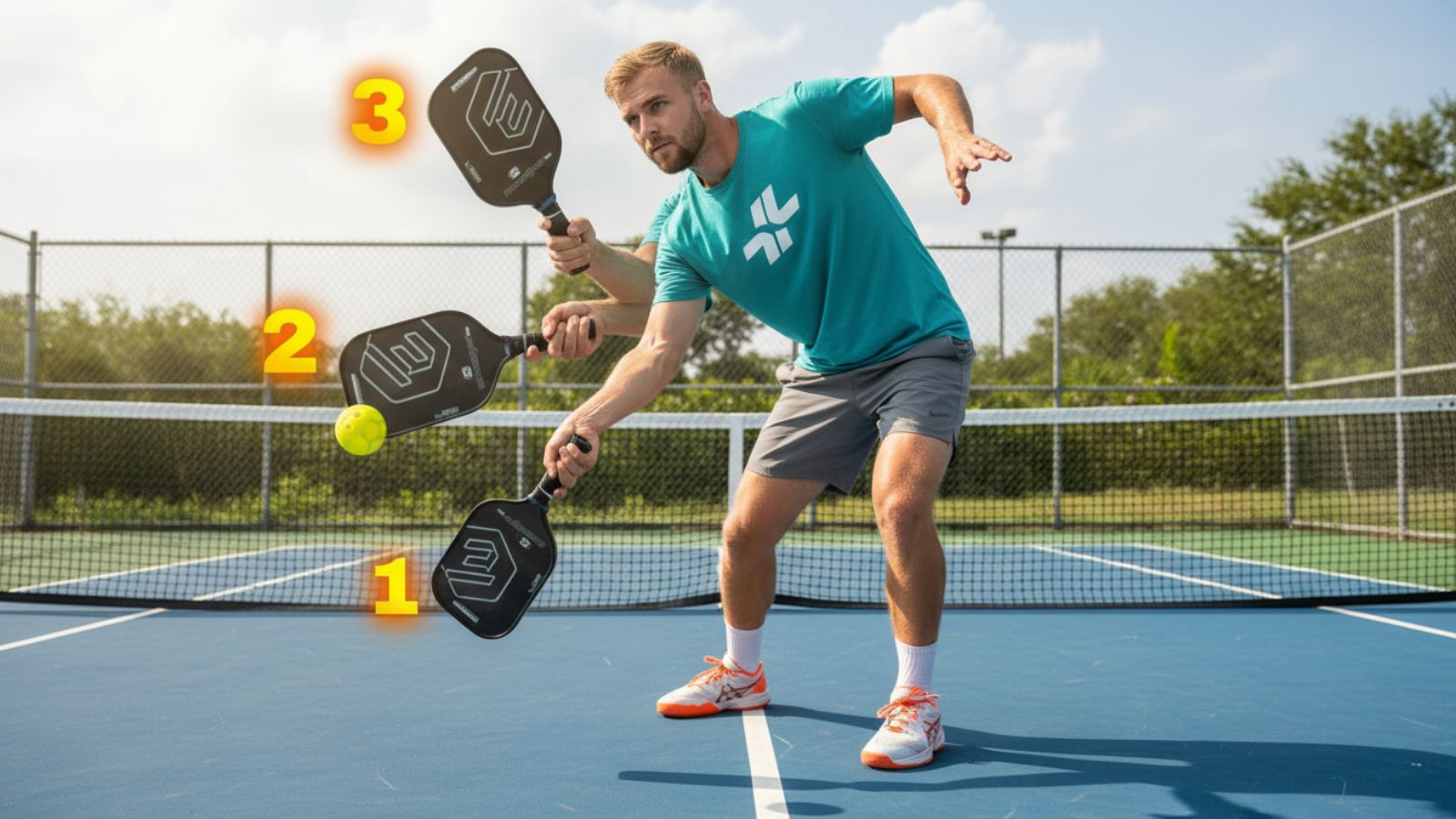
Think: heavy and dipping — not flat and fast.
2. Compact Swing Beats Big Swing
Rec mistake: bigger backswing = more power.
Reality: bigger backswing = later contact and more errors.
Banger cue: “Short take-back. Fast through.”
Compact = repeatable. Repeatable = dangerous.
3. Contact Must Be Out Front
Late contact ruins drives. If the ball reaches your hip, you’re already compromised.
Cue: “Meet it early.”
Strong bangers hit:
- In front of their lead hip
- With weight slightly moving forward
- With stable paddle face
Where Bangers Actually Win Points
At the rec level, very few points are finished by clean, untouched winners. Most are won because the opponent hits a bad reply under pressure.
That’s the real goal.
High-Percentage Targets (And Why They Work)
✅ Opponent’s feet (especially in transition)
When players are moving forward, their paddle is higher than the ball. A drive at the feet forces an awkward half-volley. That’s where pop-ups live.
✅ Right hip / inside shoulder
This jams the swing path and crowds their contact point. Most rec players struggle to generate clean counters when the ball crowds their body.
✅ Middle seam
Two paddles. One ball. Even experienced teams hesitate for a split second. That hesitation often produces a soft block or miscommunication.
✅ Backhand volley side
At 3.0–4.0, most players’ backhand volleys are less stable under pace. Targeting that side increases the chance of a floating reply.
The key shift: Hard to handle > hard to hit.
A 75% drive to the feet often creates more damage than a 100% blast at the sideline.
The Drive Doesn’t Finish the Point
This is where most rec bangers fail. They drive… and admire.
They hit a heavy third-shot drive, stay planted at the baseline, and watch to see what happens next.
At lower levels, that sometimes works. At higher levels, it doesn’t. Because if you don’t move forward behind your drive, you give your opponent time to reset and take control of the kitchen.
Strong bangers understand something critical: The drive is not the kill shot. It’s the setup shot.
The Drive + Crash Concept
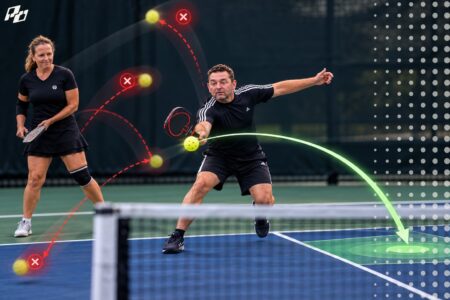
If your drive forces a defensive block:
- Move forward immediately (under control)
- Split step as they make contact
- Be ready for the weak reply
You are not rushing recklessly. You are advancing behind pressure. Take a look:
A good drive often produces:
- A short block
- A floating reset
- A ball that sits up slightly
If you stay back, they recover and neutralize the point. If you move in, you take that ball out of the air and finish.
Shot Selection Rules (So You Don’t Donate Points)
Aggression only works when the ball earns it.
🟢 Green Light to Speed Up
- Ball is above net height (you’re not hitting up)
- You’re balanced and set
- Opponent is leaning, reaching, or out of position
If you can contact the ball slightly in front and drive down through it, that’s your window.
🔴 Red Light
- Ball is below net height
- You’re stretched, drifting, or late
- You’re attacking out of impatience, not opportunity
Check out our pickleball coach, Marko Grgic, as he breaks this down in a recent video we published”
Grip Reality Check: It’s All About Pressure
Most rec bangers think power comes from squeezing harder. It doesn’t. If your drives feel wild, tense, or inconsistent, the issue is often grip pressure, not mechanics.
When you grip too tightly:
- Your wrist stiffens
- Your swing slows down
- You lose natural topspin shape
- Your paddle face becomes harder to control
When you stay too loose at contact:
- The paddle wobbles
- The face angle changes
- Balls float or spray
The key is controlled firmness at the right moment.
Grip Pressure Guide for Bangers (1–10 Scale)
This applies specifically to drives, speed-ups, and aggressive volleys — any shot where you’re accelerating the paddle through the ball and trying to apply pressure.
If you manage grip pressure correctly on these shots, you get heavier pace, cleaner topspin, and better control.
| Situation | Grip Pressure |
|---|---|
| Ready position | 3–4 (relaxed, responsive) |
| Backswing | 3–4 (stay loose) |
| At contact | 5–6 (brief firming for stability) |
| After contact | Return to 3–4 |
The sequence matters: Loose → firm at impact → loose again.
➡️ If you stay tight the whole time, you kill acceleration.
➡️ If you stay too loose at impact, you lose control.
Controlled pressure timing is what separates clean aggression from wild swinging.
Drills to Build a Real Banger Game
1️⃣ The 70% Topspin Drill
Drive at 70% pace with maximum shape.
Goal: 10 in a row, deep, dipping.
You’re building control, not ego.
2️⃣ Feet Target Drill
Have a partner block your drives.
Your only target: Their feet.
You win when they pop one up.
3️⃣ Drive + Transition
Drive crosscourt. Take 3–5 controlled steps forward. Split step.
Train pressure + positioning together.
Is Becoming a Banger “Rude”?
Let’s be honest — this comes up all the time in rec play.
No, becoming a banger isn’t rude. But being reckless absolutely is.
There’s a big difference between playing aggressive pickleball and turning every rally into a spray-and-pray contest. Most partners don’t mind pace. What they mind is unnecessary risk — blasting balls below net height, attacking neutral dinks, or speeding up just because you’re bored.
A good banger is intentional.
They:
- Choose smart targets (feet, seam, backhand)
- Attack when the ball earns it
- Understand the tone of the session
In tournament prep? Let it rip. In mixed 3.0 open play? Maybe dial it down a notch.
Force is a tactic. It shouldn’t be your entire personality on court.