
You’ve probably heard it:
“Slice is over.”
“Topspin is the future.”
“Don’t slice — it just sits up.”
At high levels, that criticism makes sense. The modern game is faster. Players attack off the bounce. Paddles generate more spin. A floaty slice that sits up gets punished immediately.
But here’s what most rec players misunderstand: Slice isn’t dead. Bad slice is dead.
And at the 3.5–4.5 level, a properly executed slice dink is still extremely effective — when you understand what it’s actually for.
First: What Slice Is (and Isn’t)
Slice is not:
- A winner
- A trick shot
- A way to look advanced
- A replacement for good placement
Slice is:
- A control tool
- A rhythm changer
- A way to keep the ball low
- A defensive stabilizer under pressure
➡️ If you treat it like offense, it fails.
➡️ If you treat it like control, it works.
Why People Say Slice Is “Over”
There are real reasons the backhand slice dink gets criticized — especially in today’s faster game.
But when you look closely, the issue usually isn’t the shot itself. It’s how and when players are using it.
1️⃣ Most Rec Players Chop Down on the Ball
When players hear “slice,” they instinctively cut down sharply on the ball. That downward chop does two things:
- It increases net clearance (which feels safe)
- It reduces forward penetration
The result? The ball floats, lands short, and bounces up — exactly what modern players want to attack.
A good slice doesn’t drop the ball into the kitchen. It drives it forward with controlled backspin. Most rec players confuse “spin” with “cutting,” and that’s where the shot breaks down.
2️⃣ They Add Too Much Spin
Intermediate players often think more spin equals more control. So they exaggerate the brushing motion.
But in pickleball, especially at the kitchen, exaggerated motion increases variability. The bigger the swing, the harder it is to control paddle face angle and depth.
The truth is: slice comes mostly from paddle angle and friction — not from dramatic movement. When you try to “create” spin instead of allowing it, you lose consistency.
3️⃣ They Use Slice on Attackable Balls
This is a tactical mistake, not a mechanical one.
If the ball is above net height and you choose to slice instead of roll or attack, you’re voluntarily giving up offense.
Slice is a neutralizing tool. If you apply it when you’ve earned an offensive opportunity, you’re playing backwards.
That’s when players say, “Slice doesn’t work.” In reality, they used a defensive shot in an offensive moment.
The bottom line: The problem isn’t the backhand slice dink. It’s misunderstanding its purpose, overcomplicating its mechanics, and applying it in the wrong situations.
When used intentionally — not habitually — slice is far from “over.”
The Mechanics: What a Good Slice Actually Looks Like
Our friend and pickleball coach Will East breaks down how to nail the backhand slice dink — in just 17 seconds:
A good slice dink should look boring. Here’s what separates a controlled slice from a floaty one:
✔ Paddle Face Slightly Open
Not exaggerated — just slightly tilted upward relative to your swing path so the ball can glide and spin.
✔ Forward Swing (Not Downward)
This is critical. The paddle should move forward toward your target — not down toward the floor.
If you swing down:
- The ball floats
- The ball sits
- The ball gets attacked
Think: “Through the ball, not at the ground.”
✔ Contact Out in Front
Late slice is weak slice. If the ball gets beside your body:
- You lose control of angle
- You lift unintentionally
- You invite speed-ups
Clean slice contact happens slightly in front of your lead hip.
✔ Loose Grip
Grip pressure around 2–3 out of 10.
Too tight:
- You pop the ball
- You lose touch
- You can’t adjust
And if it’s too loose, you lose structure.
➡️ Think relaxed but stable.
When Slice Works Best (Real Match Scenarios)
Let’s get practical.
Scenario 1: You’re Facing a Speed-Up Happy Opponent
Some rec players attack anything that looks remotely liftable. Slice works here because it:
- Stays lower after the bounce
- Forces contact below net height
- Reduces comfortable attack windows
Best target:
- Crosscourt to their backhand foot
- Middle to create indecision
Your goal isn’t to win the point. Your goal is to remove their speed-up opportunity.
Scenario 2: You’re Stretched Wide
When you’re pulled outside your base, topspin is harder to execute cleanly.
Slice gives you:
- A softer reset
- A controlled neutral ball
- Time to recover position
But here’s the key: don’t just “get it back.” Still aim deep enough inside the kitchen so it doesn’t sit short.
Scenario 3: You Want to Change Rhythm
In long dink exchanges, rhythm matters. If you’ve hit five flat dinks in a row, a controlled slice can:
- Change bounce feel
- Change timing
- Make your opponent slightly adjust their paddle angle
You’re not trying to surprise them. You’re trying to subtly disrupt comfort.
When NOT To Use the Backhand Slice Dink
Most slice errors aren’t about spin. They’re about ball height, contact point, and paddle angle under pressure.
Here’s where slice breaks down technically:
❌ When the Ball Is Above Net Height
If you’re contacting above net level, slice reduces your margin.
Technically:
- Backspin increases upward rebound.
- You lose downward control.
- You give up attack opportunity.
If you can hit down, don’t slice. Roll or attack.
❌ When Contact Is Late (Beside or Behind You)
Slice requires forward contact. If the ball drifts beside your hip:
- Paddle face opens.
- Spin exaggerates float.
- Depth becomes inconsistent.
Late + slice = short ball or pop-up.
If contact isn’t out front, go flat.
❌ When Your Paddle Path Is Too Vertical
Many players chop downward. Downward path:
- Reduces forward penetration.
- Increases net clearance.
- Produces “dead” bounce.
Correct slice path is slightly forward and slightly downward, not steep. Think glide, not chop.
❌ When You’re Off-Balance
Slice needs angle control. If your weight is drifting backward:
- The face opens.
- The ball floats.
- Depth control disappears.
Stable base first. Spin second.
❌ When You Overuse Wrist
Excess wrist action:
- Changes paddle angle mid-swing.
- Adds unpredictable sidespin.
- Shrinks your margin.
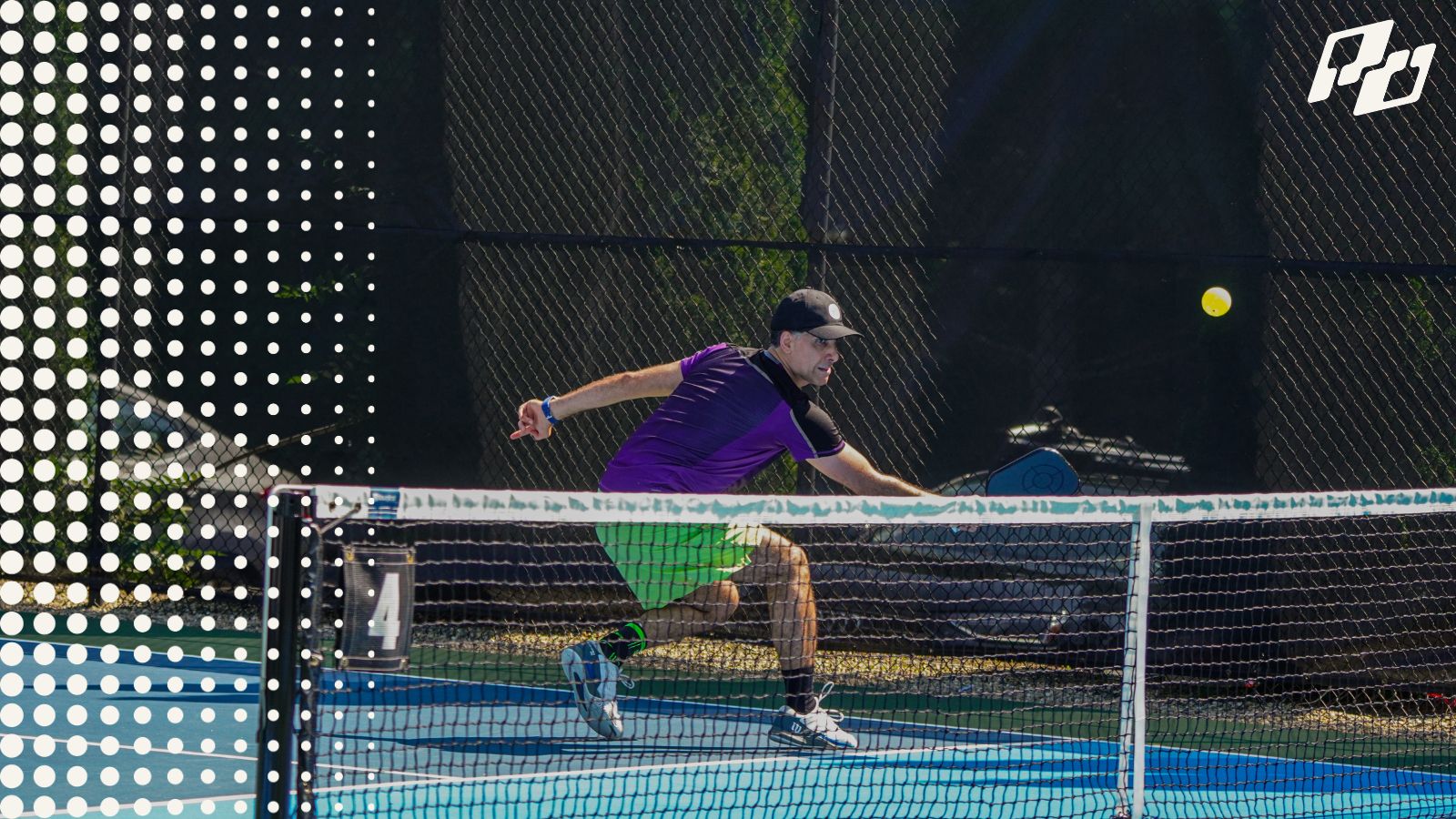
Slice comes from paddle face angle + smooth extension, not wrist snap. Pro player Roscoe Bellamy breaks down this common mistake — and shows exactly what a clean, effective backhand slice dink should look like.
❌ When The Rally Speed Is High
Slice slows tempo. It requires time.
In fast exchanges:
- Contact window shrinks.
- Spin margin disappears.
- Compact punches are safer.
If tempo is high, simplify.
Simple Technical Rule
Use slice when:
✔ Ball is below net height
✔ Contact is in front
✔ You’re balanced
✔ Rally tempo is controlled
Avoid it when those conditions aren’t met.
Intermediate Player Upgrade: How to Actually Make Slice Work
If you’re sitting in that 3.5–4.0 range, this is usually where the slice either becomes a real tool… or a liability. Here’s the shift that changed it for me:
Stop trying to make the slice “do something.” Start using it to take something away.
➡️ Take away pace.
➡️ Take away bounce height.
➡️ Take away your opponent’s comfort.
A few practical upgrades:
✅ Prioritize height control over spin.
If your slice is low and skidding, it’s working — even if it doesn’t look dramatic.
✅ Own the contact point.
If it’s not clearly out in front, don’t force it. Slice punishes lazy positioning.
✅ Shrink the motion.
The more compact your swing, the more repeatable it becomes.
✅ Think surgical, not flashy.
Slice isn’t a highlight shot. It’s a control shot.
The best slice dinks I’ve seen at 4.0 don’t look fancy. They look boring. Calm. Under control. And that calm? That’s what forces errors.
In rec pickleball, calm wins far more rallies than creativity ever will.