The pickleball dink-to-flick pattern works by using an aggressive dink to make your opponent reach, lift, or lose balance. If that dink creates a weaker reply, move in ready to flick the next ball. The key is not forcing the attack — it is earning it with the previous dink.
If you watch enough pro pickleball, you start noticing something. The best players rarely force attacks.
They create them.
Coach Tanner Tomassi recently highlighted one pattern that perfectly shows this idea, and it is one of the best concepts early intermediate players can start using. Instead of waiting for an obvious attack, they use a purposeful dink to earn the next ball.
That sounds simple.
It is not.
Most rec players think of every dink as either “safe” or “aggressive.” Pros think one shot ahead.
A good dink is not the end of the rally.
It is the shot that creates the attack.
That mindset alone can completely change how you play at the kitchen.
Stop Looking for Attacks. Start Creating Them.
One of the biggest differences between a 3.5 player and a 4.5 player is patience with purpose.
Many rec players attack because:
- The ball looks attackable.
- They are tired of dinking.
- They want to surprise the opponent.
- They see a little bit of height.
Better players are asking a different question: “Can I make the next ball easier to attack?”
That small change in thinking creates much better decisions.
Instead of gambling on a low-percentage speedup, you first make your opponent uncomfortable. Only then do you attack.
That is why so many kitchen attacks at higher levels look easy. The difficult work happened one shot earlier.
The Pattern Is Surprisingly Simple
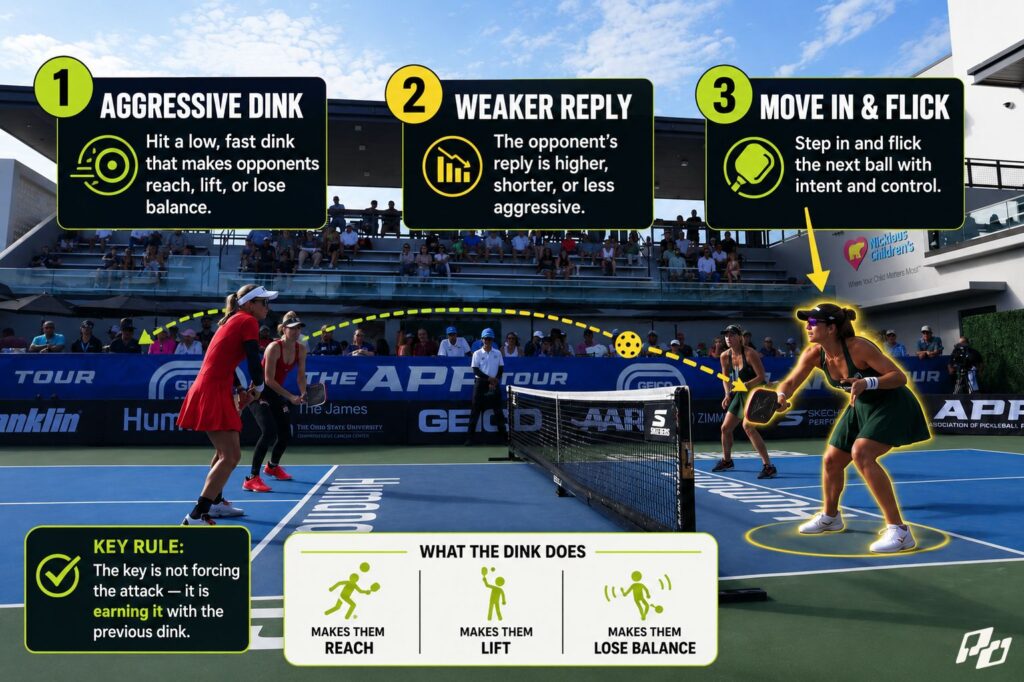
Think of it as a two-shot sequence.
Shot 1: A Dink That Creates Pressure
Not every dink should simply land in the kitchen. Sometimes your goal is to make your opponent hit from an uncomfortable position.
That usually means:
- Pushing them wider.
- Making them reach.
- Moving them backward slightly.
- Forcing contact below net height.
- Taking away balance.
You are not trying to win the point with the dink.
You are trying to lower the quality of their reply.
That is when a dink becomes offensive: not because it is hit harder, but because it makes the next ball easier to attack.
Shot 2: Move In Expecting the Flick
This is where most rec players lose the advantage.
They hit a good aggressive dink…
…then admire it.
But the whole point of that dink was to earn the next ball.
If your dink forced your opponent to reach, lift, or contact the ball from a low position, you should already be leaning forward mentally and physically. Not crashing into the kitchen. Not guessing. But preparing to take the next ball early.
That next ball is often the one you flick.
The pattern is:
- Pressure dink first.
- Expect a weaker reply.
- Step in and flick if the ball sits up.
The key is anticipation. You are not reacting after the pop-up happens. You are reading that your dink was good enough to create one.
That is why better players look so quick at the kitchen. They are not magically faster. They are ready for the ball their previous shot was designed to create.
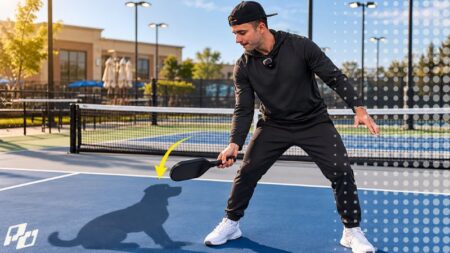
Check out how it works:
The Biggest Mistake: Hunting Every Flick
This pattern is incredibly effective. That also makes it dangerous. Once rec players learn it, many immediately try to flick every second ball.
Don’t.
The aggressive dink does not guarantee an attack.
- Sometimes your opponent handles it beautifully.
- Sometimes they reset perfectly.
- Sometimes they surprise you.
Good players don’t force Pattern Step 2. They simply become ready for it.
Think of it like fishing.
You cast the line.
You don’t yank it every two seconds hoping there’s a fish.
What Makes a Dink “Aggressive”?
Many players think aggressive means harder. Usually it doesn’t. A dangerous dink is one that removes comfort.
That might mean:
| Aggressive Dink | Why It Works |
|---|---|
| Deep to the opponent’s feet | Forces contact lower and later |
| Wide toward the sideline | Creates reach and opens the middle |
| Into the outside foot | Makes balance and paddle angle difficult |
| Toward the backhand shoulder | Often creates awkward contact |
| Middle at the transition player | Creates indecision between partners |
Notice something. None of these require maximum pace. They require placement.
That is a huge difference.
Learn to Read the Quality of Your Own Shot
This is probably the biggest skill in the entire pattern. After your dink leaves the paddle, immediately ask:
Did I actually make them uncomfortable?
Look for clues.
✓ Are they reaching?
✓ Are they stretching?
✓ Did they stop moving?
✓ Is their paddle below the net?
✓ Did they lose balance?
✓ Did they contact the ball late?
Those are green lights.
If instead they’re balanced, early, and comfortable…
…don’t attack.
Dink again.
Many coaches call this earning the attack, and it’s one of the clearest differences between recreational and advanced decision-making.
Why Early Intermediates Should Learn This First
Players around the 3.25-3.75 level often think becoming more offensive means learning a better speedup.
Usually the bigger improvement is learning when to speed up. That’s what this pattern teaches.
Instead of attacking random balls…
…you attack balls you’ve helped create.
The percentage goes way up. The errors go down. Your opponents feel constant pressure because every dink now has a purpose.
The Drill That Teaches the Pattern
Don’t practice flicks first. Practice earning them.
One player feeds neutral dinks. The other player’s only job is to move the opponent into uncomfortable positions.
No attacks allowed.
Once both players recognize obvious weak replies consistently, add the attack. This teaches something most rec players never practice:
Decision-making.
Not every high ball deserves a flick.
Not every stretched opponent gives you enough.
Learning that judgment is more valuable than hitting twenty extra speedups.
Common Mistakes
| Mistake | Better Thought |
|---|---|
| Attacking after every good dink | ✅ Wait until the reply is actually attackable |
| Hitting aggressive dinks too hard | ✅ Prioritize placement over pace |
| Watching your own shot | ✅ Start reading your opponent immediately |
| Leaning into the kitchen before earning it | ✅ Anticipate, don’t gamble |
| Trying to finish every rally | ✅ Build pressure first |
My Favorite Way to Think About This Pattern
Most rec players wait for mistakes at the kitchen. Better players create the mistake before it happens.
They do not rush the flick. They earn it.
One smart dink makes the opponent reach, lift, or lose balance. Then the next ball becomes attackable.
By the time the flick happens, the point is already leaning their way.
The attack is not the start of the pressure.
It is the payoff.