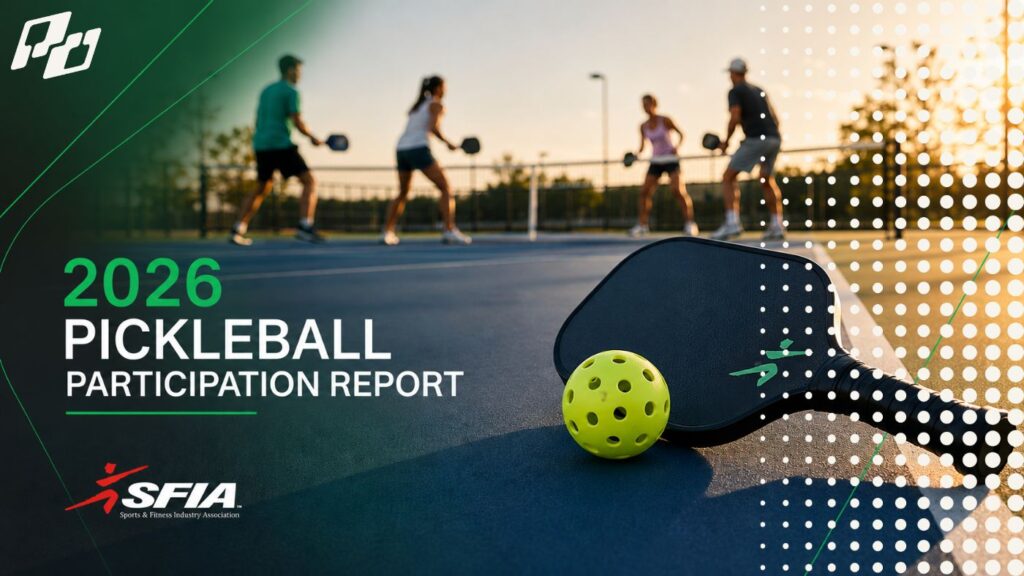
The 2026 pickleball participation report shows the sport is getting younger, busier, and more competitive. Teenagers have the highest participation rate, while older players remain the most dedicated frequent players. For rec players, that means more crowded courts, more organized play, more juniors, and a changing open-play culture.
If you’ve been playing pickleball for a few years, you’ve probably noticed things feel different.
Courts are busier. Waiting lists are longer. There are more leagues, challenge courts, and younger players showing up. Even the average level of play seems to be rising.
That’s not just your imagination.
Every year, the Sports & Fitness Industry Association (SFIA) publishes its national Pickleball Participation Report, one of the most comprehensive looks at who is playing pickleball in the United States and how the sport is changing. It tracks participation, age groups, playing habits, and long-term trends across millions of Americans.
Why should you care?
Because today’s numbers become tomorrow’s pickleball experience.
They help explain why your local courts are getting more crowded, why open play is becoming more competitive, why facilities are adding new courts, and where the sport is likely headed over the next few years.
Some of this year’s findings confirmed what many players already suspected. Others completely shattered the biggest myths about pickleball.
Here are the insights every recreational player should know.
The Biggest Myth Is Officially Dead
Let’s start with the headline everyone gets wrong. The highest participation rate in pickleball isn’t among retirees.
It’s teenagers.
According to the latest national participation report, 13–17-year-olds have the highest participation rate of any age group, with 18–24-year-olds right behind them.
That doesn’t mean there are more teenagers than retirees playing.
It means a larger percentage of teenagers are choosing to play pickleball than any other age group.
That’s a huge difference.
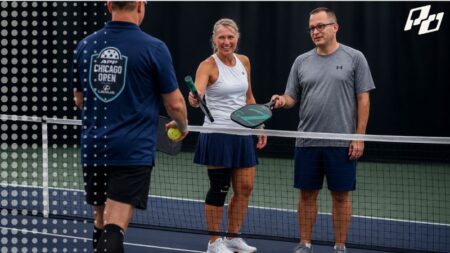
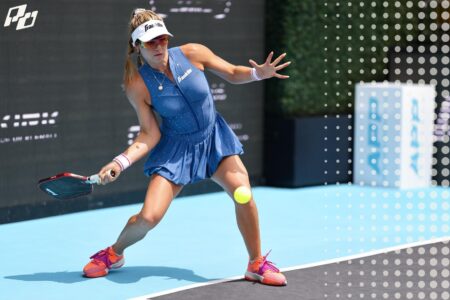
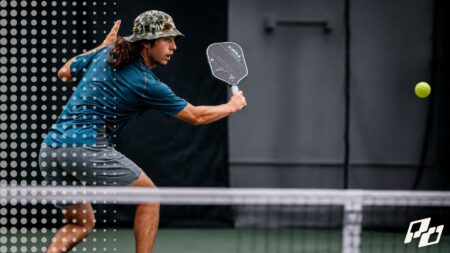
And it’s probably one reason you’re seeing more college clubs, high school programs, and younger players showing up during evening open play.
🎥 What Our Founder, Paul, Noticed
The Retirement Stereotype Wasn’t Completely Wrong
Here’s where the report gets really interesting. While teenagers have the highest participation rate…Older adults still dominate one important category:
Frequency.
Players over retirement age are far more likely to play multiple times every week. So both things can be true.
Young players are discovering pickleball.
Older players are building their weekly routine around it.
That combination is incredibly unusual.
Most sports either stay young…
…or age with their participants.
Pickleball is doing both at the same time. For rec players, that’s good news.
It means you’ll continue seeing a mix of generations on the same courts instead of one group replacing another.
Pickleball Isn’t Growing. It’s Exploding.
The participation numbers aren’t just higher. They’re dramatically higher.
Millions of Americans picked up a paddle over the last year, continuing one of the fastest growth streaks in modern sports.
That creates obvious challenges.
- More crowded courts.
- Longer paddle stacks.
- More waiting.
- More competition for public facilities.
If your local courts suddenly feel busier than they did two years ago…
…it’s not your imagination.
The numbers say the same thing.
Expect More Skill-Based Open Play
One trend hidden inside the growth is this: the average skill level at many facilities is rising. As players stick with the sport longer, beginner-heavy open play naturally shifts toward more intermediate players.
That means we’ll probably continue seeing:
✓ More challenge courts
✓ More DUPR sessions
✓ More ladders
✓ More organized leagues
✓ More skill-specific open play
Five years ago, almost every game was simply “open play.” Today, players increasingly want games closer to their own level.
That trend is likely to continue.
The Sport Is Becoming More Competitive—But Also More Social
One interesting contradiction appears throughout the participation data.
Players are becoming more serious.
They’re buying better paddles.
Tracking ratings.
Taking lessons.
Joining leagues.
But they’re also staying because of the people.
Study after study continues to show that the social side of pickleball remains one of the biggest reasons players keep coming back.
That’s something many rec players already know.
Sometimes you show up for the games.
Sometimes you show up because your Tuesday morning group feels like family.
What This Means If You’re a Rec Player
The report isn’t really about numbers. It’s about where pickleball is headed.
⮕ Expect busier courts.
⮕ Expect stronger average players.
⮕ Expect more juniors.
⮕ Expect more organized play.
⮕ Expect more private groups.
⮕ Expect better facilities.
Expect more opportunities to compete if you want them—and more opportunities to simply enjoy the social side if you don’t.
In other words…
The game you’ve been playing for the last few years is still pickleball. But the community around it is becoming much bigger, much younger, and much more diverse.
The Most Interesting Number Isn’t an Age
If I had to pick one takeaway from the entire report, it wouldn’t be participation growth.
It wouldn’t be teenagers.
It wouldn’t even be retirees.
It’s this: pickleball is one of the few sports in America where a 15-year-old, a 45-year-old, and a 75-year-old can all play together—and all feel like they belong.
There aren’t many sports that can say that. That’s probably the biggest reason pickleball keeps growing.
Not because it’s easy.
Not because it’s trendy.
Because very few activities bring together families, friends, neighbors, former athletes, and complete beginners in quite the same way.
The participation report simply put numbers behind something most rec players already feel every time they walk onto the court.
Pickleball isn’t becoming America’s game.
It’s already there.