Win more pickleball firefights by starting with a better paddle window, staying slightly backhand-favored, holding a stable face, meeting the ball early, and reloading after every counter. The goal is not just faster hands — it is making fast kitchen exchanges feel slower and easier to control.
A pickleball firefight feels like chaos.
The ball speeds up. Both players are at the kitchen. Someone counters. Someone blocks. Someone panics. Three shots later, nobody is totally sure what happened — except one team is walking to the baseline.
Most rec players think they lose these exchanges because their hands are too slow. Sometimes that is true.
But more often, the problem starts before the ball gets fast.
Your paddle is in the wrong window.
Your swing gets too big.
Your feet get noisy.
Your partner goes quiet.
You attack a ball that was not really attackable.
Then the firefight starts from a bad position, and now you are just trying to survive.
The better players are not just reacting faster. They are making the firefight easier before it happens.
That is the real skill.
The First Rule: Don’t Start a Firefight You’re Not Ready to Finish
A lot of intermediate players love speedups. They see a ball sit up slightly and think, “Go.”
But if your speedup is not low enough, disguised enough, or placed well enough, you are not attacking. You are donating pace.
A good speedup should create one of three things:
| Your Speedup Should Create | Why It Matters |
|---|---|
| A jammed counter | Opponent has less room to swing |
| A late block | Ball comes back weaker |
| A predictable reply | You know where the next ball is likely going |
If your speedup does not do any of those, you are just starting a hands battle from neutral — or worse, from disadvantage.
Modern coaching around speedups emphasizes that the goal is not simply hitting harder, but recognizing the right moment, staying compact, and turning a brief advantage into control of the rally.
Remember: “If I speed it up, I must be ready for the counter.”
That one thought will stop a lot of bad attacks.
Your Paddle Window Matters More Than Your Reflexes
Fast hands do not help much if your paddle starts in the wrong place.
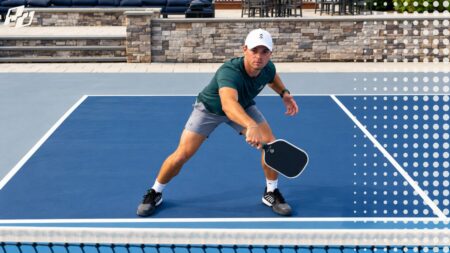
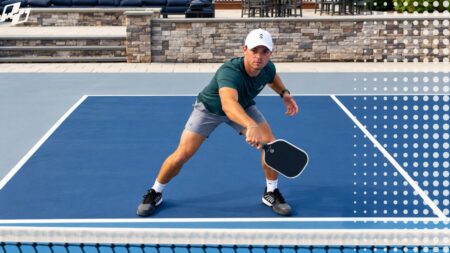
At the kitchen, your paddle should already be sitting in the space where the next fast ball is most likely to come: out in front, slightly backhand-favored, around chest height, and not glued to your body.
That is what makes good hands look “fast.” Their paddle does not have far to travel.
Why Stay Slightly Backhand-Favored?
In a firefight, the backhand is usually your quickest defensive tool.
It can cover balls at your body, left shoulder, and even many balls toward your forehand with a short extension instead of a grip change or a bigger swing. That means fewer moving parts and faster reactions.
The forehand is still there when you have time. But in fast exchanges, many advanced players naturally rely on the backhand because it lets them defend more court with less movement.
Remember: “Backhand first. Forehand when you earn it.”
Reload Immediately After Every Shot
This is where many rec players lose firefights.
They speed up the ball…
…then leave their paddle low.
Or they counter once…
…and admire the shot.
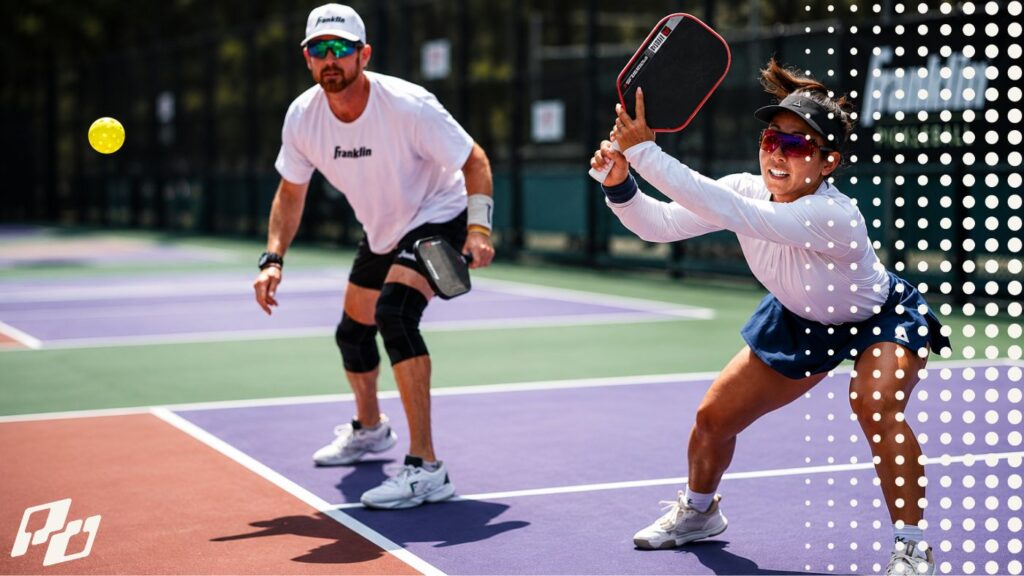
Instead, the moment your paddle makes contact, bring it straight back into your ready window.
Think: Hit. Reload. Expect the counter.
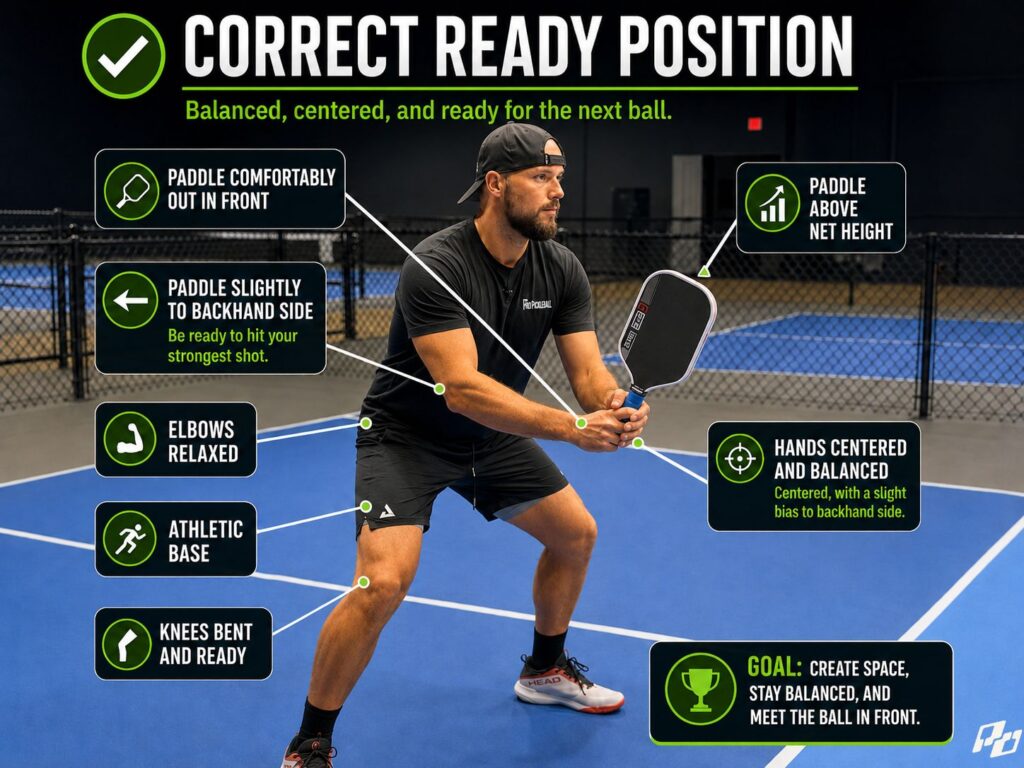
If your paddle gets back after your opponent starts swinging, you are already late. A good ready window gives you three big advantages:
- You block body shots sooner.
- You counter with a compact motion instead of a big swing.
- You stop feeling surprised by speedups because your paddle is already in position.
Keep your grip light, your elbows relaxed, and your paddle active—not stiff. Think of your paddle as returning “home” after every shot.
Cue: “Reset before they hit.”
That one habit alone can make your hands feel noticeably faster without improving your actual reaction time.
Stabilize the Paddle With Your Index Finger
When players lose firefights, the problem is often not slow hands. It is an unstable paddle face.
This tip helps on both forehand and backhand counters, but it is especially useful on backhand counters and body balls, where the paddle has less time to adjust.
Apply light pressure with your index finger along the paddle handle. That finger helps stabilize the face without forcing you to squeeze the entire grip.
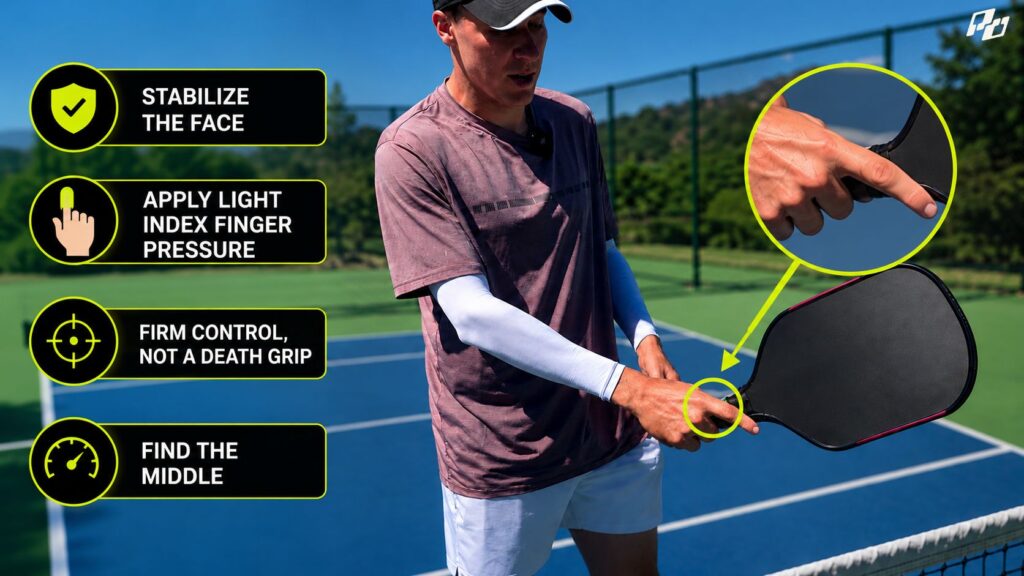
The goal is firm control, not a death grip.
If you squeeze too hard, your hands slow down.
If your grip is too loose, the paddle twists at contact.
Find the middle.
Cue: “Guide with the finger, not the fist.”
Compact Does Not Mean Passive
“Keep it compact” is common advice, but players often misunderstand it. Compact does not mean weak. It means your paddle travels only as far as it needs to.
In a firefight, the incoming pace is already there. Your job is usually to redirect, block, press, or counter with a short motion. Big swings make the paddle face change too much, and once the face changes, the ball starts flying.
A strong counter often feels more like a short punch than a full swing. You are not winding up. You are meeting the ball early and sending it back with structure.
Remember: “Short move, firm face.”
That helps you stay aggressive without getting wild.
Hold the Paddle Face Slightly Closed
This is a small detail, but it matters a lot in firefights.
If your paddle face is too open, fast balls tend to pop up. That gives your opponent the exact ball they want: a higher counter they can attack down on.
In fast exchanges, you usually want the paddle face slightly closed — not slammed shut, just angled enough that your counter stays low and drives forward instead of floating.
Think of it like this:
Open face = ball climbs.
Slightly closed face = ball stays down.
This is especially useful when you are countering chest-high balls, body attacks, or speedups that already have pace. You do not need to add much. You need to redirect the ball with a firm, controlled face.
The goal is not to crush the counter. The goal is to send it back low, fast, and uncomfortable.
Cue: “Close the face, keep it down.”
Let Your Hands Do the Work
One mistake slows down a lot of intermediate players.
When the ball speeds up, they move their whole upper body instead of just the paddle. By the time their shoulders rotate, the firefight has already moved on.
Instead, let your hands work independently.
Keep your chest relatively quiet and make the adjustment with your forearms and hands. The less your body moves, the faster you can recover for the next counter.
This is especially important on backhand counters and body shots, where a small hand movement is almost always quicker than turning your shoulders. On forehand counters, the same idea applies—use the smallest movement possible unless you have time to attack.
Remember: “Hands first. Body second.”
Keep Your Elbows Alive
Another detail that separates good hands players is elbow position.
Many rec players pin their elbows tightly against their ribs when the pace increases. That makes the paddle feel slow and forces bigger movements to reach the ball.
Instead, keep your elbows comfortably in front of your body, with a little space between your arms and ribs.
Think of your forearms as suspension. From this position, you can block, counter, or reset with minimal movement on both your forehand and backhand.
Pinned elbows create panic.
Active elbows create options.
Cue: “Elbows in front, paddle alive.”
Aim Where the Next Ball Gets Worse
A lot of players counter straight back because that is where the ball came from. Sometimes that is fine.
But in a real firefight, your target should make the next ball harder for your opponent. Good counter targets are usually:
| Target | Why It Works |
|---|---|
| Paddle-side hip | Jams the opponent and limits swing space |
| Middle seam | Creates hesitation between partners |
| Right shoulder / dominant-side armpit | Awkward for many players to counter cleanly |
| Feet after they lean forward | Forces them to lift |
| Behind the attacker | Works if they overcommit after speeding up |
The point is not to blast harder. The point is to make their next contact worse than yours.
Remember: “Counter to discomfort.”
That is how you win the exchange without winning a hand-speed contest.
Know When to Reset Instead of Fighting
This is the piece many intermediate players miss. Not every fast ball should be countered.
If you are late, stretched, off balance, below net height, or jammed with no space, trying to “win” the firefight usually gives your opponent exactly what they want.
A reset is not giving up. It is refusing to lose from a bad position:
@kevindongpickleball Get the ball DOWN! If your opponent does first, then try to reset the ball back into the kitchen. Paddle: @Crush Pickleball (use KD15 for 15% savings) Follow for more pickleball highlights, tips, and clips #pickleball #pickleballhighlights #propickleball #pickleballaddict #pickleballtournament #pickleballmemes #pickleballtips #pickleballathlete #kevindongpickleball #kevindong #crushpickleball #teamcrush #coachbmac #alliereichert #kelseymatthews ♬ original sound – Kevin Dong Pickleball
Use this quick rule:
| Your Position | Better Choice |
|---|---|
| Balanced, ball in front, chest-height | Counter |
| Late but stable | Block or soft counter |
| Stretched wide | Reset |
| Ball below net height | Reset |
| Paddle jammed into body | Absorb or block |
| Opponent’s ball is sailing | Let it go |
Cue: “Fight when balanced. Reset when compromised.”
That one decision saves a lot of points.
The Off-Ball Player Can Win or Lose the Firefight
This is underrated.
If your partner is in the firefight and you relax, you are late for the ball that gets redirected.
The off-ball player should stay engaged, shade toward the likely opening, and keep the paddle pointed toward the action. Recent coaching on off-ball firefight positioning emphasizes staying active, creeping toward the middle when the exchange is crosscourt, and being ready to clean up the next ball.
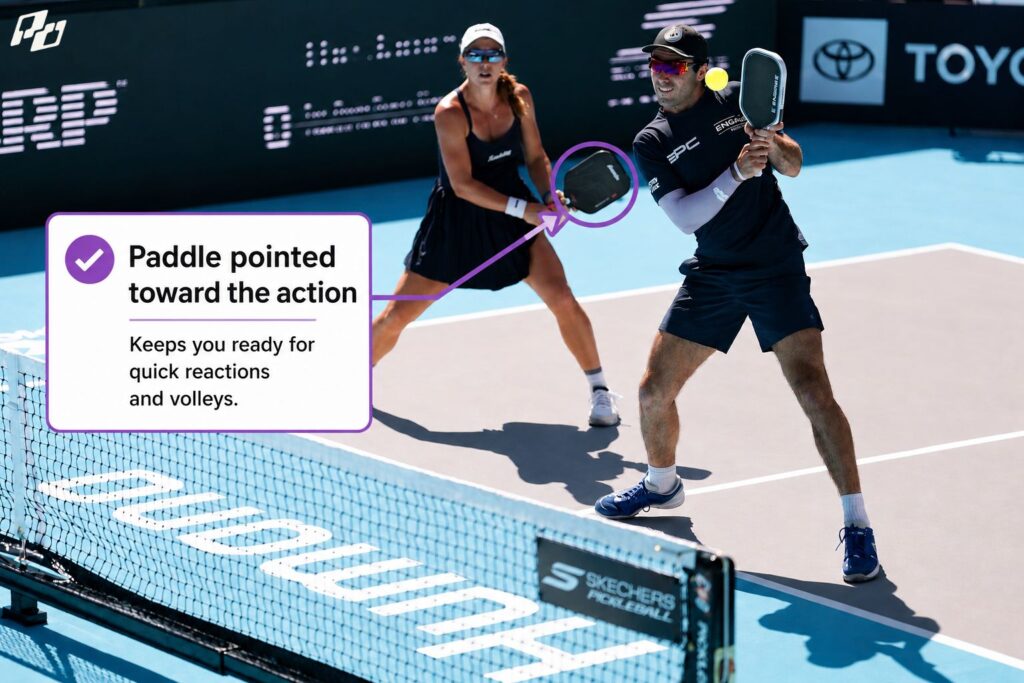
Your job is not to watch your partner battle. Your job is to be ready for the ball that escapes the battle.
Remember: “If my partner is fighting, I’m hunting the next ball.”
That keeps you from becoming a spectator at the worst possible time.
The Firefight Decision Map
Use this during games:
| What You See | What It Means | Best Response |
|---|---|---|
| Opponent attacks from low | Ball may rise into your counter zone | Paddle ready, look to counter down |
| Opponent contacts above net height | Their attack may be stronger | Protect body, shorten motion |
| Your speedup sits up | Counter is coming hard | Reset paddle immediately |
| Ball comes at your hip | You are being jammed | Compact block or body counter |
| Ball is below your paddle window | Do not force offense | Reset |
| Opponent overcommits forward | Feet or behind them may open | Counter with target, not power |
The goal is not to memorize the table. The goal is to stop treating every fast ball the same.
A Better Drill Than Random Hand Battles
Most players “practice hands” by standing at the kitchen and blasting balls until someone misses.
That is fun.
It is not enough.
Try this instead:
Round 1: Speedup + Counter
One player feeds a slightly attackable dink. The attacker speeds up. The defender counters. Then stop.
Focus on the first two balls, not chaos.
Round 2: Counter + Reset Choice
Same drill, but the defender must choose: counter if balanced, reset if jammed.
Round 3: Add the Off-Ball Player
Play doubles. One pair starts the speedup. The off-ball player must shade, stay ready, and clean up any redirected ball.
Round 4: Live Point
Now play it out.
This progression teaches the real skill: not just hitting fast, but recognizing when to counter, when to reset, and where the next ball is likely going.
Common Firefight Mistakes
⮕ Starting the speedup and admiring it.
The counter is coming. Your paddle should already be back.
⮕ Swinging bigger when the ball gets faster.
Fast exchanges reward smaller motions, not bigger ones.
⮕ Countering from below net height.
That is how pop-ups happen. Reset instead.
⮕ Standing too tall.
High posture makes body shots harder to manage.
⮕ Letting the off-ball player nap.
Many firefights are won by the player who was not hit first.
⮕ Aiming at open court too early.
In fast exchanges, the body target is often safer than the sideline.
The Real Goal Is to Make Firefights Feel Slower
The best hands players rarely have superhuman reflexes. What they do have is better preparation:
✓ Earlier contact.
✓ A better paddle window.
✓ A slightly backhand-favored ready position.
✓ A stable paddle face.
✓ Compact movements.
✓ Quick reloads.
✓ Smart decisions about when to counter and when to reset.
Those habits do not actually slow the ball down.
They make the rally feel slower, because your paddle is already where it needs to be before the next shot arrives.
That is the real secret behind great firefights.