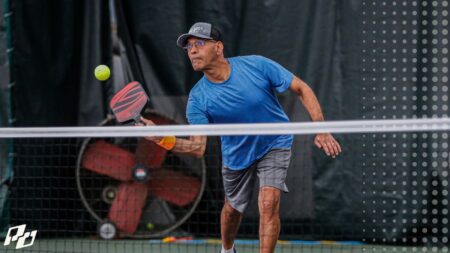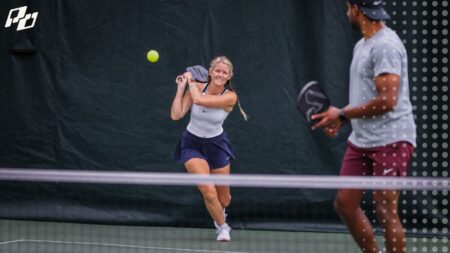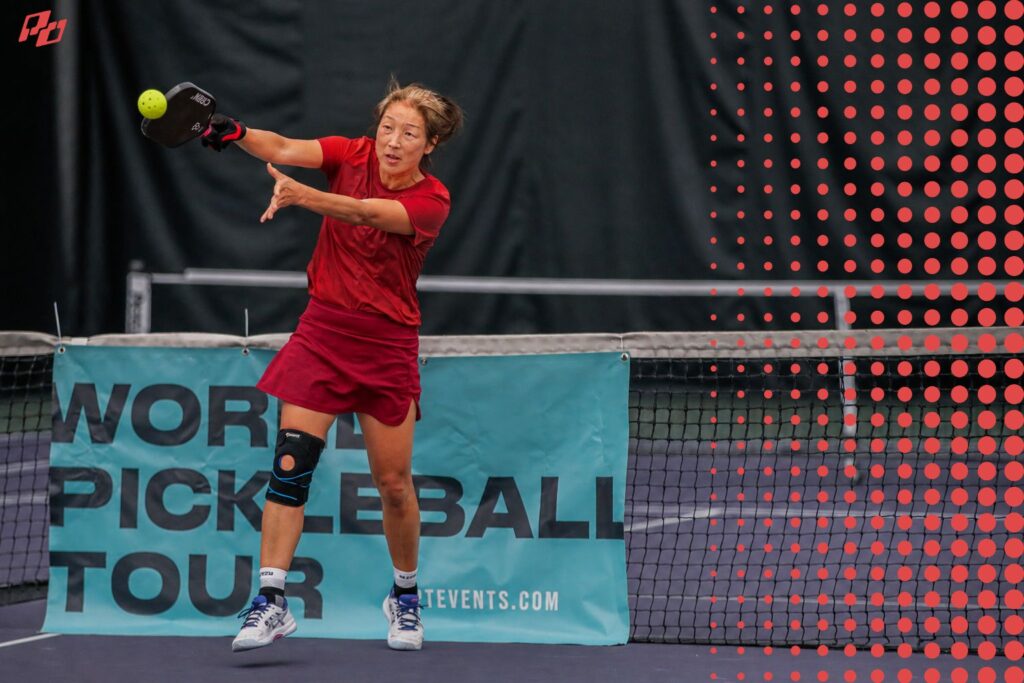
Rec players often miss an easy ball after a difficult shot because their balance, spacing, and timing haven’t fully recovered. Fast exchanges force reaction; slower sitters require you to reset, re-read the ball, and create the contact point yourself. Think: recover, read, hit.
You know the rally.
Someone fires a ball at your feet. You somehow dig it out and keep the point alive. Then they leave the next ball sitting up.
Slower. Higher. Easier.
And you dump it into the net.
It feels ridiculous—but those two shots are connected.
The first ball may have crossed the net, but your body may still be recovering from it when the second ball arrives.
That creates what I think of as recovery debt: your feet, balance, paddle position, and spacing haven’t fully reset yet.
So the real question isn’t: “How did I miss such an easy ball?”
It’s: “Was I actually ready to hit it?”
That one change in thinking explains a lot of those maddening misses.
The Hard Shot Leaves a “Recovery Debt”
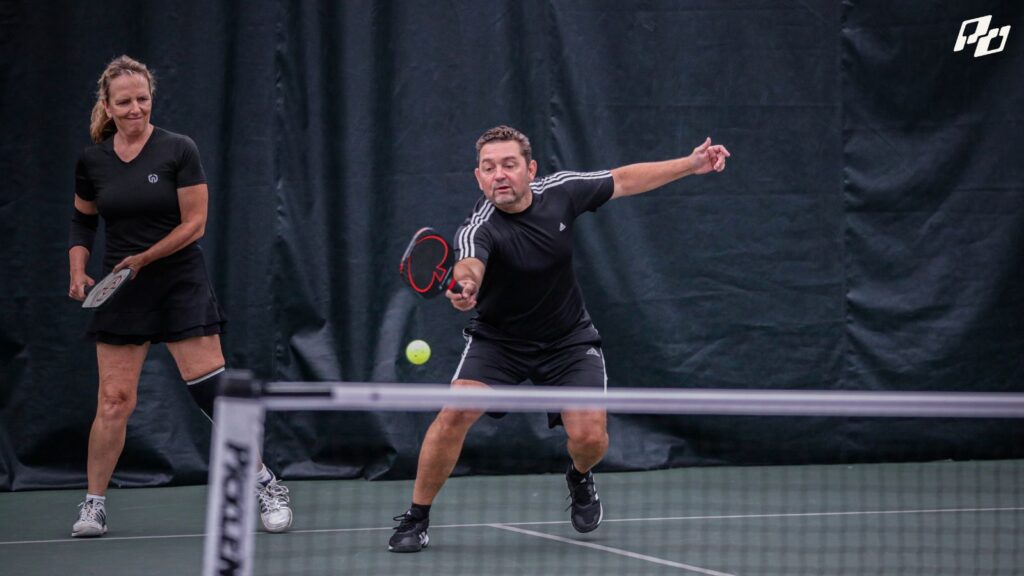
Imagine you lunge wide for a reset.
You make it.
Great shot.
But while the ball is traveling back across the net, you still have some work to do.
Your feet have to get back underneath you.
Your chest has to stop drifting.
Your paddle has to return.
Your weight has to become usable again.
That is your recovery debt.
If the opponent gives you enough time, you pay it off and everything feels normal. But sometimes they float the next ball almost immediately. Now your brain sees an attacking opportunity while your body is still recovering from defense.
Your brain says: “Go.”
Your body is still saying: “Hang on.”
That is why the second ball can feel strangely awkward even though it is objectively slower and higher.
The important question is no longer: Was that ball easy?
It’s: How ready was I when it arrived?
That changes the whole way you diagnose the miss.
Fast Balls Borrow Your Timing for You
There’s another weird reason some rec players look better against pace than against a sitter. A fast ball does a lot of the timing work for you.
It arrives quickly.
Your contact window is obvious.
Your swing stays compact because it has to.
You don’t have much time to interfere.
- Ball comes.
- Paddle meets ball.
- Done.
Then a slow ball arrives. Now you have to create the timing.
You have to decide how far to move.
When to stop.
How long to wait.
Where the ball will enter your ideal contact window.
And that is where good-looking opportunities get butchered.
The player drifts forward.
Then a little farther.
Then realizes the ball hasn’t arrived yet.
Now they’re too close.
Or they plant early, watch the ball continue to travel, and end up reaching.
So here’s an aha moment worth stealing: fast balls test reaction; slow balls test spacing.
That’s why the “easy” ball sometimes exposes you more than the hard one.
Why Sitters Make You Overplay
The hard ball usually gives you almost no decision.
Reset it.
Block it.
Survive.
The sitter is different. Suddenly you see:
- the sideline
- the middle
- the opponent’s feet
- the angle
- the body
- the winner
And now the supposedly easy shot has six possible answers. That’s a hidden problem. The more attackable the ball looks, the more rec players often try to upgrade the result.
A ball that only needed a clean attack suddenly becomes: “I should finish this.”
So the swing grows.
The target shrinks.
The body starts rotating harder.
And the easy ball becomes mechanically harder than the difficult one you just survived. The better player often does something much less exciting.
They see the sitter and think: what is the easiest strong ball I can hit from the position I’m actually in?
Not the position they wish they were in.
The Shot After the Miracle Should Start With Your Feet
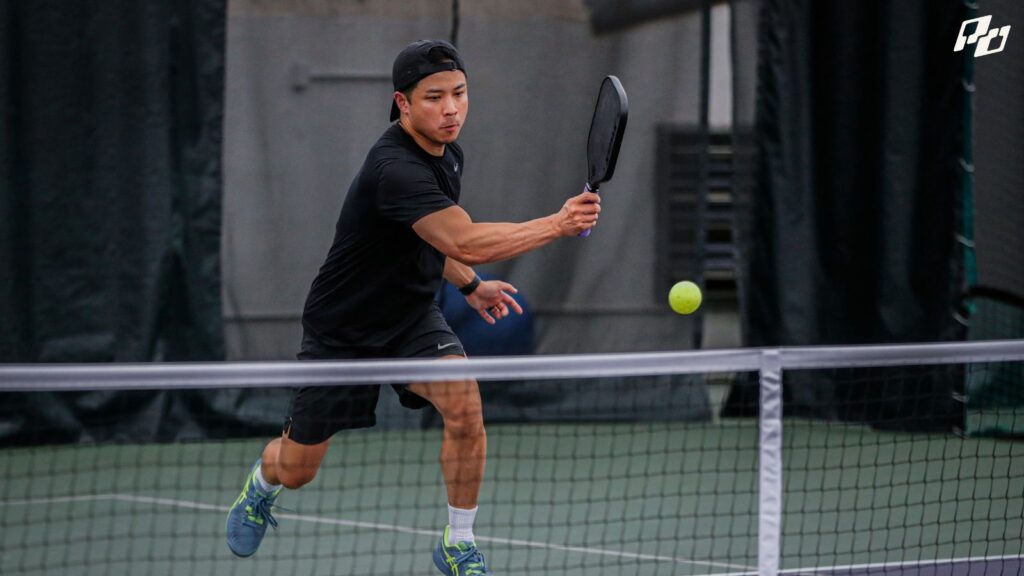
Here’s the habit I’d want rec players to build. The instant you make a difficult defensive shot, don’t watch to see whether it was good. Use the ball’s flight time to pay off the recovery debt.
- Get underneath yourself.
- Bring the paddle back.
- Re-center your weight.
- Then read what comes next.
That creates a much better sequence: survive → recover → read → attack
Most ugly sitter misses happen because the sequence becomes: survive → watch → see popup → rush
The difference may only be half a second. But at the kitchen, half a second is enormous.
Train Ball 2, Not Ball 1
Here’s a better drill because it trains the actual problem. Have a partner feed you two balls.
Ball 1 should force an uncomfortable defensive contact: low, wide, at your feet, or slightly behind your ideal position. Ball 2 should be slower and attackable.
Here’s the rule: Ball 1 does not count. You only score if you make Ball 2 cleanly.
Now something interesting happens.
You stop celebrating the great reset.
You start caring about what happens after the reset.
You notice whether your feet recovered.
You notice whether you ran into the sitter.
You notice whether you were actually balanced enough to attack aggressively.
That’s the skill rallies demand and normal drills often miss.
You’re not practicing a reset.
You’re not practicing a putaway.
You’re practicing the transition between them.
Survive → Recover → Read → Attack
After the difficult shot, try: recover, read, hit.
- Recover: Get your body back underneath you.
- Read: Treat the next ball as a completely new problem.
- Hit: Use the amount of offense your position actually supports.
That’s it.
Because the real reason you miss the easy ball after the hard one usually isn’t that you suddenly forgot how to hit a pickleball.
You just arrived at Ball 2 carrying too much of Ball 1 with you. And once you start seeing that, those ridiculous misses stop looking quite so ridiculous.