
Ben Johns’ family used to play football every Thanksgiving. In 2024, his mom decided too many of them had hands too valuable to risk and switched the game to pickleball. Johns told pickleball.com that about a dozen of them would split into two teams of six and rotate. One house rule: “We’re playing doubles, and the boys have to play lefty.”
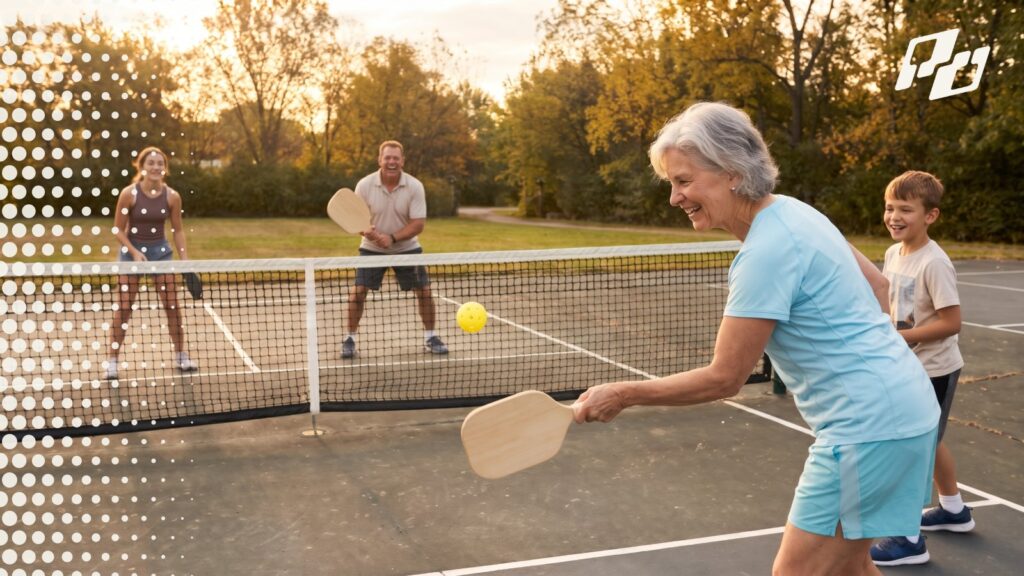
Most families don’t have world-class hands to protect. Yours might have a 4.0 cousin, a grandma who plays twice a week and a nine-year-old who just picked up a paddle. Here’s how to make that a real tournament.
Our quick recommendation…
Match the format to your headcount, build every team with one stronger and one newer player, and handicap your best players instead of asking beginners to play up. Keep games short so nobody sits for long. Everything below is our suggestion for a friendly family game, not official rules, so bend it to fit your crew.
Formats by headcount
4 or 5 players: rotate partners
Play short games to 7 and switch partners after every game, so everyone plays with everyone. With five, one person sits each game and comes back in for the next one. Each player keeps their own running point total, and the highest total wins.
6 to 8 players: fixed teams, round robin
Split into teams of two, pairing your strongest player with your newest. Every team plays every other team once, in games to 7 or 9. With eight players, that’s four teams and six games, which fits one court and one afternoon.
9 or more: two big teams
Borrow the Johns family’s setup of two teams that rotate players. Each game, each side sends out a new doubles pair. Score it like a match: every game won is a point for the team. Let each captain set the order, and make sure everyone plays before anyone plays twice.
Setting up on a driveway or in a gym? Our guide to pickleball court dimensions has the measurements for taping lines.
Handicaps that keep it fair
A good handicap slows your best players down. It doesn’t ask your newest player to play up. Pick one or two:
- Off hand only. The Johns family rule. Strong players hit with their non-dominant hand. For a look at how that plays out at the top level, see how Ben Johns started hitting lefty forehands at Worlds.
- A head start. The team with the newer players starts a game to 11 with 3 or 4 points. Adjust it between games until the scores get close.
- No attacking the newest player. Strong players can’t drive, speed up or smash at the youngest or newest player on the other side. Everything to them stays soft.
- Two bounces for kids. Young kids can let the ball bounce twice before they hit it.
- An easier serve. Kids and beginners get two tries on every serve.
Playing with older relatives? Read our look at pickleball falls and ER visits before game day. If it’s a young player’s first time, start with our tips for introducing kids to pickleball.
Between games, or for the youngest players, try the games in our pickleball drills for the whole family. For snacks, prizes and a trophy worth fighting over, see our pickleball party ideas.
Quick answers
How do you make pickleball fair when skill levels don’t match?
Put one stronger and one newer player on each team, then handicap the best players: off hand only, a few points’ head start for the other team, or no attacking the newest player. These are our suggestions, not official rules.
What’s the best format for a family pickleball tournament?
It depends on how many people play. Rotate partners with 4 or 5 players, run a round robin of fixed teams with 6 to 8, and split into two big teams that rotate pairs with 9 or more.
Can young kids play pickleball with adults?
Yes, with a few house rules. Let young kids take two bounces, give them two tries on the serve and keep the hard shots away from them.
Are these official pickleball rules?
No. The formats and handicaps here are our suggestions for friendly family games. Change them to fit your group.