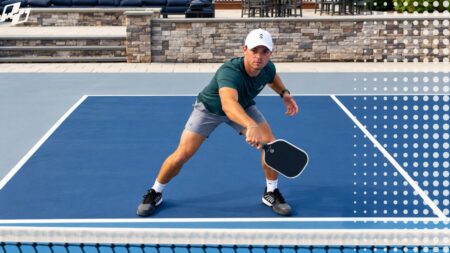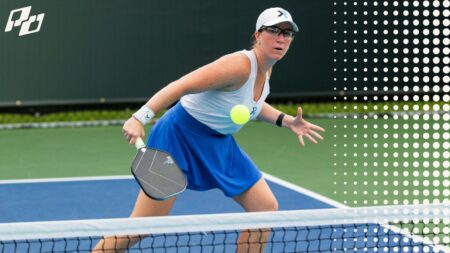


Gabriel Tardio has become one of pickleball’s most electrifying young talents, and his signature backhand flick is redefining right-side play in doubles.
This compact, explosive shot allows him to counter aggressive attacks with incredible speed and precision, often catching opponents completely off guard.
At just 19 years old, this Bolivian up-and-comer has already earned the attention of the sport’s biggest names, most notably Ben Johns, who made Tardio his “first call” when choosing a new doubles partner for 2025.
Let’s take a look at what makes his playing style so special.
From Bolivia to Stardom
Gabriel Tardio’s pickleball journey began at age 14 when his grandfather introduced him to the sport in Bolivia. Together, they built two courts at their home, laying the foundation for what would become an incredible rise in professional pickleball.
After moving to Jupiter, Florida in September 2019 to pursue tennis, the COVID-19 pandemic changed everything when tennis academies closed in March 2020.
What started as a way to stay active during lockdown quickly transformed into a burning passion for pickleball.
Gabriel Tardio – Key Career Highlights (as of June 2025)
| Milestone | Details |
|---|---|
| Age Turned Pro | 17 years old |
| 2024 Medal Count | 7 in Men’s Doubles (4 Gold, 3 Silver), 2 in Mixed Doubles (1 Gold, 1 Silver) |
| Career Matches Played | 476 |
| Doubles Win-Loss Record | 62–12 in the past 12 months |
| Longest Win Streak | 14 matches |
| PPA Tour Rankings | 5th in Men’s Doubles, 6th in Mixed Doubles |
How Tardio’s Approach is Breaking Traditional Doubles Strategy
In pickleball doubles, the right side is traditionally viewed as a supportive role, where being calm, steady, and predictable is the name of the game. The right-side player would cover their 30% of the court, allowing the dominant left-side player to create the offense and take the lead.
Gabriel Tardio is single-handedly changing that philosophy with:
- Aggressive Court Coverage: Tardio takes up significantly more court space from the right side than almost anyone else in the sport. He even straddles the middle line sometimes, forcing opponents into impossible situations
- Revolutionary Court Split: His backhand flick has been so effective that he and Ben Johns now split the court about 50/50, which is a dramatic departure from traditional right-side positioning
- Tactical Control: His backhand flick creates a strategic chess match of sorts. He can bait opponents into attacking the middle (where he punishes them with the flick) or force them to go down the line to his explosive forehand. This gives him control over multiple areas of the court
- Offensive Mindset: Rather than just being the “setup guy,” Tardio has developed an aggressive approach that forces opponents to completely rethink their strategies against right-side players
Watch highlights from Gabriel Tardio and Ben Johns playing doubles:
Technical Breakdown of Tardio’s Backhand Flick
Tardio’s signature shot—the backhand flick—is a lightning-fast, twitchy motion that generates effortless spin and power. The compact motion is similar to throwing a frisbee with a small, explosive wrist action.
Unlike traditional backhand volleys that rely on larger swing motions, the flick is all about efficiency and surprise.
The amount of pace Tardio can create from this flicking motion is incredible; there aren’t many players in the world who can do it quite like he can.
Grip and Setup
Tardio uses a continental grip with a subtle twist: he rotates his wrist slightly so the paddle face angles downward when he makes contact.
This grip adjustment is key for directing the ball precisely toward his opponent’s feet, making their return extremely difficult.
The Ready Position
Tardio’s ready position is also unique: he drops lower than most players when anticipating an attack. By starting with his paddle lower than normal, he can quickly bring it up through the ball with the paddle face already angled downward.
This low ready position serves multiple purposes:
- Naturally angles the paddle face downward for offensive shots
- Maintains ability to defend against attacks to either side
- Creates optimal leverage for the flick motion
Body Positioning and Movement
Tardio emphasizes staying low with his shoulders tucked, which enables him to cover both backhand and forehand sides quickly.
This positioning prevents him from getting caught in an awkward “chicken wing” position where his arm is too close to his body–a common mistake that limits reaction time and shot options.
The Execution
The key to Tardio’s backhand flick is keeping the motion compact and in front of his body. Rather than taking a full backswing, he keeps the paddle positioned forward and uses a short, explosive motion to generate power.
This compact approach allows for:
- Quicker reactions and more consistent contact
- Better disguise and deception
- More control over ball placement
Watch Gabriel Tardio’s tips for backhand counters:
Tips for Learning the Backhand Flick
Here’s a plan for rec players looking to incorporate elements of Tardio’s backhand flick into their game.
Wall Drills
Tardio recommends wall practice to develop the feeling of punching the ball forward instead of taking full swings. These drills help players develop:
- Faster hands and better anticipation
- Compact motion essential to the flick
- Proper contact point timing
- Controlled power generation
Strength and Conditioning
Given the wrist and forearm demands of the flick motion, off-court conditioning is essential:
- Wrist Flexibility: Daily wrist stretches and mobility work
- Forearm Strength: Resistance exercises for grip and forearm endurance
- Core Stability: Better balance during low ready positions
- Reaction Training: Agility ladder and cone drills for quick movements
Progressive Development
Most recreational players should master basic volley techniques before attempting the advanced flick motion:
- Foundation First: Consistent continental grip volleys
- Position Work: Comfort with low ready position
- Compact Development: Small swing development
- Integration: Gradual addition of wrist flick motion
Who Benefits Most From This Shot?
For Beginners
Focus on fundamentals first! Work on proper grip and basic weight transfer before worrying about generating maximum power.
Practice standard volleys until contact becomes second nature.
For Intermediate Players
Start implementing controlled acceleration while maintaining accuracy. Practice recognizing which balls are perfect for flick opportunities versus which ones should be handled with a softer touch.
For Advanced Players
Work on making your preparation look identical for both soft shots and attacks. Develop comfort attacking balls from various heights and positions on the court.
The Future of Right-Side Play
Gabriel Tardio’s personal goal is to become “the best right side player in the world!”
Given his rapid rise in the game and the attention he’s getting from established pros, like Ben Johns, that goal seems well within reach.
But Tardio’s success is part of a broader evolution in pickleball, where traditional roles are being challenged by players willing to push boundaries.
As the sport continues to grow and attract young talent like Tardio, we can expect to see even more innovative shots and strategies emerge. The backhand flick may be Gabriel Tardio’s signature shot today, but it’s likely just the beginning of his impact on professional pickleball.