
Most rec players assume the hardest ball to reach in pickleball is simply the widest one.
That seems logical. If you pull someone far off the court, they have to run more, so it must be harder to reach.
But in doubles, that’s usually not the ball that causes the most problems.
The toughest balls aren’t always the ones that make opponents move the farthest. They’re the ones that force players into awkward contact points, bad leverage, or late decisions with their partner.
In other words, the hardest ball to reach cleanly is usually the one that jams mechanics, not the one that travels the farthest.
For most recreational doubles players, that typically means three areas of the court:
- The inside foot during dink exchanges
- The paddle-side hip or shoulder during speed-ups
- The middle seam when you want confusion between partners
Let’s break down why these spots work so well—and how you can use them in real games.
Why the Widest Ball Isn’t Always the Hardest
A ball can be far away and still be easy to handle. That’s the key idea many players miss.
When someone hits a very wide ball, the situation is usually obvious. The defender clearly sees the shot coming, knows it’s their ball, and understands they must move quickly to reach it.
Yes, it requires speed, but it often doesn’t require a complicated decision.
The shots that cause more trouble are the ones that:
- crowd the player’s body
- force awkward footwork
- limit paddle angles
- create hesitation between partners
Those situations make it difficult not just to reach the ball—but to play it well. And that’s where the real advantage comes from.
1. The Inside-Foot Ball: The Toughest Dink to Handle
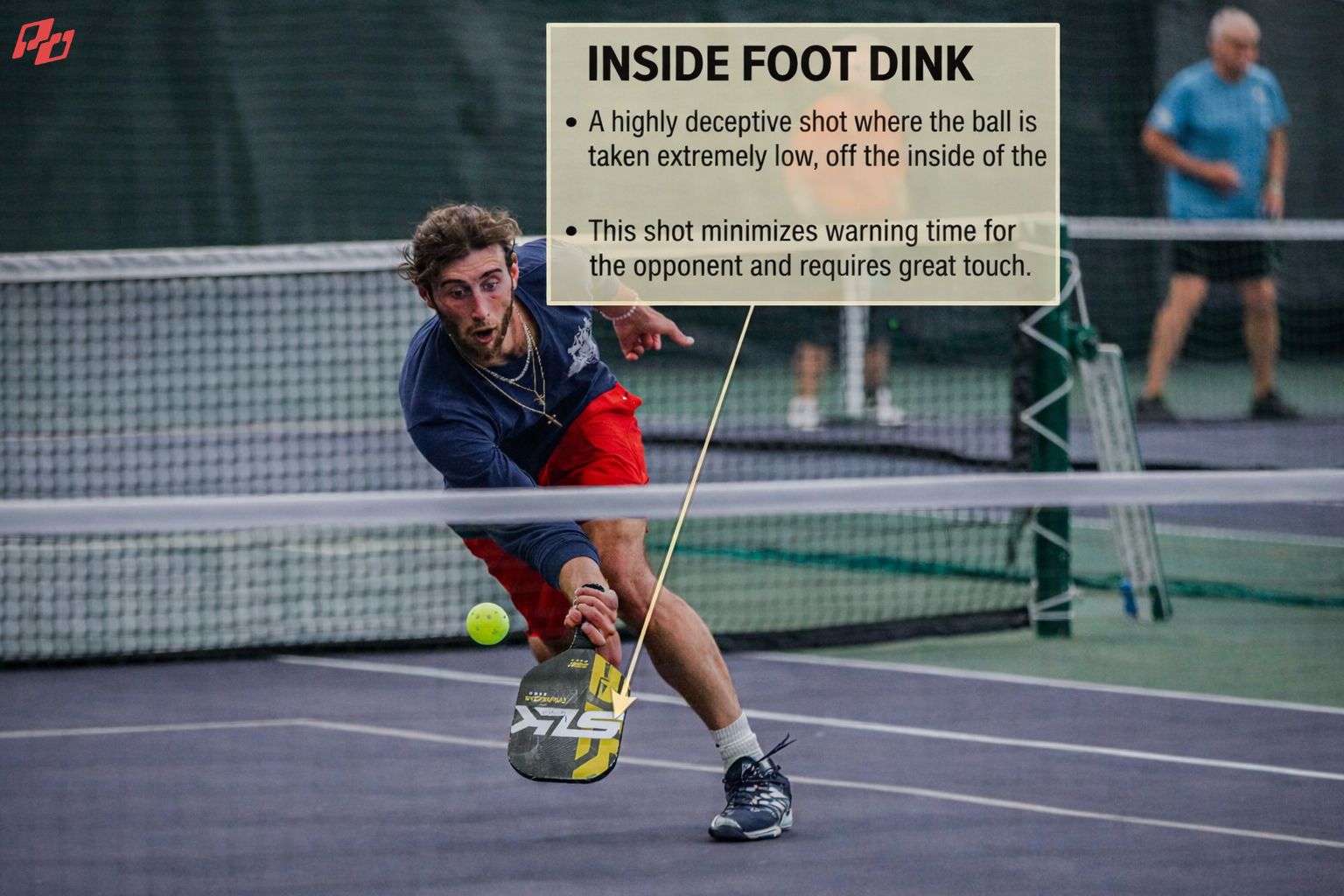
In kitchen exchanges, one of the most uncomfortable balls for most rec players is the inside-foot dink.
✗ Not the dramatic sideline dink.
✗ Not the extreme crosscourt angle.
✔ The inside foot.
That’s the foot closest to the middle line of the court.
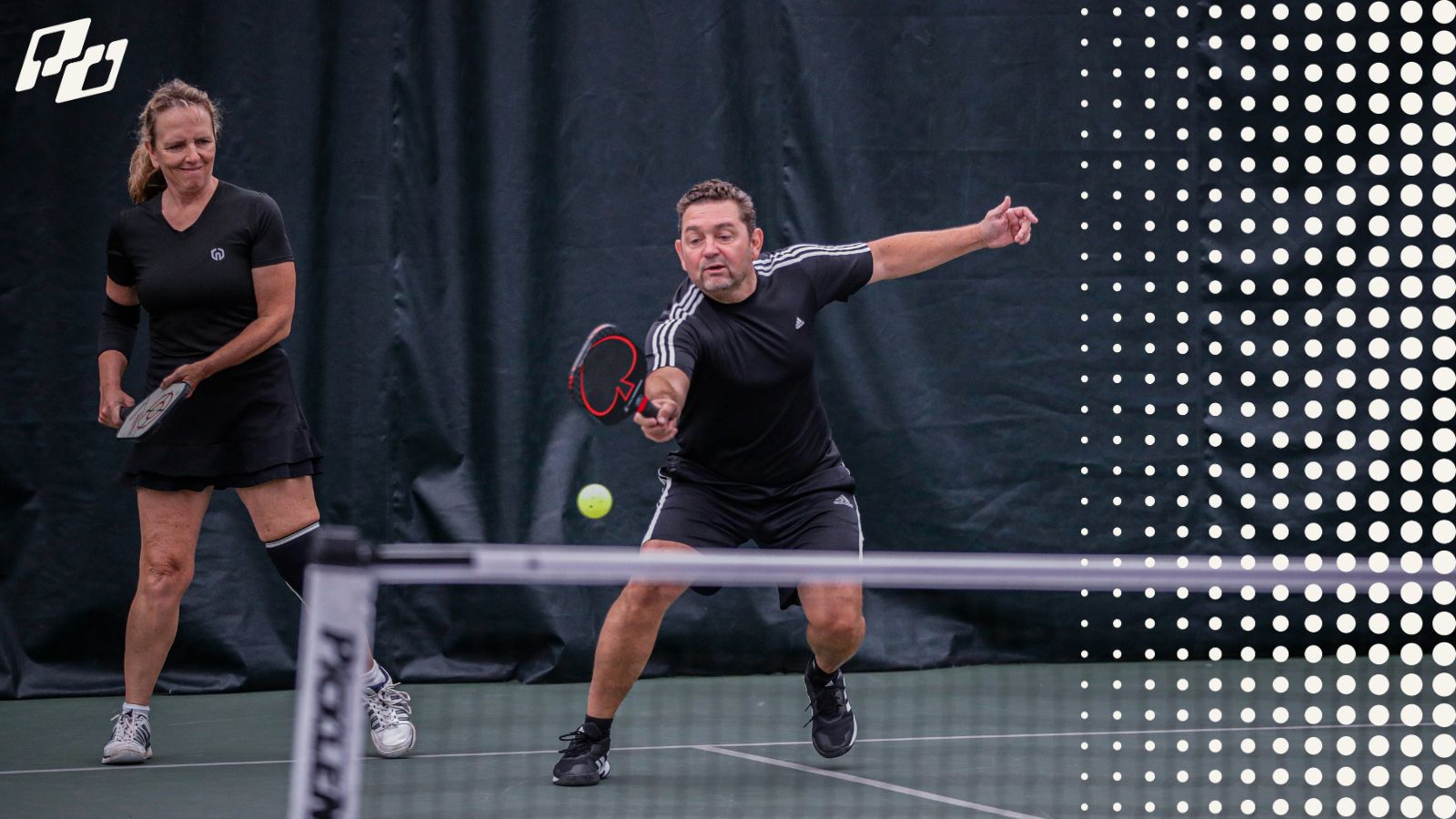
When the ball lands near that spot, it creates a very awkward contact point.
Why?
Because the paddle and body get crowded together. The defender often struggles to:
- get the paddle underneath the ball
- maintain a clean contact point
- control the direction of the shot
Instead of extending toward the ball naturally, the player ends up jammed close to their body, which makes lifting the ball safely over the net much harder.
That’s why these shots often produce:
- pop-ups
- floated dinks
- weak middle balls
And those are exactly the replies you want.
Scenario: Crosscourt Dink Pressure
Imagine you’re in a crosscourt dink rally. Instead of immediately trying to hit a sharp angle, you first move your opponent slightly wider a few times.
Then on the next dink, you aim just inside their middle foot. Suddenly they’re uncomfortable.
They’re not sure whether to step around it or reach awkwardly. The paddle angle becomes tight. The contact point is too close to their body.
Even though they technically reach the ball, the quality of the shot drops dramatically.
That’s the difference between reaching the ball and reaching it cleanly.
2. In Attacks, the Hardest Ball Is Usually the Paddle-Side Hip
Now let’s talk about speed-ups.
If you watch experienced players, you’ll notice something interesting. Many attacks are not aimed for open corners.
Instead, they target the opponent directly in front of them—specifically around the paddle-side hip. This is one of the most difficult areas to defend.
The reason is simple: it creates a decision problem.
At the paddle-side hip, the defender is caught between forehand and backhand mechanics. The paddle is already in that area, but the body is also in the way.
That means the defender often has to decide in a split second whether to:
- slide the paddle across the body
- switch to the other side
- step away from the ball
Those micro-decisions slow reactions and produce weaker counters. The result is often a soft block or a popped-up ball.
Scenario: Kitchen Speed-Up Opportunity
You’re at the kitchen line and your opponent leaves a ball slightly too high. Many players try to blast the ball into open space.
But a smarter play is to attack straight ahead toward the paddle-side hip.
That shot:
- shortens reaction time
- jams the paddle path
- limits counterattack angles
Even if the defender touches the ball, the reply is usually weak.
When Defenders Adjust: Move Higher
Once you attack the hip a few times, good players start protecting that area. That’s when another target becomes effective: the shoulder or armpit area.
If a defender drops their paddle lower to protect the hip, the upper body becomes exposed.
A quick attack toward the shoulder forces them to lift the paddle rapidly, often producing a rushed or floating reply.
Good attackers constantly adjust their targets based on where the defender’s paddle starts.
3. The Middle Seam: The Hardest Ball Mentally
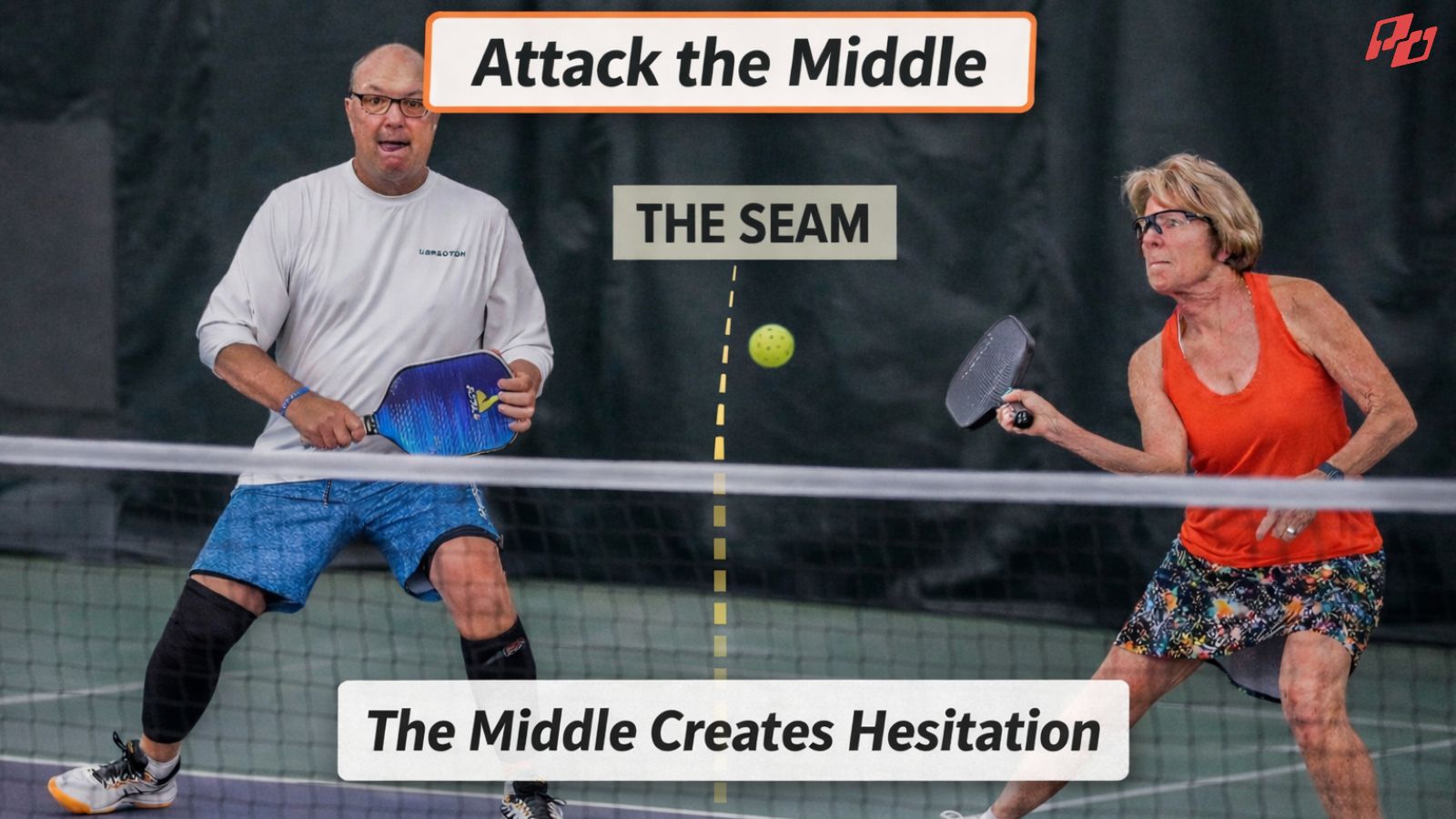
Now let’s talk about the middle.
The middle seam isn’t always the hardest ball to reach physically. But it might be the hardest ball to claim confidently.
In doubles, the middle introduces uncertainty. Both players might think:
- “Is this mine?”
- “Is my partner taking it?”
- “Should I step across?”
That hesitation—even for half a second—can be enough to produce a mistake. The middle also reduces angles, which often makes it safer for the attacking team.
That’s why experienced players frequently aim for the seam when both opponents look comfortable.
Scenario: Neutral Kitchen Rally
Both opponents are solid at the kitchen line. Nothing obvious is open. Instead of forcing a risky angle, you slide a faster ball through the middle.
Now both defenders hesitate slightly. That small delay can cause:
- paddle clashes
- late reactions
- weak returns
The middle creates problems that wide shots sometimes don’t.
The Real Pattern Behind Hard-to-Reach Balls
All of these targets—inside foot, hip, shoulder, middle—share something in common. They force opponents into uncomfortable contact points.
The hardest ball to reach isn’t always the furthest one. It’s the one that makes your opponent think:
“I can get there… but I can’t hit this well.”
That’s the difference between simply retrieving a ball and defending it effectively.
Practical Aiming Cues for Rec Players
If you want simple rules to follow in real games, think like this:
During dink rallies:
→ Look for chances to crowd the inside foot.
When attacking a ball:
→ Aim first for the paddle-side hip.
If opponents start protecting the hip:
→ Move the target toward the shoulder or armpit.
When both players look comfortable:
→ Use the middle seam to create confusion.
These targets tend to produce weaker replies than simply trying to hit the sidelines.
One Mistake to Avoid
Don’t confuse smart targeting with reckless power. Many of these shots work best with controlled pace, not maximum speed.
A well-placed attack with moderate pace and spin often causes more problems than a wild swing aimed at the lines.
The goal is not to overpower your opponent. The goal is to create awkward contact and poor positioning.