
We’ve published a lot of articles about dink mechanics, kitchen strategy, and soft game control over the years.
Footwork. Contact point. Paddle angles. Court positioning.
But sometimes the biggest problems on the court aren’t advanced tactics or complicated technique. Sometimes it’s one simple mechanical mistake that shows up over and over again in recreational play.
And if you watch rec games long enough, you’ll see this one constantly: players trying to dink using their wrist instead of their shoulder.
Recently, pro player Callie Jo Smith posted a short Instagram video pointing this out, and it perfectly captures the mistake that causes thousands of pop-ups every day on pickleball courts.
Her message is simple:
“Your wrist might be the reason your dinks are popping up.”
Watch the video below:
Let’s break down why that happens, what good dink mechanics actually look like, and how you can fix it immediately.
The Hidden Problem With “Wristy” Dinks
At first glance, wrist movement might not seem like a big deal. After all, pickleball is a finesse game, right? Shouldn’t you be using your hands?
Yes — but not like that.
The issue is wrist extension — when players bend their wrist upward during the dink. This creates three major problems.
1. The Paddle Face Becomes Unstable
Your paddle face determines where the ball goes. When your wrist bends upward, the paddle face angle constantly changes during the swing.
That means your paddle might be:
- Slightly open
- Suddenly very open
- Closed at contact
Even tiny changes in paddle angle dramatically affect the trajectory of a soft shot. The result? Instead of a controlled dink that drops softly into the kitchen, the ball floats upward.
And floating balls are exactly what your opponents want.
2. Wrist Motion Creates Unpredictable Power
Your wrist is a small, fast-moving joint. That makes it excellent for quick reactions — but terrible for consistent touch shots. Small wrist movements create big changes in speed and angle.
That’s why wristy dinks often look like this:
- One dink barely clears the net
- The next pops up waist-high
- The next dies into the net
The inconsistency comes from using a high-variability joint to control a shot that requires precision.
3. Wrist Dinks Break Your Paddle Structure
Watch high-level players during dink rallies. Their paddle structure stays quiet and stable.
When players start flipping their wrist, several things happen:
- The paddle tip moves too much
- Contact point shifts backward
- Timing becomes inconsistent
That’s when dinks start feeling awkward, rushed, or out of control.
The Simpler Solution Pros Use
Callie Jo Smith’s fix is refreshingly simple:
“Think simple and stable instead:
Keep the wrist quiet.
Let your shoulder do the work.
Push through the ball with a smooth, controlled motion.”
This advice reflects a fundamental principle taught by many coaches. Dinks should be controlled by the larger joints of the body. Not the wrist.
Let’s break down what that actually means.
The Shoulder-Driven Dink
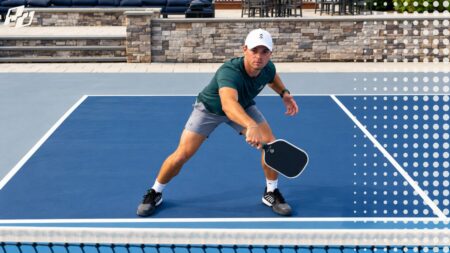
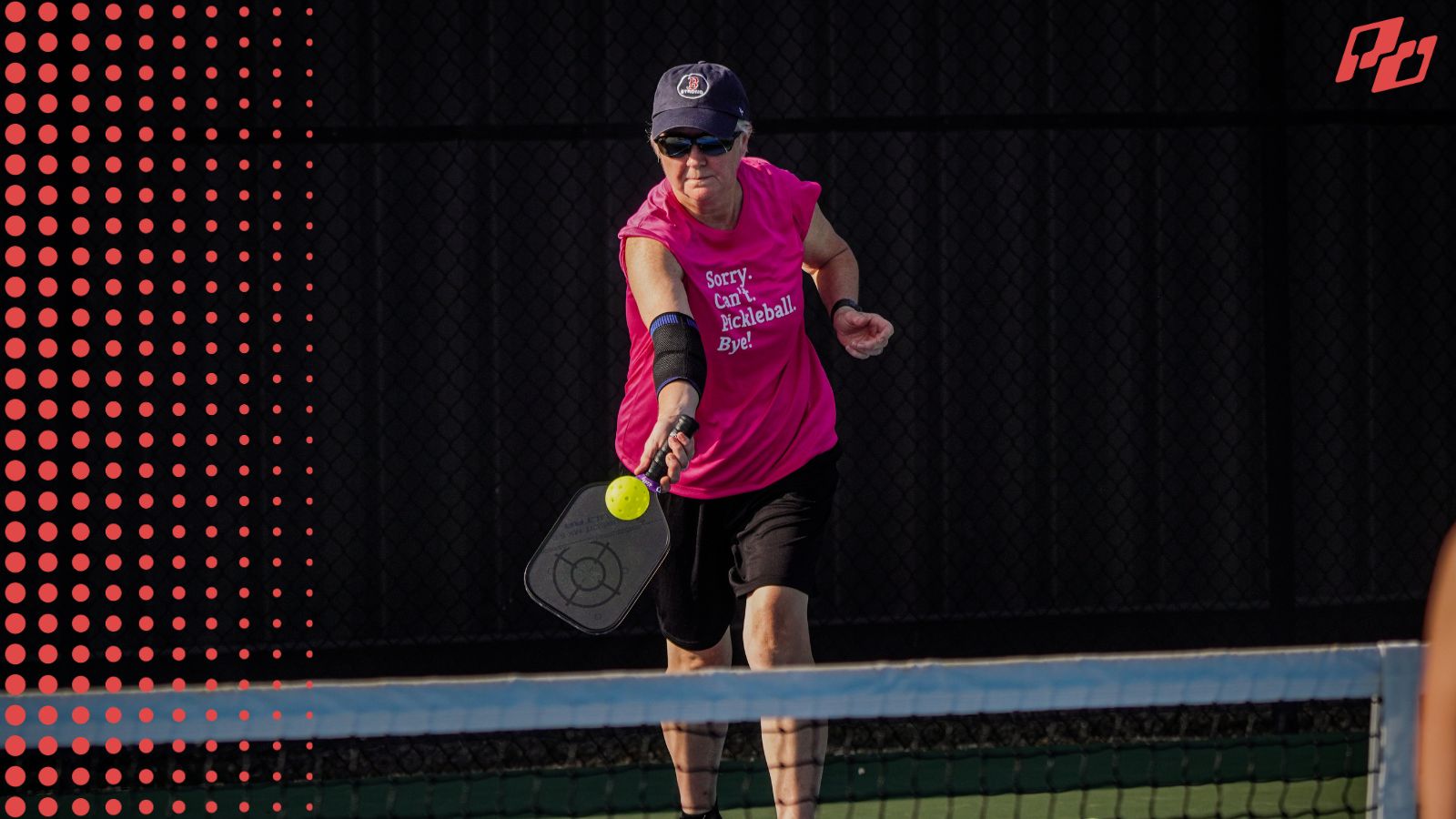
Instead of flicking the ball with your wrist, think of the dink as a small pushing motion from the shoulder and arm. The movement is subtle. But mechanically, it’s very different.
What Good Mechanics Look Like
A stable dink typically includes:
- A quiet wrist
- A slightly open paddle face
- A gentle forward push from the shoulder
- Minimal backswing
The motion should feel like guiding the ball, not flipping it.
The “Push” Cue That Helps Many Players
One cue many coaches use is: “Push the ball, don’t scoop it.”
➡️ Scooping usually means the wrist is bending.
➡️ Pushing means the paddle face stays stable while the arm moves forward.
Think of it as rolling a ball softly across a table, not lifting it upward.
The Contact Point Mistake That Makes Wristing Worse
Many wristy dinks are actually caused by late contact. When the ball gets too close to your body, players instinctively use their wrist to save the shot.
That leads to the classic pop-up dink.
Instead, aim to contact the ball:
- Slightly in front of your body
- Around knee to waist height
- With your paddle already stable
If the contact point is correct, the shoulder-driven push becomes much easier.
Popular pickleball coach Tanner Tomassi breaks down key contact and wrist-lock tips for dinks in under a minute—watch it here.
The Role of Paddle Stability
Top players often talk about paddle stability at the kitchen line. That means the paddle face stays consistent throughout the shot.
A quiet wrist helps you achieve that. In fact, many teaching pros emphasize the idea of a “locked but relaxed wrist.”
Not stiff. Just not actively bending during the shot.
This creates a predictable paddle face — which leads to predictable dinks.
How Pros Create Softness Without Using Their Wrist
Here’s the surprising part. Pro players actually use very little wrist on standard dinks. Instead, they control touch through:
- Paddle angle
- Swing length
- Shoulder movement
- Grip pressure
Grip pressure is especially important. Many coaches recommend keeping the grip around 3–4 out of 10 during dink exchanges.
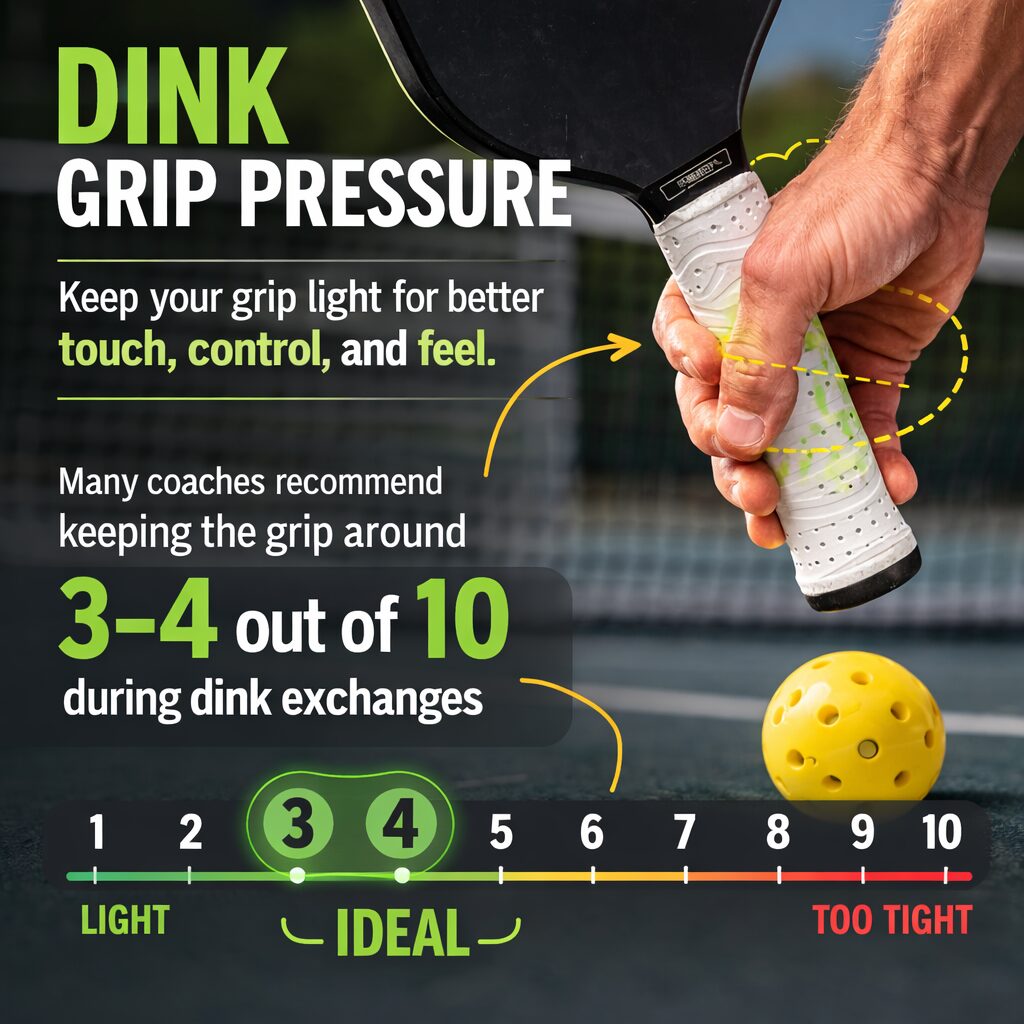
This allows the paddle to absorb the ball slightly without needing wrist manipulation.
A Simple Mental Checklist Before You Dink
Next time you’re in a kitchen rally, run through this quick checklist:
✔ Is my wrist quiet?
✔ Is my paddle face stable?
✔ Am I pushing through the ball instead of flicking it?
✔ Is my contact point in front of me?
If you answer yes to those, your dinks will immediately become more consistent and harder to attack.