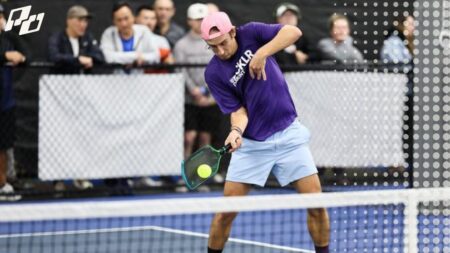
Ask ten rec players what their go-to shot is, and you’ll hear drives, lobs, and Ernes. But the quiet MVP of high-percentage pickleball isn’t flashy—it’s the middle cross-court dink.
Now, quick clarification before the purists jump in: when we say “middle cross-court dink,” we’re not talking about a simple straight-ahead dink into the center of the kitchen. We mean a cross-court dink aimed toward the middle seam—that in-between space where opponents hesitate, communication breaks down, and chaos starts quietly.
It’s not glamorous, but it’s brutally effective. It stretches the diagonal, shrinks your risk, and forces decisions that even high-level teams struggle to make cleanly.
For intermediate rec players, mastering this shot is one of the fastest ways to win more points—and lose fewer.
Why This Shot Works So Well
1. Bigger Margins = Fewer Errors
A cross-court dink travels the longest diagonal on the court, which means more margin for error and more time to adjust your contact.
The net is also lower in the center (34″) than at the posts (36″), giving you a safer path with less chance of clipping tape.
2. It Creates Instant Confusion
Balls hit toward the middle force opponents to communicate, and at the rec level, communication is often slow.
One second of hesitation—“Yours or mine?”—and your team wins the rally without ever swinging hard.
3. It Keeps You in High-Percentage Patterns
Pickleball doubles is all about controlled aggression. The middle cross-court dink keeps rallies neutral until your opponents break shape or pop one up.
You’re not giving away free points—you’re waiting for them to self-destruct.
4. It Sets Up the Shots That Win Matches
The middle cross-court dink feeds into your team’s next move—usually a roll into the body or a push to the middle seam. It’s not the finisher—it’s the feeder.
Where It Fits in Doubles Strategy
The middle cross-court dink isn’t just a safety shot—it’s a pattern builder.
- Neutralizing after speed-ups: When the pace spikes, a soft middle cross-court dink lets you reset and regain shape.
- Creating confusion on stacked teams: Drop one at the middle elbow; most teams will hesitate.
- Setting up body attacks: After two or three consistent diagonals, hold your paddle steady, wait half a beat, and redirect the next one into the opponent’s hip.
- Owning the net: The center of the net is your lowest, safest path—perfect for consistent pressure.
When (and When Not) to Use It
✅ Use it when:
- You’re stabilizing after a fast exchange.
- Opponents aren’t communicating clearly.
- You’re off balance or out of position.
- The game is getting wild and you need to reset pace.
⚠️ Be cautious when:
- You’re feeding a stacked team with a dominant forehand in the diagonal.
- You’ve become predictable and need to break pattern.
- You’re hitting high floaters instead of low, skimming dinks.
❌ Don’t buy into the myth:
“Down the middle solves the riddle” isn’t always true. If your ball sits up or you aim middle when your opponents are already covering it, you’re handing them a put-away.
Use the middle wisely, not blindly.
Mechanics That Make It Work
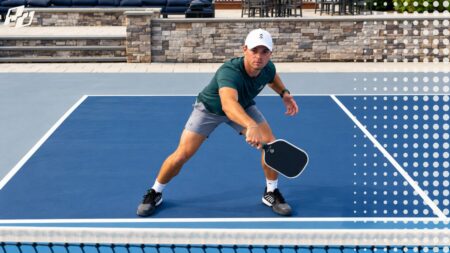
- Base and posture: Stay low, weight forward, paddle in front. No backswing—just lift with your shoulder and forearm.
- Contact point: Slightly in front, with a firm but relaxed wrist. Late contact = pop-up city.
- Height control: Aim 6–8 inches above the net tape on a descending path. Low trajectory = safe control.
- Target zones:
- Far corner of the opponent’s NVZ for depth and stretch.
- Seam between players for hesitation.
- Inside hip for awkward body contact.
Partner Coordination in Doubles
The cross-court dink is only as good as your team’s communication.
- Call the seam: Decide ahead of time—closest forehand takes it unless it’s dipping or awkward, in which case “mine” or “you” should be called early.
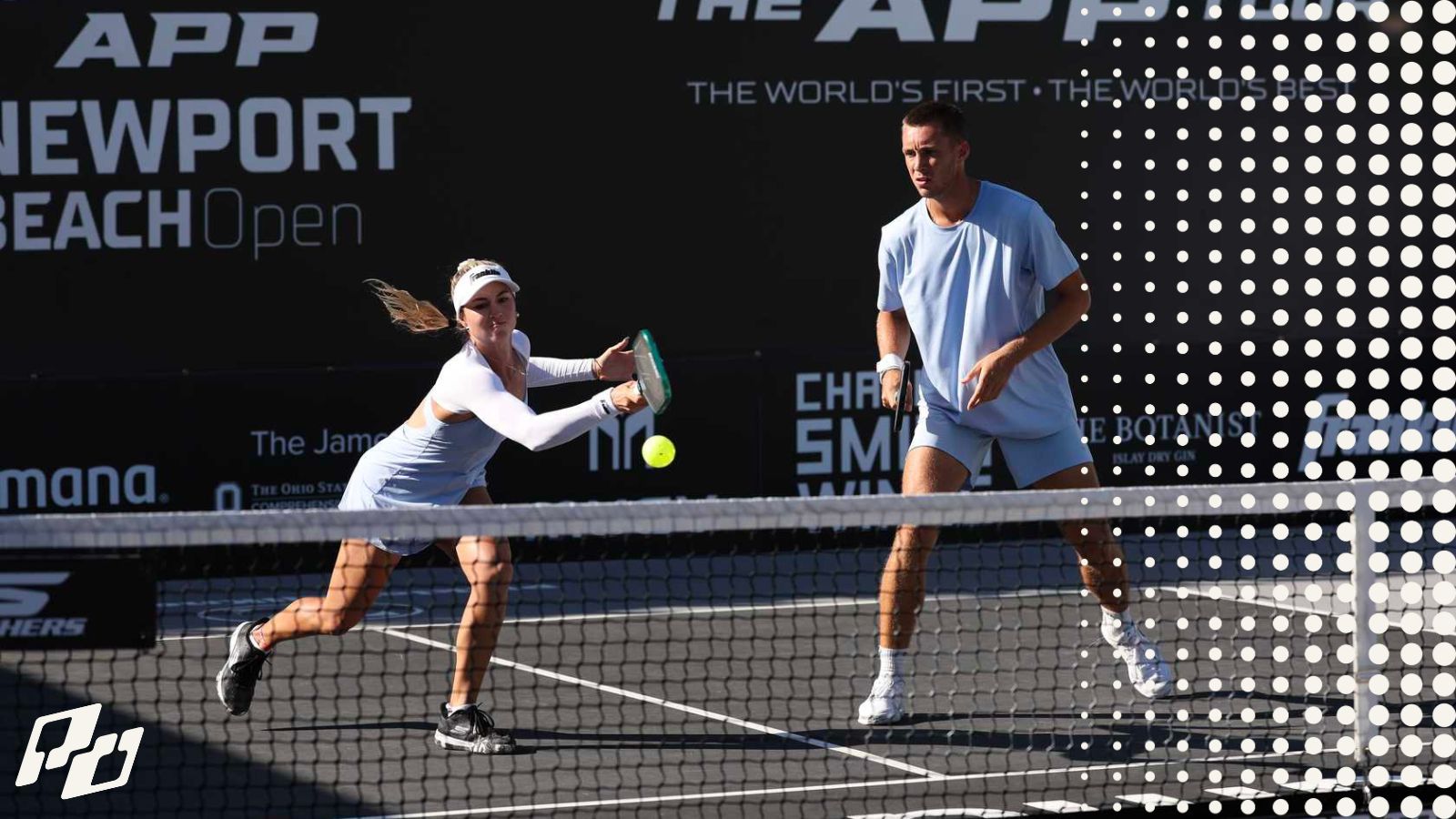
- Move with the ball: On cross-court patterns, both partners should shift slightly toward the diagonal, closing the seam and re-centering after every hit.
- Poach smartly: After two quality dinks, your partner can lean middle to anticipate a high ball. But if it doesn’t come, reset immediately—poaching is a movement, not a migration.
Common Mistakes (and Fixes)
1. Floating too high: Usually caused by wrist flicking or late contact.
Fix: Lock your wrist and use a smooth, compact shoulder motion.
2. Leaving it wide: Over-angling to the sideline reduces margin.
Fix: Aim inside the NVZ triangle or middle seam for a safer target.
3. Watching instead of moving: Staying static after a dink opens gaps.
Fix: Keep your feet active; move in sync with your shot and partner.
Drills to Groove It
1. Seam Caller Drill
Two players alternate soft dinks to the middle, calling “mine” or “you” each time. The goal: eliminate hesitation.
2. Tape-Skimmer Ladder
Hit 20 cross-court dinks that clear the net by less than a paddle’s width. Count every net clip as a penalty, every clean skim as a win.
3. Diagonal–Diagonal–Middle Pattern
Hit two controlled diagonals, then redirect the third softly into the middle hip. This builds the disguise you need for advanced-level redirection.
The Bigger Picture: Why It Wins More Rec Games
At the recreational level, most points are lost—not won. The middle cross-court dink keeps you in control of tempo and targets the weakest part of most teams: communication.
It gives you more time, safer angles, and smarter options. It turns chaos into consistency, and consistency into confidence.
If you want to win more doubles games without overhauling your swing or chasing highlight shots, start mastering the middle. It’s the shot that quietly builds rallies—and breaks opponents.
Why Smart Teams Win the Boring Way
Here’s the truth: the middle cross-court dink isn’t flashy, but it’s what separates steady, winning teams from streaky, frustrated ones. If you’ve got solid fundamentals but struggle to finish points or stay composed under pressure, this is your next level.
The shot teaches discipline, patience, and emotional control—three traits that quietly define elite doubles players. It reminds you that strategy beats speed, and that rallies are won not by the loudest hit, but by the smartest choice.
When you start using it intentionally, something shifts. You stop rushing. Your team finds rhythm. You start earning high balls instead of forcing them. And suddenly, you’re the pair everyone hates playing—because you never seem rushed, never seem risky, and never seem to miss.
It’s not glamorous. It’s not easy. But it’s the high-IQ move that makes everything else in your game work better.