
We recently listened to Collin Johns share a simple but overlooked idea about playing at the kitchen.
And here it is:
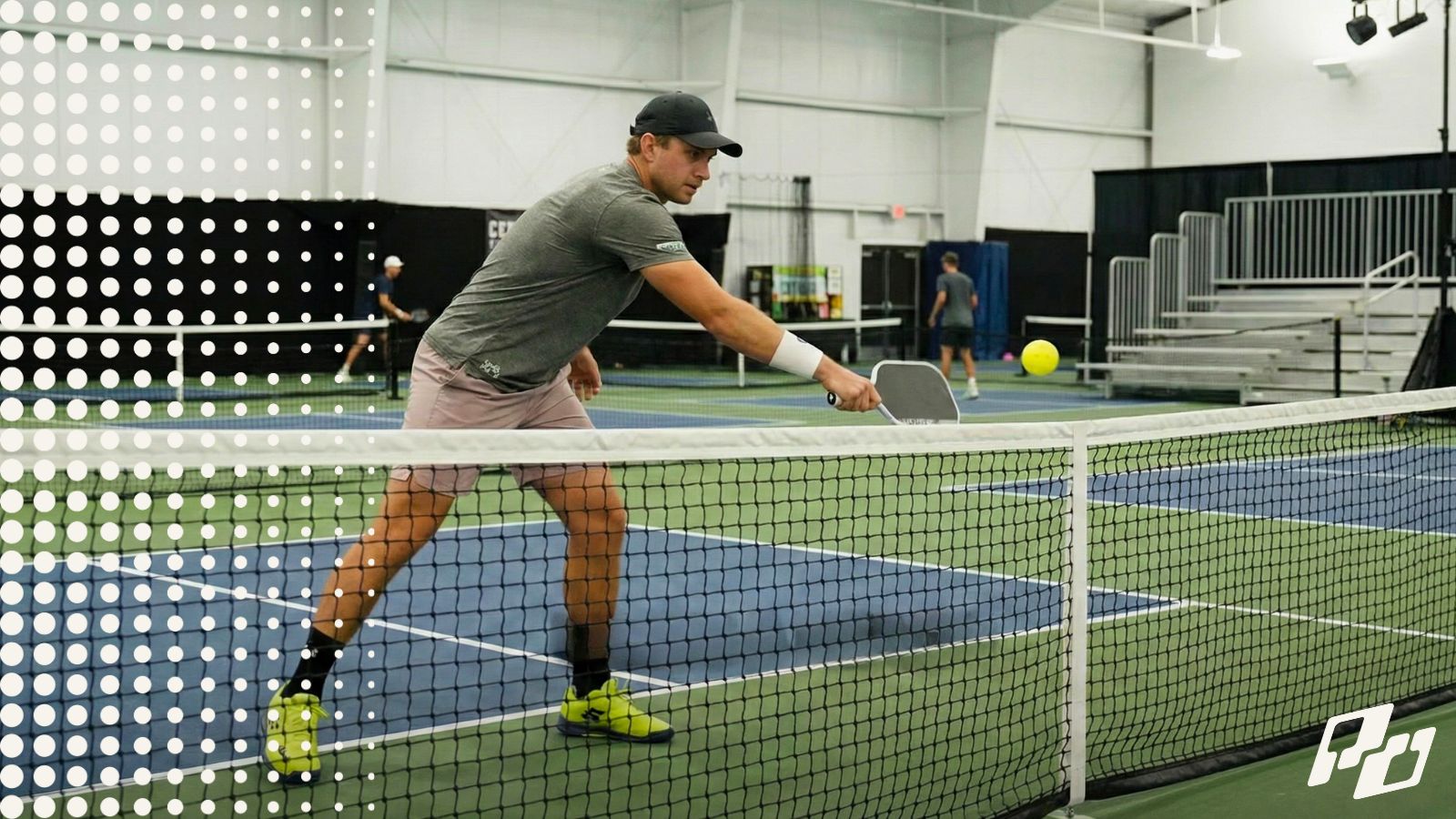
When he talks about reaching, he’s not saying “don’t move your feet.” He’s saying: don’t move more than you need to.
For recreational players, that distinction matters.
➡️ This isn’t anti-footwork.
➡️ It’s anti-wasted-footwork.
Every extra shuffle at the kitchen creates space somewhere else — and that’s exactly what opponents are trying to exploit.
At the pro level, this shows up as calm, compact volleys and half-volleys that keep players glued to the NVZ line. At the recreational level, it solves a problem most players don’t realize they have:
👉 They get moved off the kitchen because they over-move, not because the ball is out of reach.
Why this matters in doubles: once you lose the kitchen line, you don’t just lose position — you usually lose the next decision too.
Most rec players lose the kitchen like this:
- they take a big shuffle for a ball they could’ve reached
- that step opens space
- the next ball goes behind them
- now they’re scrambling or backing up
Reaching efficiently is how you stop that chain reaction before it starts.
What “Reaching” Actually Means (In Rec-Player Terms)
Reaching does not mean:
- lunging wildly
- locking your arm straight
- leaning so far you lose balance
Key clarification: if your chest drifts forward or sideways past your toes, you’ve gone too far. Reaching should feel boring, not heroic.
What Collin is describing is controlled extension — keeping your base stable while letting your arm and paddle do more of the work.
That usually shows up as:
- compact forehand/backhand volleys with a quiet body
- soft half-volleys taken slightly in front of your feet
- minimal weight shift instead of big lateral steps
Practical cue: if your feet are louder than your paddle, you’re probably moving too much.
The goal isn’t to win the point. The goal is to not give ground.
Why This Is Especially Powerful for Rec Players (Not Just Pros)
Collin specifically mentions players “who don’t move particularly well,” and this is where rec players should really lean in.
At the recreational level:
- mobility varies wildly
- reaction time is inconsistent
- footwork under pressure breaks down fast
Context most rec players miss: your opponent doesn’t need to hit a great shot to move you — they just need you to overreact.
Reaching helps because it:
- reduces how often you have to reset your feet
- keeps your hips and shoulders square to the net
- prevents overreaching with your legs, which is what actually causes imbalance
If mobility isn’t your strength, reaching lets you play smaller — and smaller is more stable.
Reaching vs. Shuffling: The Balance Most Rec Players Get Wrong
This is the nuance most people miss. Collin isn’t saying “never shuffle.” He’s saying shuffle only when the ball is outside your reach window.
Define the reach window (simple test):
- Paddle can get to the ball
- Chest stays mostly upright
- Feet don’t cross or widen dramatically
If all three are true, you don’t need a shuffle yet. Think of it like zones:
- Inside reach zone → use your arm and paddle
- Outside reach zone → small shuffle, then reach
What rec players often do instead:
- shuffle first
- then reach
- then overcorrect
- then get pushed off the line
Why reaching first works: it buys you time and keeps your base intact. Shuffling first often commits you before you know where the next ball is going.
Why Half-Volleys Matter So Much Here
Half-volleys are the secret weapon in this concept. When a ball dips near your feet:
- many rec players panic
- take a big step back
- or try to lift the ball aggressively
What’s really happening: they’re trying to regain comfort instead of protecting position.
Collin’s approach is the opposite:
- soften the hands
- take it early
- absorb the pace
Practical mindset shift: a half-volley isn’t a defensive failure — it’s a positional win.
The Real Advantage: You Become Hard to Move
This is the key line from Collin’s explanation:
“It can be very frustrating for somebody who’s trying to get you out of position.”
At the rec level, frustration leads to:
- forced speed-ups
- attacks from below the net
- poor target selection
Why this shows up so often: most rec players rely on moving opponents to create mistakes. When that stops working, decision-making collapses quickly.
By reaching effectively:
- you remove your opponent’s easiest tactic
- you stop donating position
- you force them to hit one more good ball
You don’t need winners. You just need to not blink first.
How Rec Players Should Apply This in Doubles (Practically)
Here’s how to actually use this in games:
- At the kitchen, think “quiet feet first.”
If the ball is reachable without a full shuffle, stay planted. Noise is a clue. - Let your paddle travel farther than your body.
Arm extension is cheaper than foot movement — and faster to recover from. - Use half-volleys as a defensive hold, not a shot to win with.
Soft, low, and stable beats flashy. - Shuffle only when your balance would break otherwise.
Small steps, then reach — not the other way around. - Measure success by position, not points.
If you stayed on the line after three exchanges, the strategy worked.
If you can stay balanced, stay square, and stay at the NVZ without getting pushed back, you don’t need better shots — you’ll win more points simply because your opponents run out of patience first.
And that’s exactly the kind of advantage that scales at every level.