By the time you reach intermediate rec level, footwork is no longer just “move your feet.” It becomes micro-precision: how you load, where you plant, and how quickly you recover. And at the kitchen line, nothing matters more than the quality of your lunge and load mechanics.
These two movements look similar, but they serve very different purposes. Understanding that difference is one of the biggest unlocks for controlling dinks, handling pressure, and staying balanced during fast exchanges.
Let’s break it all down.
Why Proper Lunge Mechanics Matter at the Kitchen
A correct lunge gives you:
- A stable base for soft control
- Reach without losing posture
- Directional precision through proper weight transfer
- Faster recovery after wide dinks
At the kitchen line, a good lunge acts like shock absorption—it keeps your upper body relaxed and your paddle stable even when fully extended.
But what happens when the ball is beyond one step, when you’re running down a drop, or when you’re forced off the line entirely?
That’s when the load comes in.
Lunge vs. Load: The Key Difference
Intermediate players often blur these movements together, but they’re fundamentally different.
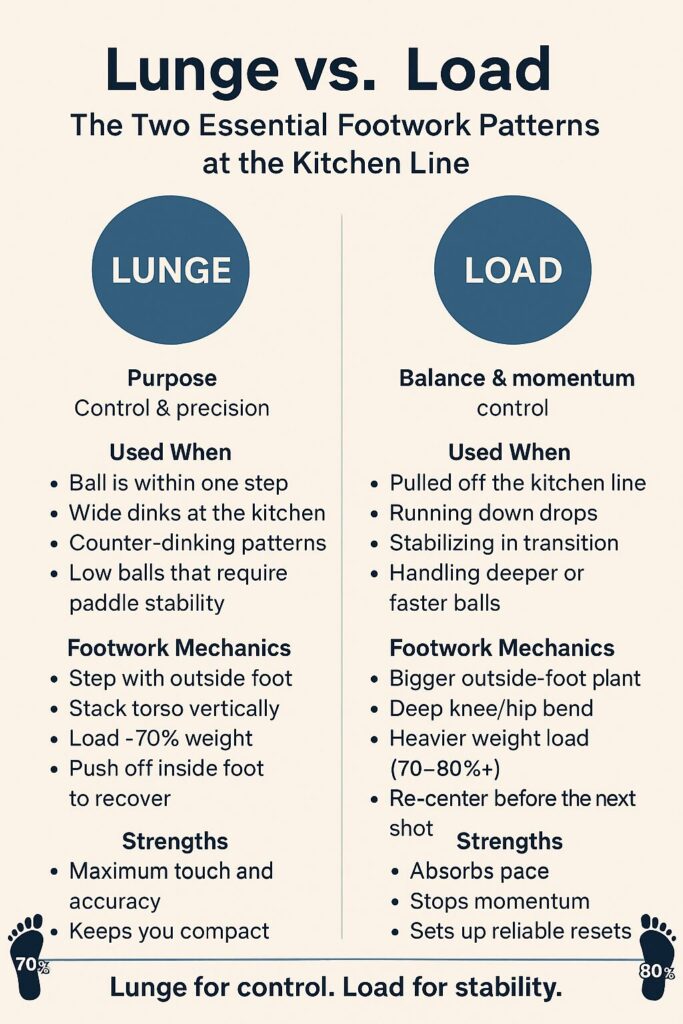
The Lunge (Short-Distance Stability Movement)
Used when:
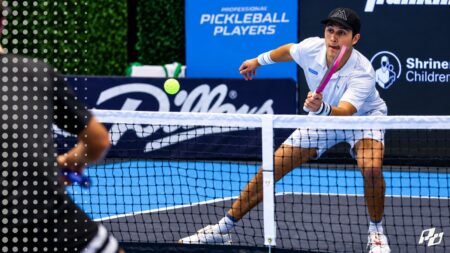
- The ball is within one controlled step
- You’re at or near the kitchen line
- You’re reaching wide for dinks
- You need stability and precision, not power
Movement Pattern:
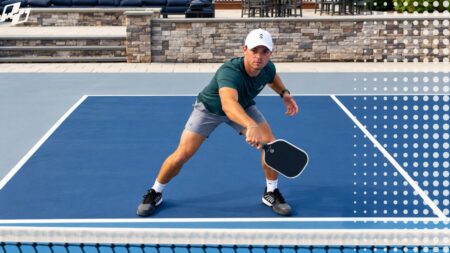
- Step with the outside foot
- Stack your body vertically over it
- Load ~70% of your weight into that leg
- Push off the inside leg to reset
Purpose:
- Soft control
- Precision
- Staying compact and balanced
- Handling short, angled, or low balls
Think: One step. Small distance. Maximum control.
The Load (Bigger, Power-Oriented Movement)
Used when:
- You’re pulled off the kitchen line
- You’re running down a drop shot
- You need stability from a deeper court position
- You’re transitioning forward through mid-court
- You need a “braking step” to stop running before hitting
Movement Pattern:
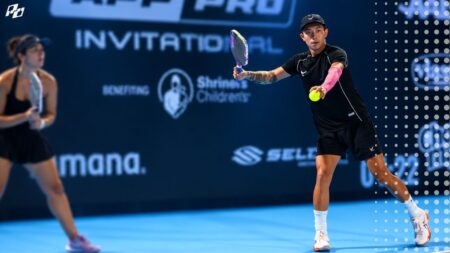
- Plant the outside foot further from your center
- Bend deeply through the hip and knee
- Use a heavier weight load (up to 80%+)
- Re-center your body from this deeper base
- Treat it like a “platform” to control or reset the ball
Purpose:
- Pace absorption
- Stabilizing under movement
- Regaining balance before hitting
- Preparing for forward transition
Think: Big distance. Larger plant. Regain control.
The load is your “braking platform”—the movement that prevents chaotic, off-balance resets.
When to Lunge vs. When to Load
✔ Use a Lunge When:
- You’re at the kitchen
- The ball is within one step
- You’re counter-dinking
- You’re pressured side-to-side
- You’re taking a low, short, or wide dink
✔ Use a Load When:
- You’re in the transition zone
- The ball lands behind you
- You need to slow your momentum
- You’re recovering from a pulled-wide ball
- You’re preparing to reset a fast or deep shot
Simple cue to remember:
Lunge = Control movement
Load = Stabilizing movement
One is about precision; the other is about absorption and recovery.
How to Execute the Lunge (Intermediate-Level Mechanics)
- Establish a wide, athletic base: Feet outside shoulder width, weight forward.
- Plant with the outside foot: Never lunge off the inside foot—it destabilizes your upper body.
- Stack vertically: Head, chest, and hips aligned over your planted leg.
- Load 70% of your weight: This prevents overreaching and keeps the paddle steady.
- Push off the inside foot: Controls direction and resets your center quickly.
How to Execute the Load (For Transition & Deep Balls)
- Take a larger, braking step: Stops your forward or lateral momentum.
- Bend through knee and hip: Deep enough to absorb pace and stay grounded.
- Anchor your weight: Most weight sits temporarily on the load leg.
- Re-center before swinging: Loads usually precede resets or soft shots.
- Use the ground for absorption: A good load feels like a controlled mini-squat.
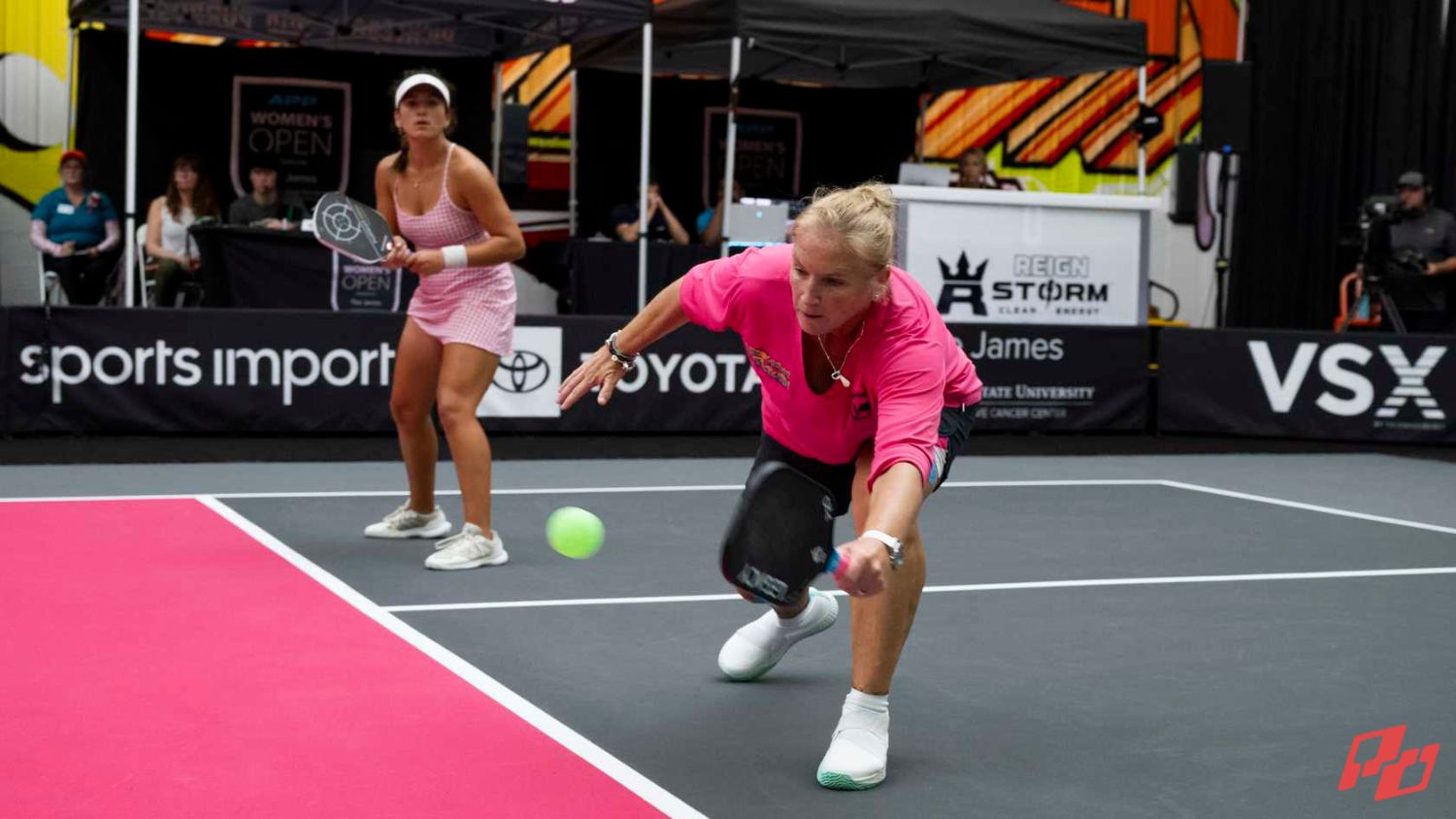
Common Mistakes (And the Damage They Do)
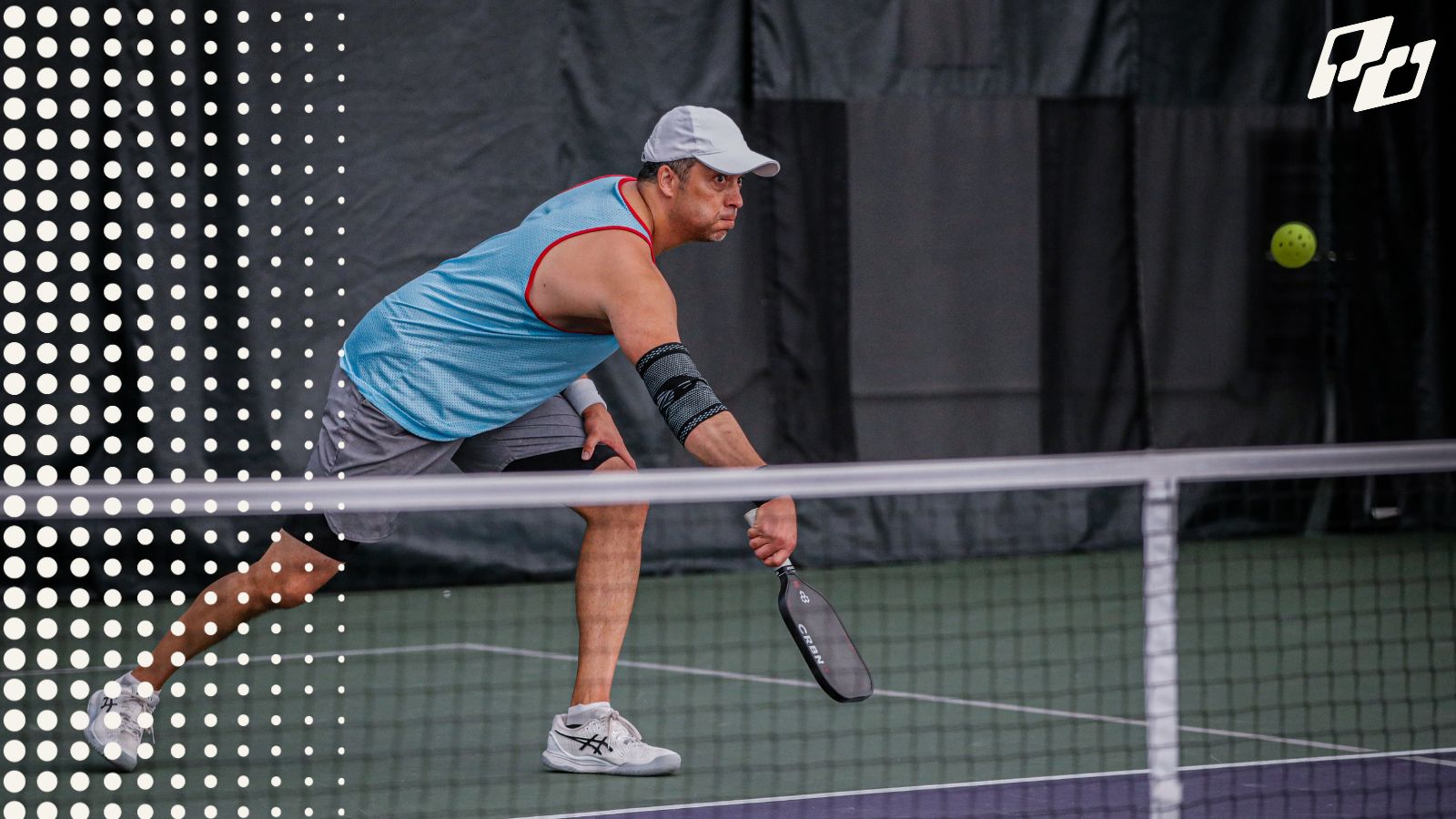
1. Leaning Instead of Lunging
Weight shifts to toes → unstable paddle → pop-ups.
2. Inside-Foot Plants
Destroys balance → collapses reach → inconsistent touch.
3. Staying Square When You Should Rotate
Shortens reach → reduces angle control → floats dinks.
4. Treating Loads and Lunges as the Same Movement
Leads to:
- Slow recovery
- Overreaching
- Poor resets
- Getting stuck in transition
5. Recovering Too Slowly
Players watch their shot and fail to re-center → they lose the next ball.
The Five-Angle Lunge Routine (Why It Works So Well)
The five-direction lunge—forward, forward-diagonal, lateral, backward-diagonal, backward—mirrors every kitchen-line movement pattern.
It strengthens:
- Knee stability
- Joint tracking
- Lateral control
- Eccentric strength for low balls
- Recovery speed
- Range of motion
Players who train these angles look noticeably more “grounded” in long dink rallies.
You can use the same five-direction pattern to practice loads as well.
One Cue to Remember Under Pressure
Lunge for control. Load for stability.
Master this distinction and your kitchen game becomes instantly calmer, cleaner, and more mechanically sound.