For better pickleball dinks, lower through your knees and hips—not your waist. Keep your back neutral, stay balanced, and contact the ball in front between your lead hip and lead foot. Match your stance to the ball’s height, then use a small leg push to guide the dink instead of swinging with your arm.
“Get lower.”
It’s probably the most common advice in pickleball. It’s also incomplete.
Watch most recreational players during a dink rally and you’ll notice something interesting. As the ball drops, they don’t actually get lower.
They simply fold.
Their knees barely move.
Their hips shoot backward.
Their chest collapses over their toes.
Their paddle drops with them.
Then they wonder why the dink pops up, the reset floats, or their lower back starts aching after two hours of play.
The problem isn’t that you’re too high. It’s how you’re getting low. The best kitchen players don’t just bend lower. They lower better.
The Biggest Myth: Lower Is Always Better
Here’s the first myth to get rid of. There isn’t one perfect kitchen stance. Elite players don’t stay in a deep squat for an entire dink rally. That would be exhausting.
Instead, their height changes constantly.
A shoulder-high speed-up?
Almost upright.
A comfortable waist-high dink?
Slight knee flex.
A low ball near the shoelaces?
Now they sink into the legs.
Your body should react to the height of the incoming ball, not lock itself into one position. Think of your stance as an elevator.
Not a basement.
The Squat vs. The Bow
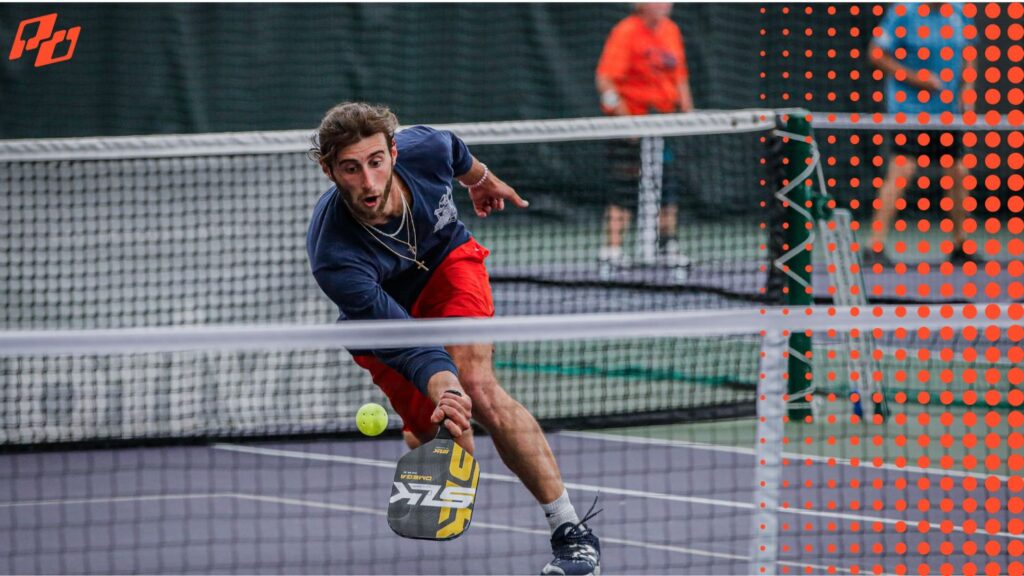
This is where most players lose control. When the ball gets low, they perform what looks like a bow.
The spine folds.
The head drops.
The paddle reaches.
Instead, you want something much closer to a squat. That doesn’t mean sitting like you’re lifting weights.
It means letting your knees and hips lower your center of gravity while your chest stays proud and your back remains relatively neutral.
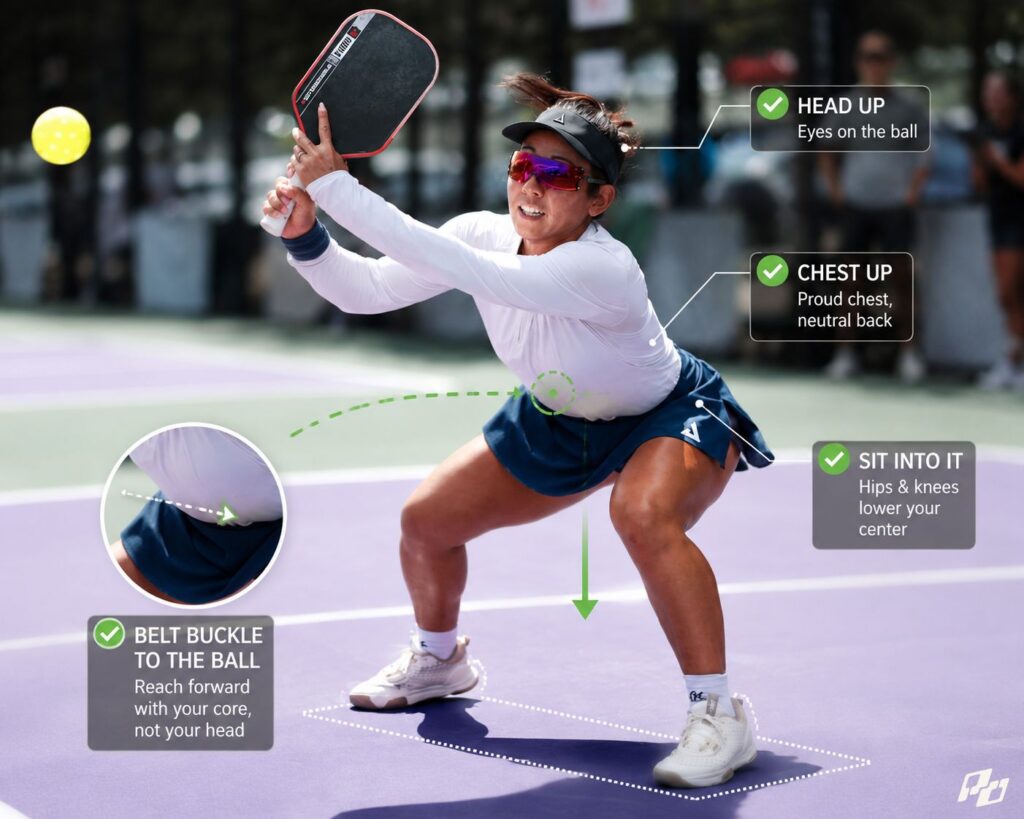
Think about bringing your belt buckle toward the ball—not your nose. That single image changes everything.
The Difference
| Bow | Squat |
|---|---|
| Mostly waist movement | Mostly knees and hips |
| Head drops forward | Eyes stay level |
| Weight shifts to toes | Weight stays centered |
| Hard to move sideways | Ready to push in any direction |
| Paddle reaches | Body moves to the ball |
The biggest difference isn’t comfort. It’s what happens after contact.
Players who fold at the waist often get stuck. Players who lower through the legs can recover immediately for the next shot.
Why Your Contact Point Matters More Than Your Height
Most players obsess over how low they are. The better question is: Where are you making contact?
One of the biggest reasons dinks pop up is that players allow the ball to drift too far back toward the body.
Now the paddle has no room to move forward.
The face opens.
The ball lifts.
The better contact zone is usually:
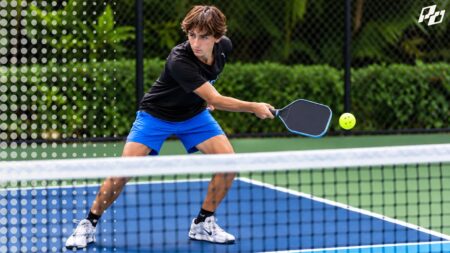
- slightly in front of your lead hip
- somewhere between your hip and your lead foot
- close enough that your elbow stays comfortably bent
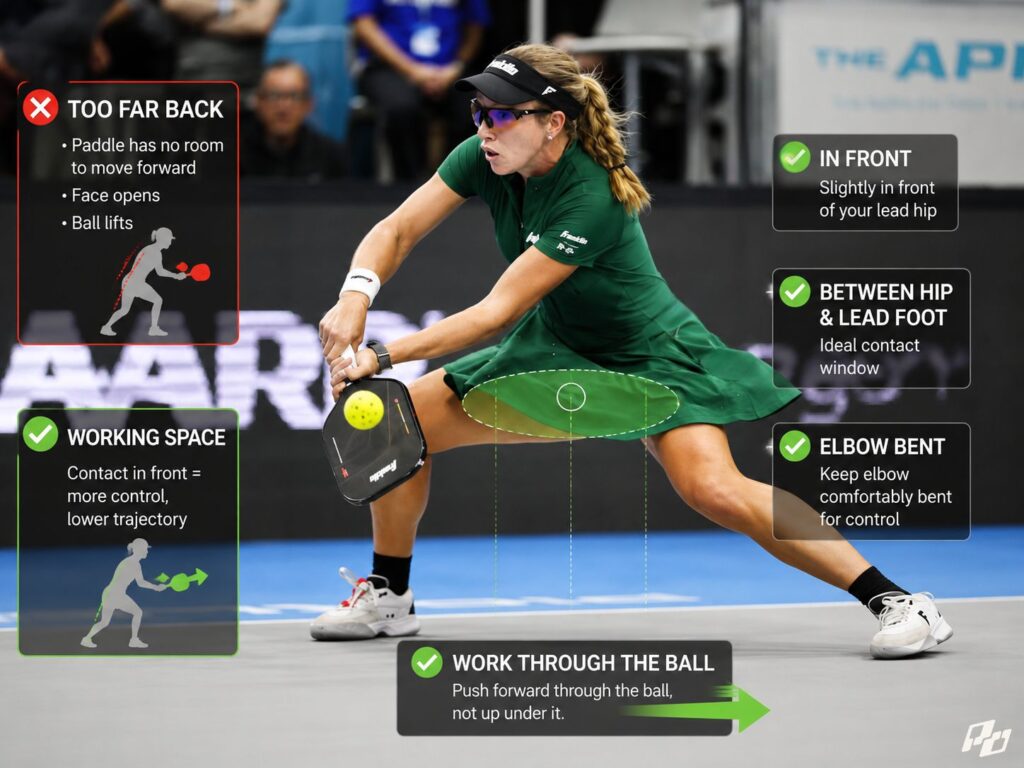
That small window allows you to push through the ball instead of scooping underneath it. Think of it as your working space.
If the ball enters that space, your mechanics stay simple.
If it gets behind you, everything becomes a rescue mission.
Your Legs Should Power the Dink
Here’s another misconception. Players think the paddle creates the shot. Most of the time, your legs do.
Watch high-level players hit soft dinks. The paddle barely moves. Instead, they lower slightly before contact, then rise just enough to carry the paddle through the ball.
The arm stays remarkably quiet. That’s why their dinks look effortless. They’re using the ground.
Many recreational players do the opposite. They stay frozen below the ball and swing with the shoulder.
The result is inconsistent pace because the arm now has to judge every inch of distance perfectly.
A tiny push from the legs is much easier to repeat.
Cue: “Lift with your legs. Guide with your paddle.”
Don’t Stay Low. Move Low.
This surprises a lot of players. The goal isn’t to stay crouched for an entire rally. The goal is to arrive low at contact.
Watch advanced players between dinks. They’re constantly changing height.
- Lower.
- Recover.
- Lower again.
- Recover again.
They’re athletic.
Not frozen.
If you stay in a deep squat the entire rally:
- your legs fatigue faster
- you react slower
- your movement becomes choppy
Think rhythm instead of posture.
- Lower for the ball.
- Rise enough to move.
- Repeat.
The Hidden Injury Risk Nobody Talks About
This isn’t just about better dinks. It’s about your back.
Players who repeatedly fold at the waist place much more stress on the lower back because the trunk ends up supporting the movement instead of the legs. Over months of play, that habit can become surprisingly uncomfortable.
Using your knees and hips spreads the work across much larger muscles. It also keeps you balanced enough to move if your opponent suddenly speeds the ball up.
Ironically, better biomechanics usually improve both performance and durability.
The Two-Ball Rule
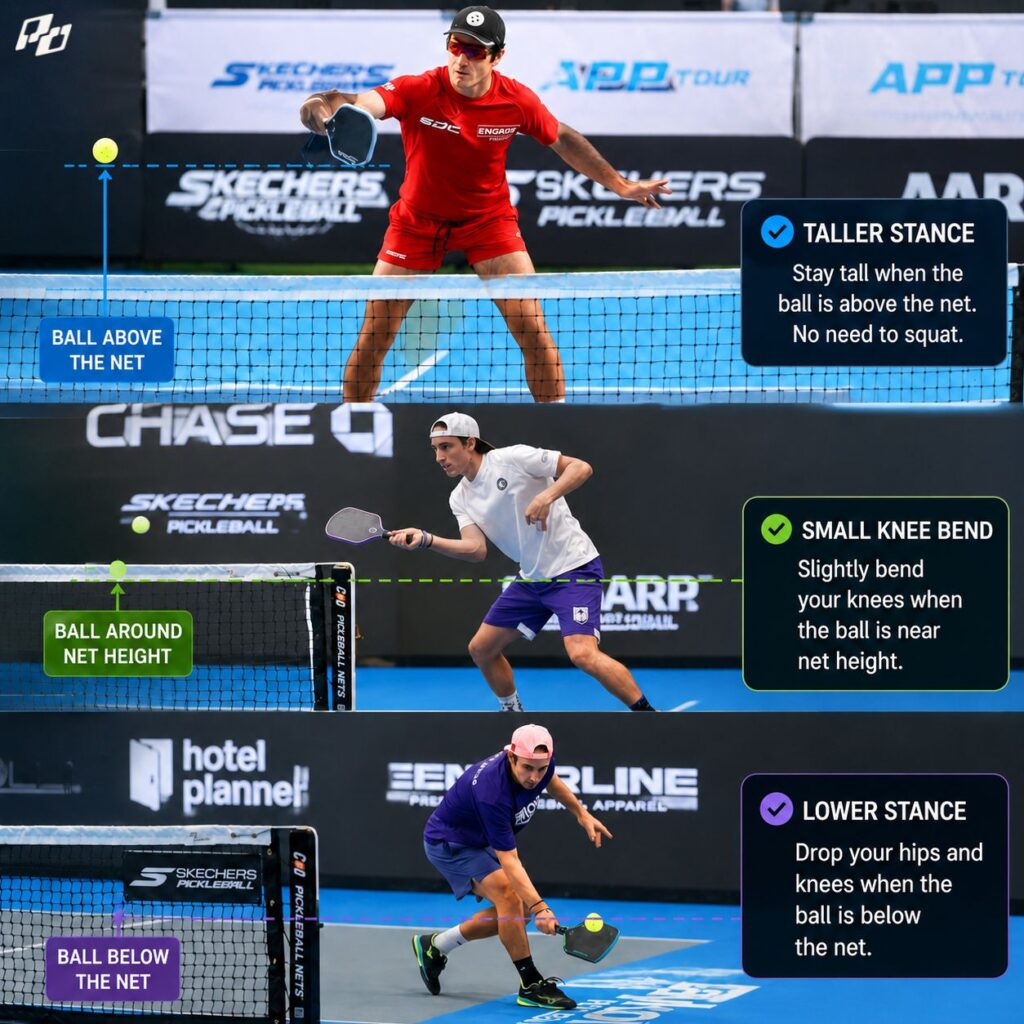
Ball above the net?
Stay taller. You don’t need to squat just because someone once told you to “stay low.”
Ball around net height?
Use a small knee bend. Stay balanced.
Ball below the net?
Now lower with your knees and hips. Keep your posture and contact the ball in front.
Your stance should follow the ball.
Not the other way around.
Try This 60-Second Self-Test
The next time you’re at the kitchen, ask someone to film you from the side. Freeze the video at contact.
Now check three things.
✅ Is your back relatively straight?
✅ Are your knees actually bent?
✅ Is the ball in front of your lead hip instead of underneath your chest?
If you answered “no” to any of those, you probably don’t have a paddle problem.
You have a posture problem.
The good news? Posture is much easier to fix.
Three Hidden Mistakes That Make Low Balls Harder
Most players know they shouldn’t stand upright. These mistakes are much harder to notice.
| If your dink… | The hidden reason may be… | Better fix |
|---|---|---|
| Pops up under pressure | You’re contacting the ball too close to your body | Move your feet sooner and meet the ball in front |
| Feels rushed on low balls | You’re bending after the bounce instead of before it | Lower as the opponent hits, not after the bounce |
| Feels inconsistent from one rally to the next | Your height never changes with the ball | Match your stance to the height of each shot |
These aren’t flashy fixes. They’re the kind that quietly make your entire soft game more reliable.
The Real Goal Isn’t to Get Lower
Here’s the thought I’d leave you with.
Stop asking: “Am I low enough?”
Start asking: “Am I low enough for this ball?”
That’s a completely different question.
Good kitchen players don’t have one stance. They have dozens.
Sometimes they’re almost standing upright.
Sometimes they’re sitting into their legs.
Sometimes they’re recovering between those two positions.
The common thread isn’t how low they are. It’s that their legs create the position, their body stays balanced, and the contact happens in front.
Master those three habits and you’ll notice something interesting. Your dinks don’t just become more consistent.
You move better, recover faster, protect your back, and suddenly low balls stop feeling like emergencies.
That’s the difference between simply bending…
…and actually playing low.