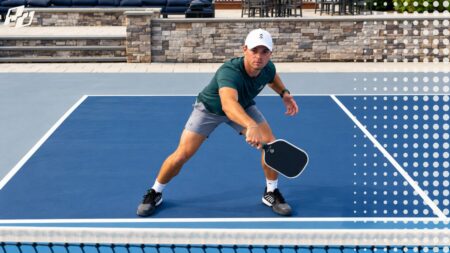


You dominate in rec—smooth drops, sharp dinks, and lightning-fast hands at the kitchen. But come tournament day? You’re late on everything, missing resets, and losing to players who didn’t seem all that threatening on paper.
Frustrating? Definitely. Uncommon? Not at all.
There’s a world of difference between casual rec play and the pressure of competition. And that gap—the one between how you play for fun and how you perform when it counts—is where most players get stuck.
Ever wonder why you crush in rec but fall apart in tournaments? This is where that disconnect lives—and the good news is, you can train for it. You just need the right mindset, the right focus, and a smarter way to practice.
Rec Play Is Not Tournament Play—And That’s Okay
In rec play, people tend to:
- Be more generous with shot selection
- Play longer rallies
- Work on weaknesses (like drops, resets, or weird crosscourt dinks)
- Laugh more, lob more, and sometimes let you stay in points you don’t deserve
In tournaments?
- They play to win.
- Bangers bang.
- Speedups get faster.
- Soft games disappear if you can’t earn them.
- No one is “letting you settle in.”
Real Talk: If You Can’t Handle Drives, You Can’t Win
One of the most common challenges players face in competition is handling opponents who only drive. And they’re not wrong to do it—if you can’t stop it, why would they stop doing it?
You’ll hear elite players say it all the time:
“You have to earn the right to dink with me.”
That means:
- If you can’t block or counter well, they’ll keep driving.
- If you can’t make them regret speeding it up, they’ll keep speeding up.
- If you just reset every drive without pressure, they’re in control.
So what do you do?
What to Train If You Want to Win in Tournaments
1. Block and Counter With Intent
If they’re driving, your job is not just to “absorb.” You have to:
- Get in your ready position early (paddle up, out front)
- Practice stable blocks with depth
- Train counters—not just resets—especially off high-speed shots
Drill idea: Have a partner rip drives at you while you alternate between soft blocks and roll counters.
2. Control the 4th and 5th Shot
If you can’t hit deep, purposeful returns or 4th balls, you’re giving the advantage away. Make sure your return:
- Is deep enough to buy time
- Has height to drop behind the serving team
- Allows you to transition with control
Don’t just survive the third shot drive—own the fourth.
3. Change the Rhythm
Good teams hate being thrown off rhythm. Try:
- Dinking to the middle to take away angles
- Changing pace and spin on dinks
- Throwing in the occasional lob—especially crosscourt with topspin
These disrupt fast-paced teams and force them into unfamiliar patterns.
4. Play Loose, Not Tight
If you’re playing worse in tournaments, it’s probably not your mechanics—it’s your mindset.
Before you play:
- Hydrate, rest, eat—just like you would in casual rec
- Warm up with drills that target your weaknesses
- Find your fun mode: play light, laugh, loosen up
During play:
- Shake hands confidently
- Act like a competitor—even if you’re nervous
The more you mirror your ideal playing conditions, the faster your performance levels out.
Rec Play: Helpful or Harmful?
✅ Pros:
- Variety of play styles to adjust to
- Great for working on softer skills
- Stress-free reps build confidence
❌ Cons:
- Lower-level opponents may mask bad habits
- No pressure = fewer mental reps
- Can build false confidence if you’re never tested
The Fix:
- Use rec play intentionally. Work on resets, dinks, positioning.
- Don’t just win—win the way you want to play in competition.
- Ask partners for pace. If you struggle with drives, train against them—don’t avoid them.
Competitive Mindset vs Casual Flow
Many players say they feel like a 4.0 in rec… and a 2.5 in tournaments. Why?
Because pressure changes everything. That muscle memory doesn’t mean much when your hands go stiff, your brain fogs, and every ball feels like a test.
Here’s how to stay in your flow:
- Play like it’s still rec: joke, smile, breathe
- Frame tournaments as learning experiences, not performance reviews
- Trust your prep—you’ve already put in the work
Pro Tip: Read The Inner Game of Tennis. It’s not just about tennis—it’s about unlocking your best game when it matters most.

The Inner Game of Tennis by W. Timothy Gallwey offers timeless strategies for mastering self-doubt and achieving peak performance through mental focus, making it a powerful guide for any sport.
Bottom Line: Train Like It’s a Tournament—Even in Rec
You don’t need to stop playing rec. You need to play rec with tournament goals in mind.
- Want to be better at pressure resets? Drill resets in rec.
- Struggling with fast hands? Ask your rec partners to speed it up.
- Not ready for aggressive drives? Practice counters instead of just blocking.
And most importantly:
Respect every level of play. If someone beats you by blasting drives, they’re not “low-level bangers”—they’re just better than you at that part of the game.
Fix it. Train it. Earn the soft game. Win more.