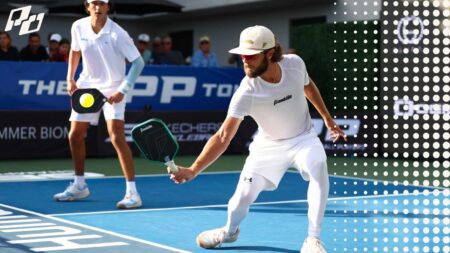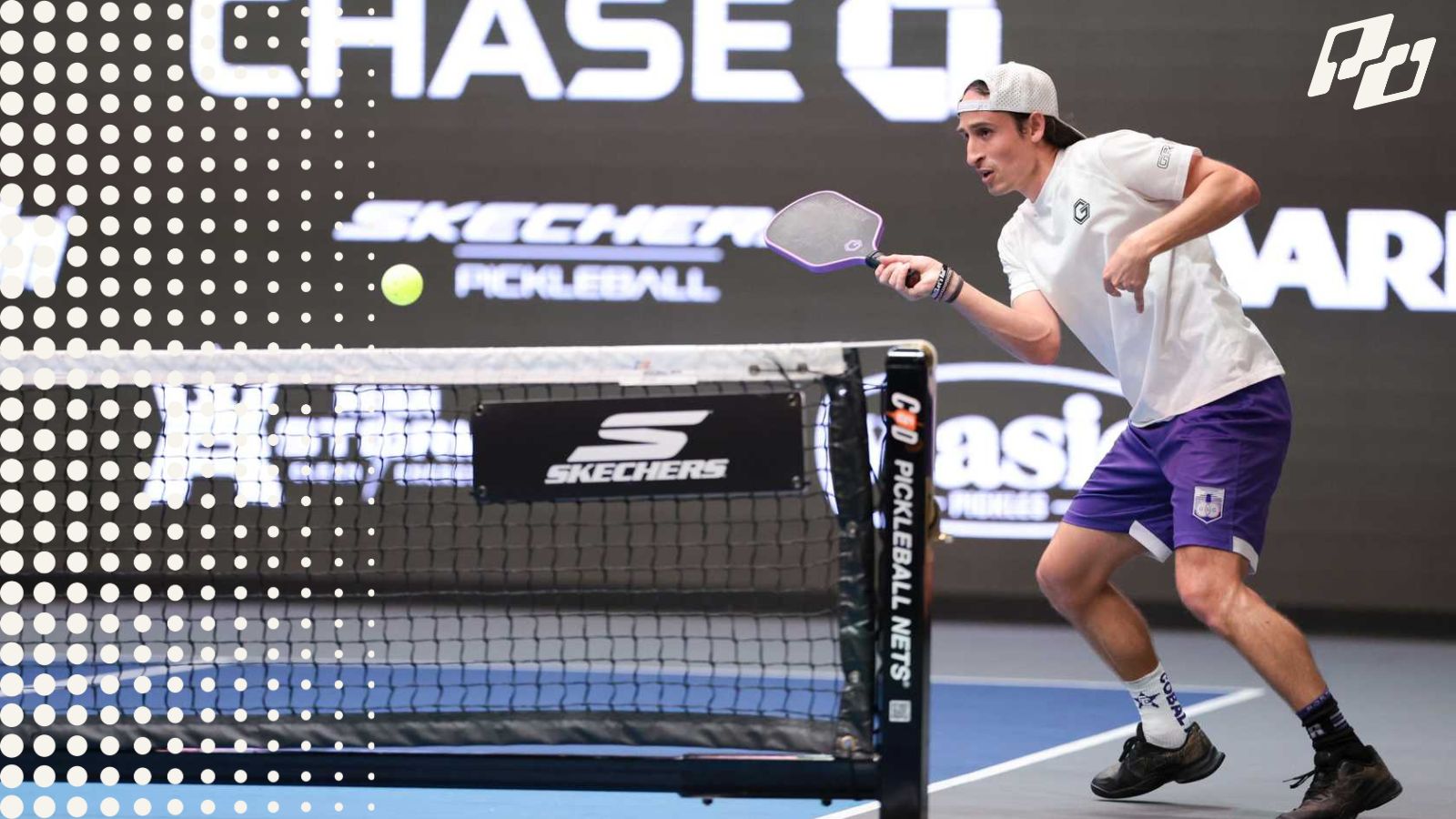
If you’ve played pickleball long enough, you know the Erne. It’s one of the sport’s signature “wow” shots—the player launches over or around the kitchen, intercepts a dink mid-air, and smacks it down before the opponent can blink. It’s bold, it’s flashy, and when you pull it off, it feels incredible.
But there’s another kind of Erne out there; one that doesn’t rely on raw speed or highlight-reel hops. It’s more subtle, more tactical, and in many ways, easier to execute once you understand the trigger.
It’s called the Split Line Erne, and chances are, you’ve had opportunities to use it without even realizing.
What Exactly Is the Split Line Erne?
You’re locked in a crosscourt dink battle. Your diagonal opponent slides across the “split line”—that invisible diagonal line connecting their sideline to yours.
Here’s the key read: when a player crosses in front of that line, their most natural, comfortable shot is to send the ball toward the middle. Very rarely will they stretch across their body to hit it back to their partner’s side.
That predictability is your opportunity. Instead of waiting for the dink to bounce or drift to your partner, you can step outside the sideline, cut it off early, and put it away with an Erne.
Unlike the classic Erne, which is often a gamble on timing and athleticism, the Split Line Erne is a read-and-react play. You’re not guessing—you’re intercepting a pattern.
Pro coach Kyle Koszuta shows you exactly how it works:
Why This Works (and Why It’s Underused)
Pickleball is full of predictable patterns, especially at the kitchen. Players fall into habits: dink here, reset there, hit middle when stretched. The Split Line Erne exploits one of the most reliable tendencies in the game.
Think about it:
- Crossing the line makes it biomechanically awkward to dink back crosscourt.
- The middle feels safe, natural, and “percentage-based.”
- Opponents don’t expect you to jump that route, because few players are taught to.
That combination makes this Erne high-percentage and surprisingly easy to pull off once you’ve trained your eyes to recognize the setup.
When to Use the Split Line Erne
The best time to spring this trap is when:
- Your opponent makes a clear crossover step in front of the split line.
- The ball is coming at a height you can attack in the air.
- You’re balanced and in a position to step wide without leaving your partner hanging.
When all three line up, the Split Line Erne becomes one of the most reliable attacking options in your toolkit.
When Not to Go For It
Of course, no tactic is bulletproof. There are times when forcing this Erne will backfire:
- When the dink is low – If the ball is dipping below net height, you’ll either clip the net or pop it up.
- When you’re late – If you spot the crossover too late, you won’t get outside in time, leaving yourself exposed.
- Against high-level disguise – At higher levels, some players can still send the ball crosscourt even after crossing the line. If you overcommit, they’ll pass you.
Like poaching in doubles, the key is picking your spots.
How to Train the Read
The hardest part of this Erne isn’t the footwork—it’s the recognition. Here’s how to sharpen it:
- Watch the feet, not just the ball. In crosscourt rallies, split your focus—notice when your opponent’s weight shifts and they step across that diagonal line.
- Study their patterns. In practice games, track how often that crossover leads to a middle dink. Most players are shockingly predictable.
- Drill with a partner. Have your partner intentionally cross the line and feed middle dinks so you can practice stepping out and intercepting.
The more you train your eyes, the earlier you’ll pick up the cue—and the more confident you’ll feel pulling the trigger.
Technique Tips for Executing the Shot
- Step, don’t lunge – One clean step outside the sideline is all you need. Don’t overreach; it throws off your balance.
- Paddle up early – Be ready to cut the ball off in front of your body. A compact swing beats a big one here.
- Aim sharp – Instead of blasting, place the ball low and into the open court. Placement wins more points than brute force.
- Recover if it’s not there – If your opponent surprises you and goes crosscourt, don’t panic. Reset, recover, and get back into the rally.
Why You Should Add It to Your Game
The Split Line Erne is a perfect example of “smart aggression.” It doesn’t require superhuman athleticism. It requires awareness. By watching your opponent’s movement and anticipating their most likely response, you turn their safe shot into your attack.
And here’s the best part: most players don’t know this Erne exists. That makes it even more devastating, because your opponents won’t be ready for it.
So the next time you’re dinking crosscourt, widen your vision. Don’t just watch the ball—watch the player. If they cross that diagonal line, there’s a good chance the ball is heading middle. That’s your invitation.
Step out. Cut it off. Put it away.
That’s the Split Line Erne—and once you start seeing it, you’ll wonder how you ever missed it.