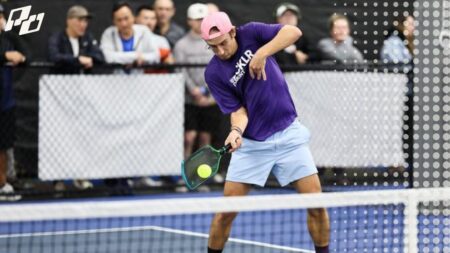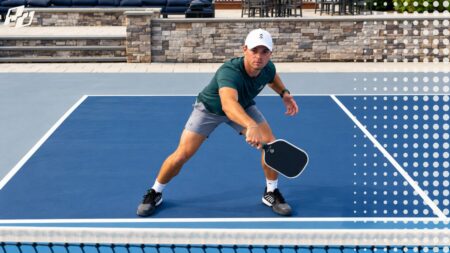


If you’ve ever felt like you’re stuck in a plateau—playing often but not really leveling up—this one’s for you.
In a no-fluff, rapid-fire format, Pickleball Union’s coaches Marko and Joey dropped 30 concise but essential tips that every pickleball player should know. And let’s be clear: while these tips may be simple, they’re far from basic. Each one addresses a small but critical habit that, when dialed in, massively improves your consistency, shot quality, and tactical awareness.
Watch the video below, then keep scrolling—we’ll break down each tip with added detail, technical context, and real-world scenarios so you can apply them right away:
1. Serve Deep
Serving deep pins your opponents further back and makes their return shorter, giving you more time and space to set up your third shot.
Aim for their backhand side and test their ability to return under pressure.
2. Stay Back on Serve
When serving, both you and your partner should remain behind the baseline until your opponent hits their return.
Why?
Because a deep return will otherwise catch you mid-step, forcing a weak third shot or awkward volley.
3. Return from Behind the Baseline
Position yourself 1–2 feet behind the baseline to allow space for a clean forward-moving return.
This gives you momentum to transition quickly toward the kitchen and discourages falling backward on contact.
Check out Marko’s video on how to nail deeper returns:
4. Short Backswing, Big Follow Through
Think compact and controlled. A shorter backswing reduces timing errors, especially under pressure.
Instead, focus on driving energy through a strong follow-through to maintain pace and direction.
5–7. Return and Run | Go Deep | Split Step at the NVZ
These three tips are a sequence:
- Hit a deep return,
- Run to the NVZ,
- Then split step right before your opponent makes contact.
That last split step is critical—it preloads your legs for lateral movement, helping you respond faster to volleys or dinks.
8. Get Wide and Athletic at the Kitchen Line
A wider base lowers your center of gravity, improving balance and reaction time. Imagine defending against a fast volley or flick—your legs are your shock absorbers.
9–11. Third Shot Roles + Setup
- Left-side (forehand-dominant) player typically covers 60% of third shots.
- Keep the ball out in front, with forward momentum.
- Avoid stepping into the shot late or off balance—set early and move through the ball.
12–14. Third Shot Drop Mechanics
- Compact swing.
- Soft grip pressure (think 3 out of 10).
- Excellent footwork: plant early, stay wide, move forward on contact.
This trifecta makes your drop less attackable and gets you closer to neutralizing your opponent’s advantage.
15–17. Driving the Third Shot
- Hit low over the net to reduce attack windows.
- Use a low-to-high swing to generate topspin.
- Maintain a soft grip to stay relaxed and smooth.
Pro Tip: Drive at the opponent’s paddle hip or at their transition foot—it’s harder to counter cleanly from these awkward spots.
18–19. Transition with Purpose
- Don’t rush the kitchen unless your shot earns it. Think of the “zone of death” (the transition zone) as a test—only advance when you’ve neutralized the opponent’s attack.
- If they pop it up, take it out of the air on the fourth shot to pressure them early and gain position.

20–22. Defend Intelligently
- On a fast drive, block with a steady paddle—don’t swing.
- If it’s shoulder height, let it fly—it’s likely going out.
- But if the drop floats high? Attack it. Use topspin or hit behind them to take control.
Marko shares smart ways to block without popping it up:
23–24. Respond to Third Shot Drops the Right Way
- If it’s below net height: smooth rolling volley.
- If it bounces: pivot and groundstroke it deep.
Overhitting a below-net ball is one of the most common transition errors—resist the urge.
25. Paddle Height in Transition

- Further back = lower paddle (protect the shins).
- Closer in = raise paddle (prepare for chest-high volleys).
Think of your paddle like a shield—where’s the danger coming from? Protect that zone.
26–29. Transition Zone Mastery
- Soft grip on resets.
- Stay light on your feet (small, quick adjustment steps).
- Read your shot quality: good reset = move in, bad one = hold your ground.
- Be patient. Use 2–3 shots to work through the transition zone—it’s not a sprint.
30. When in Doubt, Make Balls
Sounds simple, but it’s profound: the majority of points at all levels are lost on unforced errors. If you’re in trouble, hit a high, safe crosscourt dink. If you’re nervous, take a little off the drive.
In other words: play smarter, not flashier.
Bonus: Micro-Habits That Stack Up
What makes these 30 tips powerful isn’t that each is revolutionary—it’s that together, they compound. They create muscle memory. They eliminate hesitation. And they allow you to think about winning points instead of surviving rallies.
And remember: the best players aren’t doing special things—they’re doing the simple things, exceptionally well.
Not Just Tips—This is a Blueprint
Marko and Joey aren’t just firing off tips to fill a list—they’re giving you the foundations of clean, effective play. Whether you’re a 3.0 trying to level up or a seasoned 4.0 aiming for more consistency, this video is packed with the kind of insights that pros drill daily.
So as you watch, ask:
- Am I really split-stepping at the kitchen line?
- Is my grip pressure helping or hurting my resets?
- Am I mindlessly charging the kitchen… or reading the quality of my shots?
Fixing just two or three of these habits can change your game in a week.
Now hit play—and then hit the courts.