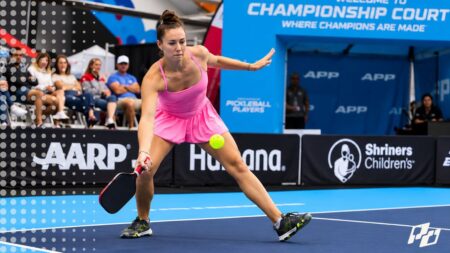
Are you playing the wrong position in doubles? Understanding the difference between left side and right side play can make a big difference in your game.
Let’s break it down and see where you might fit best.
Left Side vs. Right Side Play
The Role of the Left Side Player
The left side player in pickleball is often the aggressor. This player takes a lot of thirds, drops, and drives, and covers more court area to dictate play and move the ball around.
They also take the majority of the middle balls because their forehand is in the middle, making it easier to be aggressive. One player mentioned, “I like having the stronger player on the left side so they can use their forehand to control the middle of the court.”
The Role of the Right Side Player
On the other hand, the right side player has a more defensive role. This player aims to be consistent, acting as the stabilizer of the team.
They handle many of the counters, resets, and dinks to keep the team in the point and create opportunities for the left side player to attack. A player shared, “I prefer playing on the right side because there’s less pressure to make flashy plays, and I enjoy grinding out long dink rallies.”
Pro Pickleball Player and Coach Nicholas Wade delves deeper into the nuances of playing the left versus right side:
What About Left-Handed Players?
If you’re a lefty, your dynamics on the court change. Often, teams with a left-handed player will stack to keep their forehand in the middle. This setup allows both players to use their forehands for middle shots, maximizing their strength.
As one left-handed player explained, “I am a lefty and am a right side player. My tournament partner is a left side player. Playing this way, my backhand is actually better than my forehand.”
Benefits of Playing Both Sides
For a lot of recreational players, switching between both sides can be a game-changer. It helps you become more versatile, letting you practice hitting shots from different angles.
One player mentioned, “Playing both sides helps you hit shots with your forehand down the middle on one side and your backhand down the middle on the other.” This kind of versatility can really boost your overall game and make you a stronger player.
How to Know You’re Playing the Wrong Position
Wondering if you’re playing the wrong position in doubles? Here are some tips and signs to help you figure it out:
- Comfort Level: Are you constantly feeling out of place or struggling to keep up? If you’re not comfortable, it might be a sign you need to switch sides.
- Effectiveness: Pay attention to your performance. Are you making more errors than usual or missing key shots? Your effectiveness on the court is a good indicator of whether you’re in the right position.
- Role Preference: Think about whether you prefer being the aggressor or the stabilizer. Do you like taking charge and making aggressive plays, or do you thrive on consistency and defense? Your preference can guide you to the right side.
- Skill Set: Assess your strengths. Are you better at hitting forehands or backhands? If your forehand is stronger, the left side might suit you better. If you have a reliable backhand, the right side could be your spot.
One player shared their experience: “I personally prefer the right side. I like to drop all my thirds and grind out dink rallies. My partner takes the aggressive shots.” This player found their ideal position by focusing on their strengths and playing style.
In summary, listen to your comfort level, evaluate your effectiveness, consider your role preference, and play to your strengths. These tips will help you find the best position for your game in doubles.
Positioning for Partners with Different Skill Levels
By placing the weaker partner on the right side and focusing on their strengths, you create a balanced team that can effectively compete and grow together. Here’s why:
- Right Side for Stability: The right side is generally more defensive. It allows the less experienced player to focus on keeping the ball in play, while the stronger player on the left can take on more aggressive shots.
- Forehand Coverage: If the less skilled player is right-handed, positioning them on the right side allows their forehand to cover the middle. This setup can be more comfortable and effective. For left-handed players, the left side achieves the same result.
Keep also in mind that good communication and support from the more experienced player can help the less skilled partner improve and gain confidence, leading to a stronger overall team dynamic.
Players’ Preferences and Strategies
Players often have specific preferences and strategies based on their strengths and who they’re partnered with.
One player shared, “When I’m playing with a less experienced partner, I like to be on the left side so I can take control. But with an equal partner, I prefer the right side because it lets them be aggressive while I focus on positioning and setting them up.”
Another player added, “I think more and more pro players will start specializing in specific sides. I’m trying to play full right side in men’s matches but still stay left in mixed doubles.”
It’s clear that whether you play left or right, it depends a lot on personal comfort and strategy. Some players switch based on their partner’s skills, while others stick to one side to perfect their game. Trying out different positions can help you find what works best for you.
Find Your Sweet Spot
Understanding your playing position in doubles pickleball is crucial to maximizing your potential on the court. Knowing whether you’re best suited to stand on the left or right side can make a huge difference in your game. But don’t stop there—being versatile and open to change is just as important.
Experiment with both sides, and see how different strategies and positions feel for you. You might discover hidden strengths or new ways to complement your partner’s playstyle.
The featured image in this article is courtesy of the APP.