Pickleball Union earns a commission on purchases made through links in this article, at no extra cost to you. Our reviews are editorially independent – brands do not see or approve content before publication.
After testing over 60 paddles this past year, I’ve learned one thing for sure: you can’t judge a paddle by its price tag—or its looks. That goes both ways.
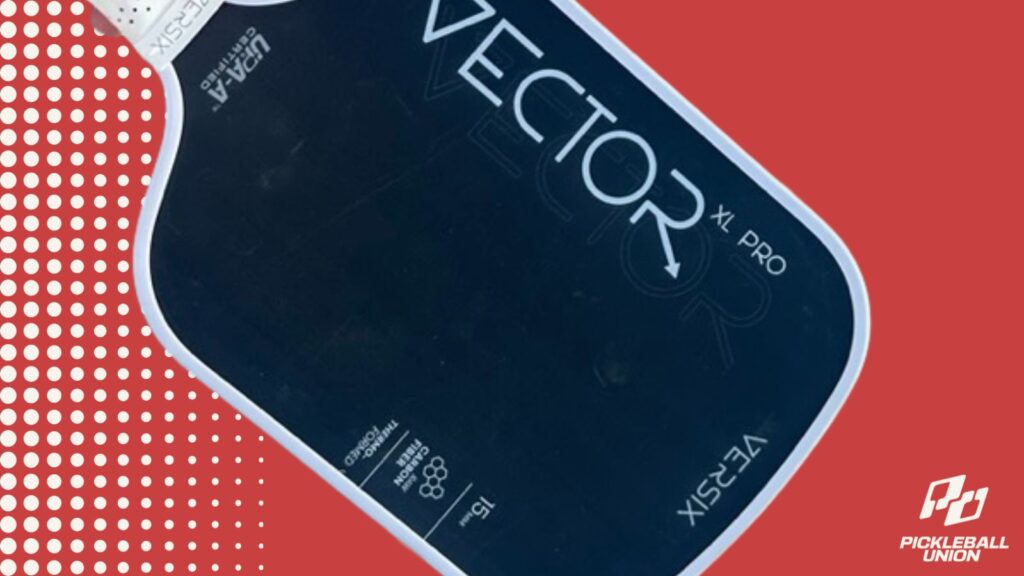
The Versix Vector XL Pro showed up from our friends at Pickleball Central with a plain design, dated Gen 2 materials, and a price that made me raise an eyebrow: just $130. Honestly, I wasn’t expecting much.
But after an hour on the court—especially coming off some solid Gen 3 and 4 paddles—I was genuinely impressed. The performance punches well above its price, and after several weeks of hitting with it, I’m confidently giving it a 4.75 out of 5. It’s an incredible value.
But… there’s a catch. And if you’re thinking about picking one up, you’ll want to read on.
By The Numbers
| Spec | Details |
|---|---|
| Length | 16.5” |
| Width | 7.5” |
| Core Thickness | 15mm |
| Grip Length | 5.75” |
| Grip Circumference | 4.25” |
| Weight (as tested) | 8.30 oz (8.1–8.4 oz avg) |
| Price | $130 (not yet available) |
Quick Video
Nuts And Bolts
- Elongated shape with broad corners
- Thermoformed polypropylene honeycomb core
- T700 Raw Carbon Fiber woven face
- Carbon wrapped foam edge under edge guard
- Perforated, tennis style grip
- UPA-A certified – due to maximum surface grit

Inside Scoop from Versix
Chris at Pickleball Central shared that Versix is their in-house brand, fully designed and produced in-house. The original Vector XL was co-developed with tennis pro Genie Bouchard and built with tennis converts in mind—long handle, head-heavy balance, and familiar feel.
The XL and XL Pro share the same shape, thermoformed build, core, and $130 price tag. The difference? The XL Pro has a much grittier face and is UPA-A approved, while the XL is USAP approved for tournament play.
Both have a carbon-wrapped foam edge for added stability and a boosted sweet spot. The XL Pro isn’t on the market yet, and since it’s not USAP legal, it’s for rec play only—for now.
First Impressions
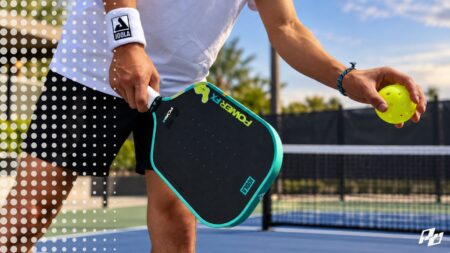
At first glance, the paddle looks pretty standard—white edge guard, black carbon face, and clean white graphics. The elongated shape includes slightly broad hip corners above the handle, but it’s a subtle design detail.
What really stands out are two things:
- The long, white handle
- The aggressively gritty surface
Despite the 8.3 oz weight, the paddle feels quicker than expected. It’s agile, but the slight head weight gives it a bit of a tennis racquet feel—which makes sense, given its design focus.
Game on…The Play Testing
Early Drills & First Feel
I kicked things off with some casual serving and dinking drills. Coming off a string of power paddle tests, it took me about 30 minutes to adjust—but what stood out right away was the paddle’s clean control and feel at the kitchen.
The longer handle and head-heavy design clearly hint at a tennis-inspired build, offering extra reach and punch without feeling unwieldy.
The Spin Comes Alive
In my next couple of sessions, the paddle’s spin potential really came into focus. I was ripping confident slices, topspin drives, and reliable cross-court drops. The 15mm core struck a rare middle ground—it stayed soft enough for resets but packed enough stiffness to deliver pace when needed.
Serves carried depth, and hands battles felt fast and connected, thanks to the paddle’s shape and weight distribution.
Surprising Staying Power
Over the following weeks, it kept making its way into my bag. For players stepping up from beginner gear—or former tennis players adjusting to pickleball—it offers serious value. The sweet spot is wide and forgiving, and the surface grit holds spin well.
While I’d swap the grip for something more padded, everything else punches above its price point. At $130, this paddle is a sleeper hit.


How It Stacks Up to Similar Paddles
This paddle isn’t built for max power, but it’s a solid all-around performer—especially for players upgrading from entry-level gear or with a tennis background. It’s control-first, with impressive spin and just enough pop.
Power
Not a banger’s paddle, but enough punch for drives and put-aways. Comparable to the Holbrook Aero T Metallic or Franklin C45.
Spin
Standout spin, thanks to a gritty UPA-A approved face. Holds up well—on par with Bread & Butter Invader and Aero T Metallic.
Control & Touch
Excellent balance and sweet spot for resets, dinks, and soft shots. Similar feel to Diadem Warrior BluCore and Bread & Butter Shogun.
| Category | Comparable Paddles | Notes |
|---|---|---|
| Power | Holbrook Aero T Metallic, Franklin C45 | Tennis-inspired feel with moderate pop |
| Spin | Bread & Butter Invader, Aero T Metallic | Gritty face delivers elite spin, holds up over time |
| Control/Touch | Diadem Warrior BluCore, Warrior V2, Bread & Butter Shogun | Excellent sweet spot, great for resets and soft game |
The Final Score
| Category | Rating |
|---|---|
| Design / Build | 🎾🎾🎾🎾¾ |
| Grip | 🎾🎾🎾🎾½ |
| Control | 🎾🎾🎾🎾¾ |
| Spin | 🎾🎾🎾🎾🎾 |
| Power | 🎾🎾🎾🎾¼ |
| Price Point / Value | 🎾🎾🎾🎾🎾 |
| OVERALL | 🎾🎾🎾🎾¾ |
Plenty of recent reviews echo what I found: this paddle performs way above its price tag. Like Pickleball Central, I think it’s an ideal choice for tennis players making the switch—it’s got that familiar racquet feel with pickleball-ready pop. I’d also recommend it for post-beginners or early intermediates ready to upgrade from entry-level gear.
Bottom line: even though it’s not USAP approved, this is the best value paddle I’ve tested—easily 30–50% cheaper than comparable Gen 2 models. Watch for it to drop soon!
Pickle on my friends, pickle on…