

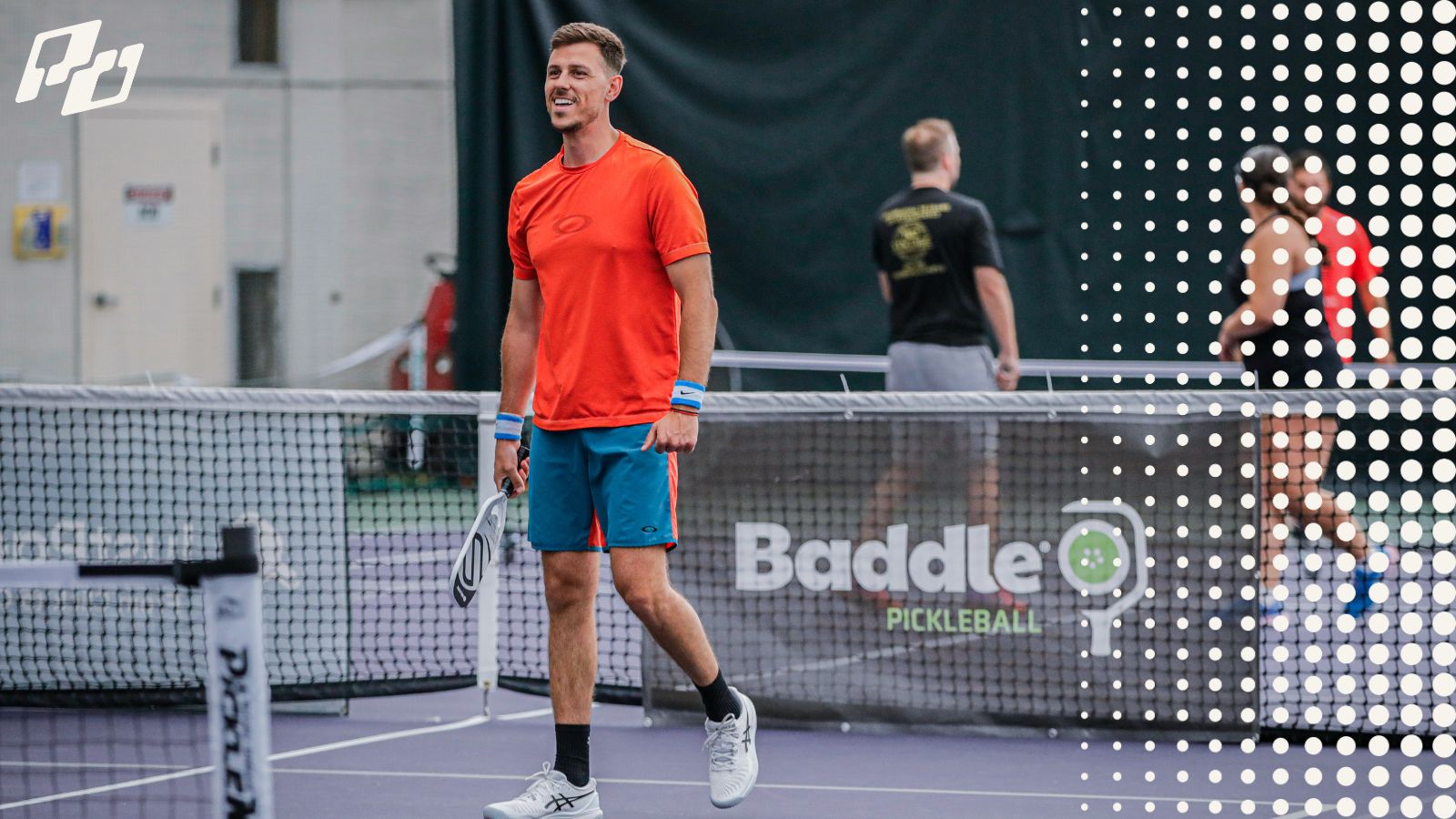
Let me paint a scene you probably recognize: You’re on the court. The last point just ended. You’re still catching your breath, your partner is switching sides, and before you know it—BOOM!—your opponent quick-serves and you’re scrambling. Fault. Or worse, a return into the net because you weren’t ready.
Sound familiar?
Now here’s the part most rec players don’t realize:
There are very specific rules in pickleball that give you power in those little moments between rallies. If you know how to use them—legally—you can:
✅ Avoid silly faults
✅ Stop aggressive servers from rushing you
✅ Double-check your position before serving or receiving
✅ Slow the pace without looking like you’re stalling
✅ Make sure the score and the server are right
Let’s break it down—rule by rule—with practical, real-world examples.phase—and how to weaponize them in friendly, rule-savvy fashion.
Rule 4.E – The 10-Second Rule: Your Legal Breathing Room
The rule says: Once the score is called, the server has 10 full seconds to serve. If they take longer, it’s a fault.
But here’s the kicker: if players switch sides during that window (say, someone forgets), the score must be recalled, and the 10-second count restarts.
Why this matters:
Most rec players rush the serve like it’s hot lava. But those 10 seconds are yours. They’re not just allowed—they’re protected.
That’s your moment to reset, confirm your positioning, and regain control of the pace.
Try this:
Let’s say your last shot was a long sprint to the baseline. Instead of rushing to serve, take a breath. Step to the correct side. Check your partner. Look across the net. Then serve.
You’ve got the time—use it.
Rule 4.C – Readiness Signals: The Legal Way to Say “Whoa!”
Before the score is called, you can let everyone know you’re not ready by:
- Raising your paddle overhead
- Raising your non-paddle hand
- Turning completely away from the net
But here’s the good part:
After the score is being called, those gestures no longer count. Instead, you need to say something—“Stop!” or “Wait!” That verbal cue is now officially recognized in the 2025 rules.
Try this scenario:
You’re returning serve and your partner’s still adjusting their hat or jogging back to their position. The server starts calling the score. Just say, “Wait!” Loud enough to be heard.
They have to stop. You didn’t break the rules—you used them.
Don’t abuse it:
Don’t use “wait” every single time. But when you truly need a second to reset, it’s your tool.
Rule 4.B.6 & 4.B.10 – Know Where You’re Supposed to Be
Here’s a common mistake: players forget what side they should be on or who’s serving next. Then the ball’s in play… and suddenly the other team is calling a fault for “wrong position.”
Let’s simplify:
- The player who starts the game serving is labeled the Second Server, but they serve first. (Weird, I know.)
- At each side-out, the correct server starts on the right (even) side.
- From there, serving side is determined by score:
- Even score = right side
- Odd score = left side
If you serve or receive from the wrong side, it’s a fault—even if you win the rally.
But! If you were in the correct position when the score was called and no one notices until mid-rally, the point counts.
Easy fix:
Right before the score is called, just ask:
“Am I good?”
This simple phrase covers two things:
- Am I the correct server?
- Am I standing on the correct side?
And yes—if there’s no ref, you can ask your opponent. They are required to answer honestly.
Rule 4.B.7 – Your Partner Can Stand Wherever They Want (Seriously)
Here’s something most people don’t know:
Aside from the server needing to be in the right box, your partner can be anywhere on your side of the court—even off the court!
Use this to your advantage:
- Stack on one side to keep your stronger player in position
- Have your partner crowd the net (legally) to intimidate a returner
- Fake like you’re going to poach, then hold position
Your positioning can apply pressure, visually disrupt the returner, or just buy a split-second of uncertainty. And in pickleball, a split-second is huge.
Rule 4.D – Who Should Call the Score (and Why It Matters)
- In rec play, the server usually calls the score.
- If they can’t, the partner may do it—but only if needed, and it shouldn’t switch mid-game unless there’s a voice issue.
Why is this important? Because if players aren’t ready and you call the score too soon, you’re messing with their timing—and they may rightly stop play.
Tip:
Make it a habit to check if everyone’s set. Then call the score clearly, wait a beat, and then serve. You’ll avoid confusion, avoid arguments, and look like a total pro.
Recap: Rules That Work for You—Not Against You
| Rule | What You Can Do With It |
|---|---|
| 4.E – 10-Second Rule | Take time to breathe, reset, and confirm position before serving. |
| 4.C – Readiness Signals | Legally pause play with a paddle raise or verbal cue like “wait.” |
| 4.B.6 & 4.B.10 – Positioning | Prevent position faults or catch opponents making them. |
| 4.B.8 – “Am I good?” | Ask anytime before the score is called to double-check your position. |
| 4.B.7 – Partner Positioning | Use creative formations and stacking to confuse or pressure opponents. |
| 4.D – Score Calling | Call the score clearly and consistently—don’t rush it. |
The Game Doesn’t Start With the Serve—It Starts Between the Points
You don’t need to play faster, hit harder, or be younger to win more rallies. You just need to be smarter between points.
Those few seconds—the 10-second rule, the readiness cue, the pre-serve check-in with your partner—are real, rule-backed moments where the best rec players quietly take control.
The rules are on your side. Use them.