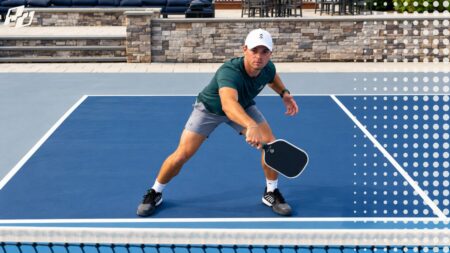
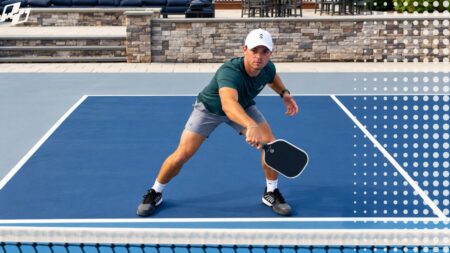
For years, the lob was the butt of jokes in pickleball. At open play, it was the move everyone groaned at: “Oh, that guy lobs all the time,” followed by an easy overhead smash from the other team. Even at the pro level, lobs were rare—maybe one or two in an entire match. They were seen as desperation shots, not real weapons.
Then came the Las Vegas PPA Open. Indoors at the Convention Center, with no wind or sun, players suddenly felt free to try them—and one player, in particular, put the lob front and center. In her semifinal against Ben Johns and Anna Leigh Waters, Anna Bright lobbed nearly ten times in a single match. For pros and fans alike, it felt like a shift: the lob wasn’t a gimmick anymore. It was part of the strategy.
As one fan watching put it: “Watching Vegas PPA and it’s obvious lobs are a meta shot now… 5+ lobs per game!”
Why Vegas Became Lob Central
The setting mattered. Playing indoors changed everything:
- No wind, no sun. Outdoors, even a light breeze can turn a perfect lob into a floater. Indoors, the flight is clean and predictable.
- Controlled depth perception. With no glare or shadows, players can judge height and distance more precisely.
- Confidence breeds attempts. Once a few landed, the floodgates opened.
One Pickleball Forum user nailed it: “Indoor definitely contributed to the abundance of it. It’s easier to be consistent with lobs indoors, but lobs are a valid shot now. Not a gimmick.”
Anna Bright: The Lob Pioneer
If lobs are “in,” Anna Bright is leading the charge. While Ben Johns hardly lobbed at all in Vegas, Bright kept going to it—again and again—against the strongest team in the world.
As another player commented: “Yep, Anna Bright got this started. Will be interesting to see how long it lasts, or will the pros find a better way to defend them…”
Bright’s lob isn’t the lazy, looping moon-ball you see at rec courts. It’s compact, disguised, and often spun. She sets it up out of a dink exchange, making her paddle path look identical until the last second. Then she brushes up, adds topspin, and the ball clears the hands by just a couple feet before diving into the backcourt.
That disguise is everything. At pro speeds, if your opponent sees the lob too soon, they’re already backpedaling. If you hide it, you’ve bought yourself one or two precious shots where you control the rally.
The Lob as a “Reverse Reset”
Think of it this way: most players reset to survive—they drop the ball softly to stay in the rally. A lob does the opposite. It resets the positions.
One Redditor summed it up: “A successful lob from the kitchen is essentially a reverse-reset—giving you back the kitchen advantage and forcing the other team to the baseline.”
That’s why the lob can be so effective. Instead of grinding out dink after dink, you flip the geometry of the court in a single swing. But there’s a catch: you only have a shot or two to cash in. If your follow-up is sloppy, the defense resets and you’ve gained nothing.
Another brilliant lob, this time from Christian Alshon at the Las Vegas PPA Open:
Why Lobs Fail in Rec Play
So why does the lob look genius when Bright does it, but hopeless when your buddy tries it in Tuesday night rec? A few reasons stand out:
- Telegraphed swings. The big, scooping motion gives defenders a full second to adjust.
- Bad timing. Lobbing from the baseline is almost always a gift. Pros do it from the kitchen, balanced and set.
- No topspin. Flat lobs float. Pros brush with topspin, so the ball dips late.
- Overuse. At rec, some players lob constantly. As one comment put it: “The dude who lobs every other shot ain’t it, chief.”
Add in the wind factor outdoors, and you see why rec lobs rarely work. As another player said: “Amateurs use it as a safety blanket, desperation shot, or a troll shot. Doesn’t mean it’s not good—it’s just used wrong.”
When (and How) to Lob Like a Pro
The lob isn’t random. It’s situational. Here are the scenarios where pros pull it out—and how you can copy them:
- In dink rallies. After several neutral exchanges, slip in a disguised lob to break the rhythm.
- When your opponent leans forward. If their weight is already over the kitchen, their first step back will be late.
- Over the backhand shoulder. Most players’ backhand overhead is weaker—target it.
- Indoors or calm conditions. Outdoors in wind? Skip it.
The execution matters even more:
- Disguise it. Make it look like a dink until the last second.
- Add spin. Brush up, don’t scoop—topspin pulls the ball down.
- Go deep, not high. Offensive lobs clear by a couple feet, not 20.
- Follow up. Don’t admire your shot—step in and be ready for the weak reply.
As one high-level player in the thread said: “The lobs that work at that high level are precise shots given specific setups. The arbitrary lob thrown by lower levels definitely gets destroyed.”
How to hit a topspin lob ft. Anna Bright:
Defending the Lob
Of course, if lobs are on the rise, you also need to know how to stop them. Pros showed in Vegas that even Bright’s best lobs can be neutralized with adjustments.
- Read the disguise early. Watch the paddle face. If it opens slightly, prepare for lift.
- Don’t backpedal blindly. Drop-step, turn, and run. It’s safer and faster.
- Communicate. Call “yours” or “mine” immediately—one chases, the other covers the middle.
- Let it bounce if needed. If you’re late, don’t swing at chest-height. A controlled bounce gives you a safer drop.
The takeaway? The lob can win you momentum, but it’s not unanswerable. The best teams in Vegas adjusted mid-match, proving it’s a tool—not a crutch.
Pro player Callie Smith breaks down an easy, effective way to handle lobs:
Fad or Future?
Some fans remain skeptical. One put it bluntly: “It worked until it didn’t.” Bright and others grabbed points early in Vegas, but once Johns and Waters adjusted, the lob lost its shine.
That’s the question: was this a Vegas-specific wrinkle, or the start of a lasting trend? Past fads—like spin serves—fizzled when defenses caught up. Yet the lob is different: it’s not a trick shot, it’s geometry. Push opponents back, reclaim the kitchen, dictate play.
Most likely, lobs won’t define matches, but they’ll remain a selective weapon, like the Erne or ATP. Not a gimmick—just another way pickleball keeps evolving.
Quick Playbook: Bringing the Lob Into Your Game
- Use sparingly. One or two per game, not every other shot.
- Disguise it. Same setup as a dink until the last beat.
- Target smart. Go over the backhand shoulder, not dead center.
- Follow up. The lob is a setup, not the finisher.
My Take: Don’t Just Toss It Up
The lob has come a long way. It’s no longer just the punchline of open play—it’s a legitimate pro-level tactic that can flip momentum in an instant. Anna Bright proved in Vegas that, with the right disguise and timing, it can rattle even the most unshakable opponents.
Here’s the bonus tip most rec players miss: stop thinking of the lob as a one-shot play. It’s always a two-shot sequence. Lob to push them back, then be ready to pounce on the weak reply. The lob is the door you crack open; the real win comes when you walk through with the next shot.
So if you add it to your game, do it with purpose. Drill it. Hide it. And use it at the right moment. Done well, the lob isn’t just a ball going up—it’s your game leveling up.