At some point, it happens to everyone.
You work your way to the kitchen, feel good about the rally… and suddenly someone from the baseline unloads a drive straight at you.
Your instincts kick in:
- You swing.
- You flinch.
- You step back.
- You hope.
And most of the time, that’s exactly what gets you in trouble.
Here’s the reassuring truth: being attacked at the kitchen isn’t a failure. It’s part of pickleball. And once you know how to handle it, those attacks stop feeling scary—and start turning into opportunities.
First, Let’s Clear This Up: Swinging Is Usually the Wrong Move
Most beginner and early-intermediate players make the same mistake when attacked: they swing at the ball like it’s a normal volley.
Coaches consistently warn against this because:
- You’re reacting late
- The ball already has pace
- Your swing adds chaos, not control
- Contact often happens beside or behind your body
That’s why pros talk about meeting the ball, not hitting the ball. Defense at the kitchen is about absorbing pace, not creating it.
The 3-Step Defensive System Coaches Teach
When you’re being attacked from the baseline and you’re at (or near) the NVZ, almost every high-level coach boils defense down to these three things:
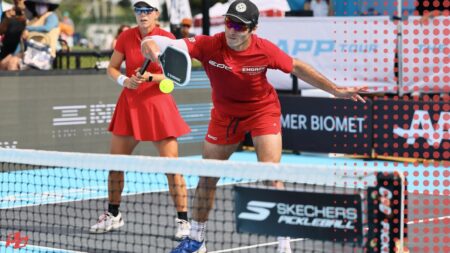
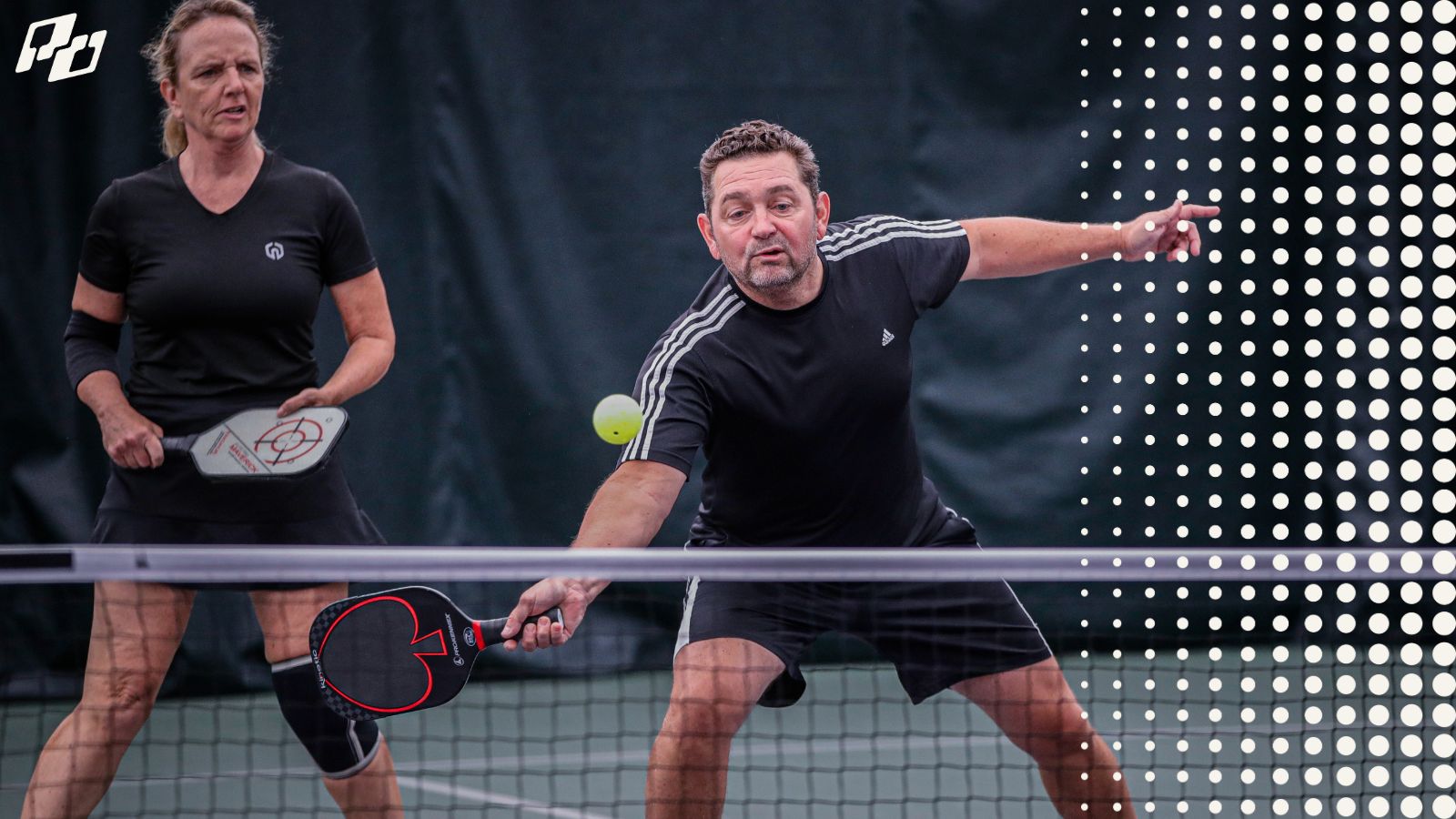
Step 1: Get in a Wide, Athletic Stance
(Before the ball is even hit)
Your job starts before the attack.
Good defenders:
- Lower their center of gravity
- Widen their stance
- Stay light on their toes
Why it matters: A wide stance lets you react without falling backward, crossing your feet, or reaching desperately. It also keeps your paddle stable when the ball comes fast.
If you’re upright, narrow, or flat-footed, you’re already late.
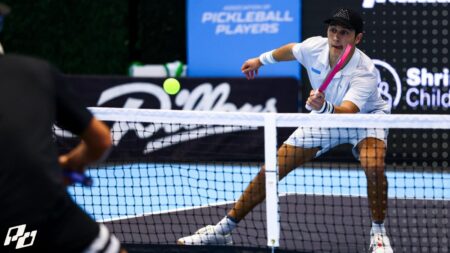
Step 2: Keep Your Arms Out in Front (Away From Your Body)
This is a big one—and something pros notice immediately.
Your arms should be:
- In front of your chest
- Slightly away from your body
- Paddle head up and ready
Why coaches emphasize this: When your hands drift back toward your body, you’re forced to “catch up” to the ball. That’s when people jam themselves, flick wildly, or pop balls up.
Arms out front = earlier contact = calmer defense.
Step 3: Meet the Ball Out Front and Block It
This is the key difference between panic and control.
Instead of swinging:
- Let the ball come to you
- Meet it out in front
- Use a short, firm block
Think:
“Paddle in the way,” not “swing to win.”
Pros often describe this as redirecting pace, not stopping it. The paddle face stays quiet, and the ball simply goes back over the net—usually low and unattackable.
This short video clearly shows what works — and what doesn’t — when you’re defending at the kitchen line:
Where Should You Aim Your Block?
Coaches generally recommend:
- Middle of the court (between opponents)
- Crosscourt at the feet
- Or softly back to the kitchen if the ball isn’t too fast
What you don’t want:
- Sharp angles
- Big counters
- Anything that requires perfect timing
Defense is about survival first, advantage second.
Common Mistakes That Get Players Picked On
If you feel like people attack you a lot, it’s usually because of one of these:
❌ Standing too tall at the kitchen
❌ Letting hands drop between shots
❌ Swinging instead of blocking
❌ Stepping back instead of holding your ground
❌ Trying to “win” the point while under pressure
Fixing even one of these can dramatically change how often you’re targeted.
A Quick Mental Shift That Helps Immediately
Here’s something pros understand early:
Being attacked doesn’t mean you’re losing the point.
Often, the attacker is taking a low-percentage shot hoping you’ll make a mistake. If you block calmly two or three times in a row, attacks usually stop.
Patience beats power more often than people think.
The Bottom Line
When you’re attacked at the kitchen:
- Get low and wide
- Keep your arms out front
- Meet the ball early
- Block, don’t swing
You don’t need faster hands.
You don’t need a harder paddle.
You need better positioning and calmer decisions.
Once you learn to defend confidently, you’ll notice something funny:
People stop attacking you—not because they can’t, but because it stops working.
The Real Takeaway
The fastest way to improve isn’t learning how to hit harder—it’s learning how to stay calm when someone else does. The moment you stop flinching, rushing, or trying to “win the point back,” the game slows down in a surprising way.
Bonus tip most rec players miss: the quieter your reaction, the less attractive you are as a target. Block a few balls cleanly, stay balanced, and let the attacker take the risk.
Defense doesn’t make you passive.
It makes you hard to beat.
And once players realize attacking you isn’t free anymore… they usually stop trying.