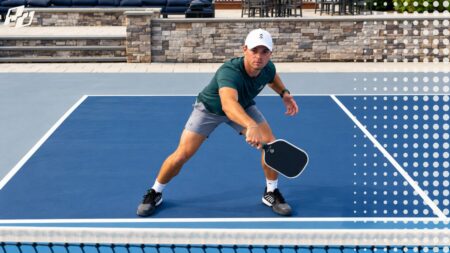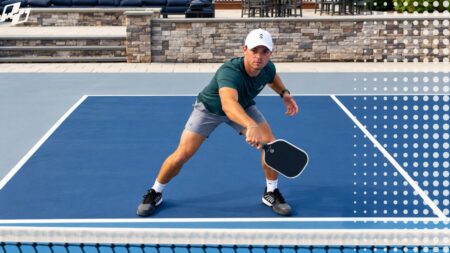

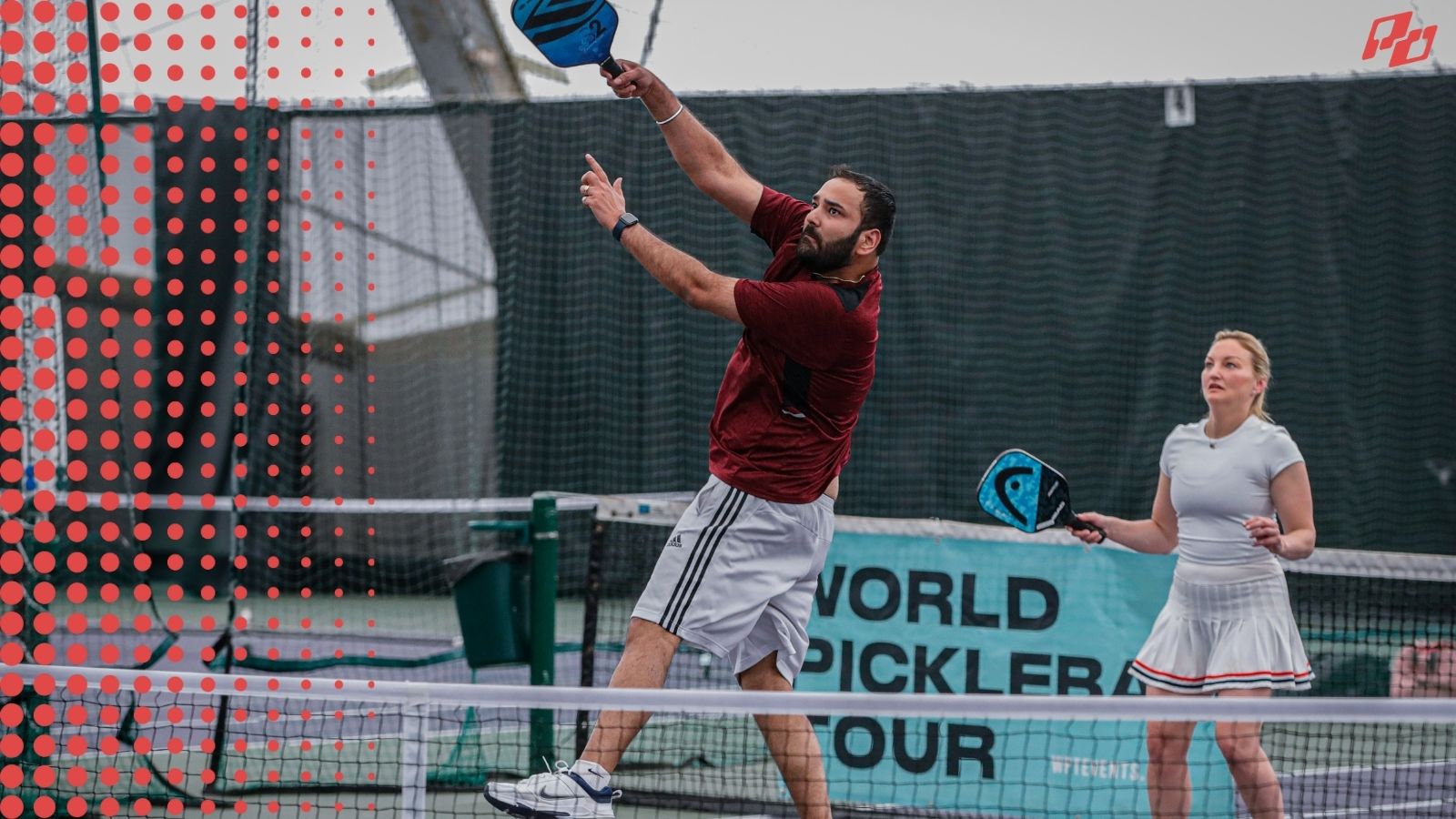
You’re in control. You’re winning the kitchen. You feel settled, confident, maybe even a little untouchable.
And then — boom — a lob floats up, dips late, lands deep in your backhand corner, and suddenly you’re sprinting, turning, reaching… and watching the ball bounce exactly where you don’t want it to.
No paddle on it. No play. Point over.
It’s tempting to think: that might be the perfect shot.
But is it?
Let’s talk honestly about the topspin lob to the backhand corner — why it feels devastating, when it actually is the right shot, how hard it is to execute consistently, and whether rec players should really be building their game around it.
Why This Shot Feels So Brutal
There’s a reason this lob leaves even experienced players shaking their heads. From a biomechanics and court-positioning standpoint, it hits a perfect storm:
- The backhand side is weaker for most players
- The player is usually leaning forward at the kitchen
- The lob forces a full hip turn and retreat
- Topspin makes the ball accelerate forward after the bounce, not sit up
That combination is nasty.
Even high-level coaches will admit: retreating for a topspin lob is one of the hardest movements in pickleball, especially when you’re caught flat-footed or cheating middle.
That’s why this shot doesn’t just win points — it humiliates positioning.
Watch one of the game’s best pros, Anna Bright, break down the topspin lob to the backhand side:
When the Topspin Lob Is Actually a Perfect Shot
Here’s where I’ll be opinionated: this lob is not a “perfect shot” in general —
but it is nearly perfect in very specific situations.
The ideal conditions:
- Opponent is tight to the kitchen line
- They’re leaning forward or hunting speed-ups
- You’ve already shown dink or drive patterns
- Their retreat footwork is average (most rec players)
- You’re balanced and unpressured when you hit it
In those moments, the topspin lob doesn’t need to be heroic.
It just needs to be:
- high enough to clear
- deep enough to push back
- spinning enough to carry forward
When those conditions line up, this shot can feel borderline unreturnable.
That’s not luck — that’s situational perfection.
Here’s how it’s done:
@richard_pickleball Tip Tuesday! This week we dug into the offensive lob and how to use it! ⭐️ Helps to get your opponents off the kitchen line and creates an offensive position for you! ⭐️ Topspin on the lob makes it even harder for your opponents to get because it runs away off the bounce. ⭐️ Adds another option to confuse opponents because it looks just like your topspin dink and a speed up! ….. #propickleball #pickleballislife #pickleballtips #pickleball #pickleballcoaching ♬ original sound – Richard_pickleball
Why Rec Players Love This Shot (Maybe Too Much)
Ask rec players what their “best” or “favorite” shot is, and you’ll hear versions of this lob all the time.
Why?
Because when it works, it:
- flips momentum instantly
- shuts down aggressive net players
- feels clever instead of brute-force
- creates a highlight moment without smashing
There’s also an emotional payoff.
Landing a perfect lob doesn’t just win a point — it sends a message: “stop crowding the kitchen.”
That’s powerful.
But here’s the part many players ignore…
This Is One of the Hardest Shots to Execute Consistently
Let’s be clear: this is a low-margin shot.
To hit it well, you need:
- precise contact height
- controlled paddle face through the swing
- correct net clearance
- depth judgment within a few feet
- topspin without over-rolling
Miss slightly and:
- it floats → smash
- it drifts long → free point
- it lands short → attack city
That’s why even players who can hit this shot often shouldn’t hit it often. Consistency matters more than brilliance.
Many coaches will tell rec players this blunt truth:
“If you need the lob to be perfect to work, it’s probably the wrong shot.”
Why Pros Use This Shot — But Don’t Rely on It
Watch high-level pickleball closely and you’ll notice something important: pros do hit topspin lobs. They just don’t build their game around them.
They use the lob:
- as a pressure release
- as a pattern disruptor
- as a positioning check
- as a reminder, not a crutch
Once the opponent backs up even a foot? The lob disappears. That’s the lesson rec players often miss.
At higher levels, the lob isn’t a weapon — it’s a threat. The threat alone changes spacing and decision-making.
Is It Worth Practicing?
Yes — but with the right expectations.
You should practice the topspin lob if:
- you want opponents to stop leaning
- you want to expand your shot palette
- you’re comfortable missing a few while learning
- you understand it’s situational, not automatic
You should not practice it because:
- you want a bailout shot
- you’re losing neutral rallies
- you want a magic solution
- you plan to use it under pressure constantly
The lob is most effective when it’s optional, not necessary.
What I’d Actually Tell a Rec Player
Is the topspin lob to the backhand corner devastating? Absolutely.
Is it unreturnable? Sometimes.
Is it the perfect shot? Only when the situation earns it.
For rec players, the goal isn’t to find the perfect shot. It’s to build a game where no single shot can dismantle you — and where you can occasionally pull out something special when the moment is right.
That’s real pickleball growth.