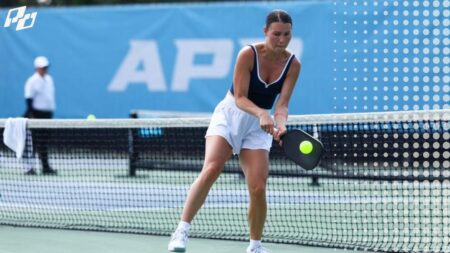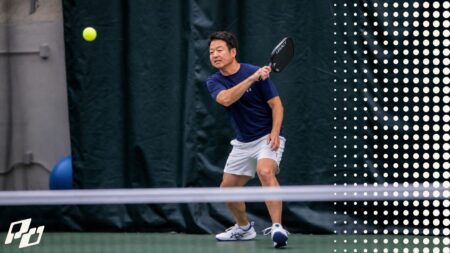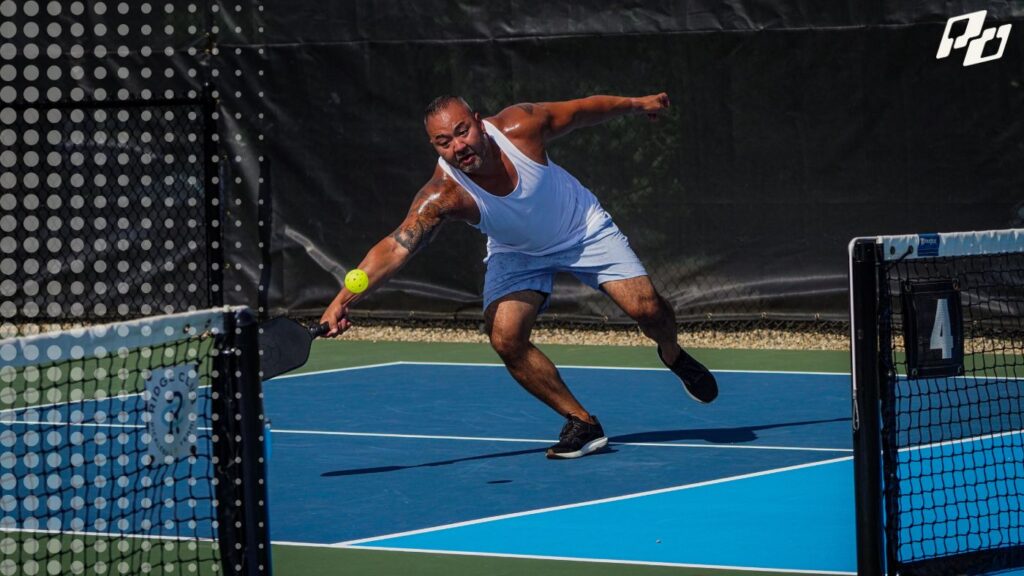
Create space at the kitchen line with small, controlled footwork. Stay balanced, keep your paddle compact, reset low balls, and recover quickly instead of backing up automatically.
This is one of the first habits beginners have to break.
You get to the kitchen line. Then the ball comes faster, deeper, or closer to your body than expected, and you back up just to feel safe.
That reaction is normal, but it keeps you stuck.
If you want to level up, you have to learn how to handle pressure at the kitchen without automatically retreating. You need to create space without giving away control.
That does not mean standing frozen at the line. Good players adjust all the time. But beginners first need to learn how to own the line before they learn when to strategically leave it.
The goal is simple:
Do not retreat automatically.
Create space.
Control the ball.
Recover your position.
The Better Idea: Create Space Without Giving Up Control
At the kitchen, you need enough room to make a clean shot. But you also want to protect your court position.
That is the balance.
A lot of players think the only way to create space is to back away from the ball. But many times, you only need a small adjustment.
Maybe you turn your hips slightly.
Maybe you take a small adjustment step.
Maybe you lower your base.
Maybe you let the paddle stay compact instead of taking a bigger swing.
The key is this: Create just enough space to hit the ball cleanly, then recover right away.
You are not trying to run from the ball. You are trying to make the ball playable.
Why This Matters So Much
When you stay balanced near the kitchen line, you put pressure on your opponents.
You can take balls earlier.
You can block speedups.
You can pressure dinks.
You can attack balls that sit up.
You can make the court feel smaller for the other team.
But when you drift back too much, the opposite happens.
Now your opponents have more time. They can drop the ball shorter. They can angle you wider. They can attack your feet. They can keep you stuck in defense.
That is why kitchen position matters so much in doubles.
You do not need to be frozen on the line. But you do need to understand that giving ground has a cost.
The Mistake Is Usually Panic, Not Movement
Moving your feet is not the problem. Panic movement is the problem.
There is a big difference between a small, controlled adjustment and a full retreat.
A controlled adjustment helps you stay balanced and ready for the next ball.
A panic retreat usually pulls your weight backward, drops your paddle, makes your swing bigger, and leaves you late for the next shot.
That is why the best kitchen players often look calm even when the ball is coming fast.
They are not standing still.
They are making smaller, earlier adjustments.
Pickleball coach Kyle Koszuta recently broke down this common issue for 3.0-level players and below — and honestly, it makes a lot of sense:
What to Do When the Ball Crowds You
When the ball comes into your body, do not immediately jump backward.
Instead, think: make room for the paddle.
You might need to turn your shoulders slightly. You might need to move one foot to clear space. You might need to block instead of swing.
The goal is to avoid getting jammed while still staying close enough to recover.
A helpful cue: Clear space, don’t escape.
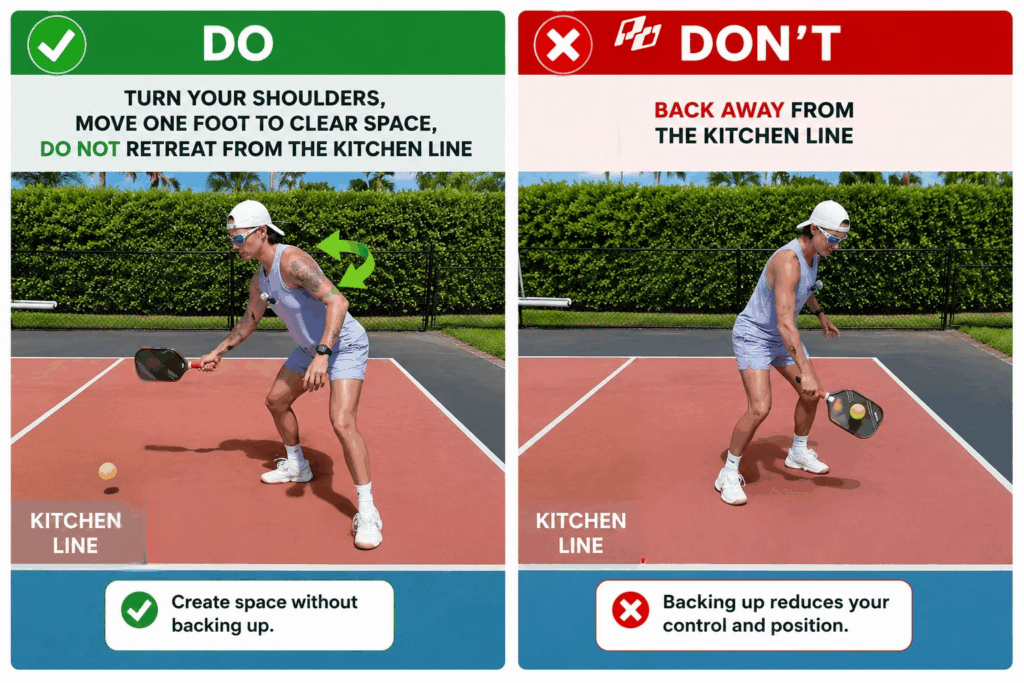
That reminds you that you are not trying to flee the ball. You are simply creating enough room to control it.
What to Do When the Ball Drops Near Your Feet
When the ball gets low near your feet, the wrong move is usually trying to attack it. If the ball is below net height, your job is often to reset it, not win the point.
Soften your grip. Keep the paddle in front. Lower your body instead of only reaching with your arm. Your goal is to send the ball back low and unattackable.
A helpful cue: If you’re late, get neutral first.
That means you do not have to do something amazing. You just have to avoid giving your opponent an easy ball to attack.
What to Do When the Ball Goes Wide
When the ball pulls you wide, do not just reach with your paddle. Move your body with the ball.
If your chest stays far away and only your arm reaches, your shot will usually be weak. You may pop it up, push it wide, or leave yourself off balance.
Instead, take a small shuffle or adjustment step so your body supports the shot.
A helpful cue: Move your body, not just your paddle.
That one idea can clean up a lot of rushed kitchen mistakes.
Beginners Need to Learn the Line First
There is an important exception here.
At higher levels, players sometimes take a small step off the kitchen line on purpose. They may do it to give themselves more reaction time against fast hands, to read an attack, or to let an out ball go.
That can be smart.
But beginners and lower-intermediate players should not use that as an excuse to start playing too far back.
First, you need to learn how to get to the kitchen line, stay balanced, dink with control, block speedups, reset low balls, and recover after contact.
In other words: Learn to own the line before you learn when to leave it.
If you back off before you have those skills, you usually make the game harder. You give your opponents more space, lose pressure, and end up reaching for balls you could have controlled from a better position.
When Backing Off Actually Makes Sense
Backing up is not always wrong.
Sometimes a small step back is smart, especially against stronger players who can speed the ball up quickly and aim at your body.
You might back off slightly when:
- Your opponent is about to attack from a strong position
- The ball is high enough for them to hit hard
- You need more time to read a body shot
- You want to avoid blocking a ball that may sail long
- You are jammed and need room to reset
But this should be intentional.
You are not backing up because you panicked. You are backing up because it helps you make a better decision.
The difference is simple: Back up with a plan, not out of fear.
And after you neutralize the ball, look to recover forward again.
A Simple Way to Think About It
At the kitchen, use this four-step idea:
Hold your position when the ball is manageable.
Adjust when you need space.
Reset when you are under pressure.
Recover before the next ball.
That is the whole skill.
You do not need to win every exchange. You do not need to attack every ball. You do not need to stand frozen on the kitchen line.
You just need to stop giving up ground for free.
One More Thing: Your Opponents Will Test You
Once you start holding your ground better, expect your opponents to notice.
Better players will test your kitchen composure on purpose. They will speed up at your body to see if you panic. They will drop short to pull you forward, then attack the next ball. They will angle wide to drag you off balance.
That is not bad news. That is the game working as intended.
When that happens, the answer is not a new skill. It is the same four steps applied under more pressure: hold, adjust, reset, recover.
The players who are hardest to beat at the kitchen are not the ones with the fastest hands. They are the ones who stay composed when things get uncomfortable. They make boring, controlled shots when the situation calls for it. They do not give free points by panicking.
That is the real goal: not to win every exchange at the kitchen, but to stop losing exchanges for free. Stay balanced. Stay patient. Make them work for every point.
And when you do give ground, make sure it has a purpose. Move back to reset, defend, or read the ball better — then look to recover forward.
That is how you stop surviving the kitchen line and start playing it with control.