Keep pickleball energy up by starting fueled, sipping fluids between games, adding electrolytes for long or hot sessions, and using carbs when your legs or focus fade. The fix is not just stamina — it is smarter hydration, sodium, fuel, pacing, and mini-recovery before fatigue takes over.
`Most rec players do not get tired all at once. They fade.
First, the feet get lazy. Then the ready position gets taller. Then the returns get shorter. Then the easy dinks start floating. Then you say something like, “I don’t know what happened. I was fine the first few games.”
That is usually not one problem.
It is a stack: not enough fuel, not enough fluid, not enough sodium, too much stop-start play, poor pacing, and no plan between games.
Pickleball is sneaky because doubles can feel casual while still giving you repeated accelerations, short recovery windows, heat exposure, long sessions, and a lot of “just one more game.” Hydration guidance from sports-medicine groups emphasizes starting exercise hydrated, replacing fluid during activity, and using carbs/electrolytes for sessions longer than about an hour.
So the goal is not “drink water.”
The goal is to stop the late-session drop-off before it starts.
The Real Reason You Feel Tired
Most players blame stamina.
Sometimes that is fair. But often, the real issue is that your body is running low on one of three things:
| What Runs Low | What It Feels Like |
|---|---|
| Fluid | Heavy legs, headache, slower reactions, worse focus |
| Sodium/electrolytes | Cramping tendency, low energy despite drinking, feeling “flat” |
| Carbs | Weak drives, poor decision-making, shaky energy, sudden fade |
That last one matters. Electrolytes help hydration, but they do not provide energy unless the drink also has carbohydrates. For long or sweaty workouts, experts generally recommend electrolytes during or after activity, but for an actual energy boost, carbs matter more.
In pickleball terms:
⮕ Electrolytes help you hold onto fluid.
⮕ Carbs help you keep playing with pop.
You may need one, the other, or both.
The 30-Minute Pre-Game Fix
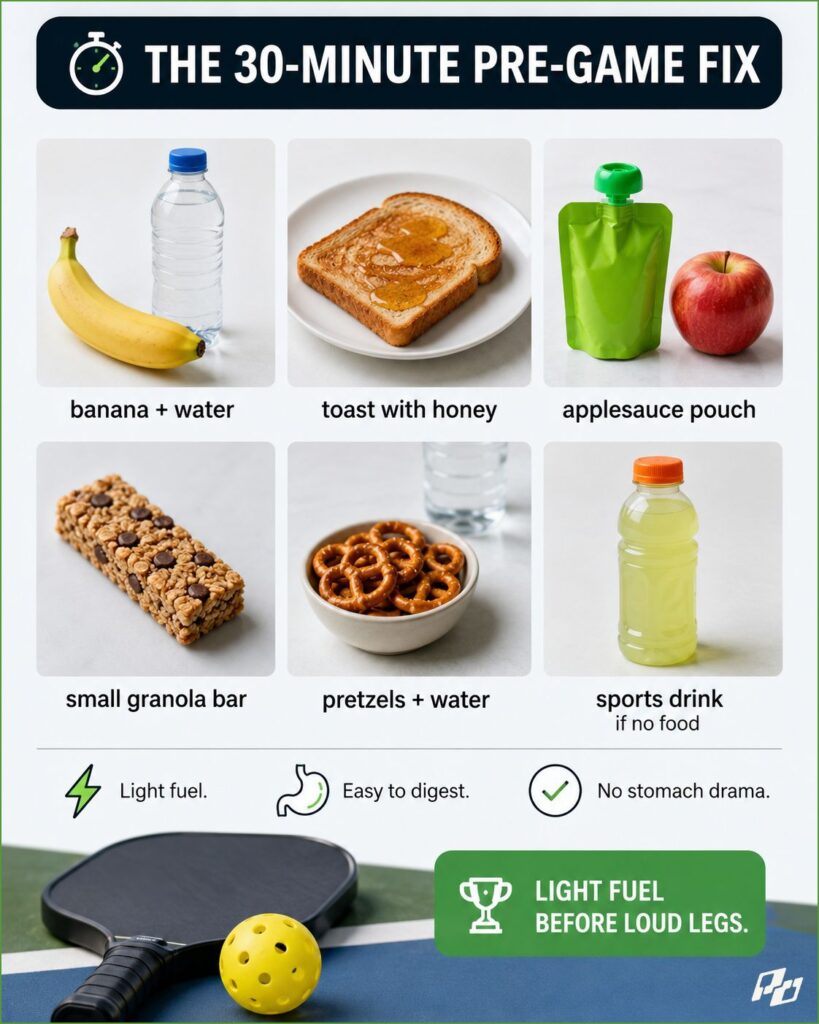
Do not show up empty and expect your first game to warm you into energy. About 30–60 minutes before play, use a small, easy snack if you have not eaten recently.
Good options:
- banana + water
- toast with honey
- applesauce pouch
- small granola bar
- pretzels + water
- sports drink if you cannot tolerate food
The goal is not a full meal. The goal is to give your body available carbohydrate without feeling heavy.
A good pre-game snack should feel almost boring. If it gives you stomach drama, it is not a good pickleball snack.
Remember: “Light fuel before loud legs.”
The Between-Games Rule Most Players Ignore
Open play creates a hydration trap. You finish a game, talk for two minutes, check the paddle rack, joke with someone, then rush back on court.
You meant to drink.
You did not.
Use a rule instead: Every time you come off court, take 3–5 swallows.
Not a giant chug. Just a repeatable habit.
Sports hydration guidance stresses individualized fluid replacement and warns against both dehydration and overdrinking. For rec players, small regular sips beat panic-chugging after you already feel cooked.
Cue: “Drink before you feel behind.”
When Water Is Enough — And When It Is Not
Water is fine for short, easy sessions.
But if you are playing longer than 60–90 minutes, sweating heavily, playing in heat, playing back-to-back sessions, or finishing with salt on your clothes, water alone may not be enough.
That is when electrolytes make sense.
Use this simple guide:
| Session Type | Best Choice |
|---|---|
| 45-minute casual indoor hit | Water |
| 90-minute moderate open play | Water + snack if needed |
| 2+ hours, hot court, heavy sweat | Electrolytes + carbs |
| Tournament day | Planned fluids, sodium, and small carb doses |
| You feel flat despite drinking | Add sodium/electrolytes |
| You feel hungry/shaky | Add carbs, not just electrolytes |
ACSM guidance says carbohydrate and electrolytes are recommended for exercise lasting longer than one hour because they can support performance without impairing water delivery.
The Electrolyte/Energy Fix
| Product Image | Product Name / Pros | Primary Button |
|---|---|---|
|
Best all-around option
|
|
|
|
Cheapest option
|
|
|
|
For heavy-sweaters
|
|
|
|
Great for long-session hydration
|
|
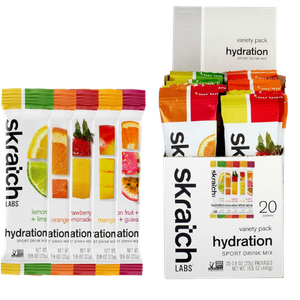
- Replaces lost electrolytes
- Hydrates fast
- Supports endurance
- Clean ingredients
- Easy travel packets
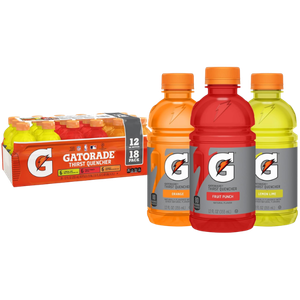
- Replaces water + electrolytes
- Adds sodium and potassium
- Helps muscles perform
- Carbs fuel activity
- Rehydrates faster than water alone
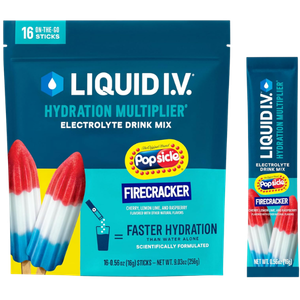
- Hydrates faster than water
- 3x the electrolytes
- Includes B vitamins
- No artificial colors
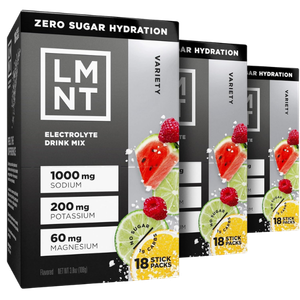
- 1000mg sodium
- Zero sugar
- Adds potassium + magnesium
- Good for heavy sweat
- Easy stick packs
Here is my practical take.
If you want one product category that makes sense for pickleball, choose a sports drink mix with both sodium and some carbohydrates, not just a zero-calorie electrolyte powder.
Why?
Because pickleball fatigue is often hydration plus fuel.
My best overall pick for long rec sessions is Skratch Labs Sport Hydration Drink Mix because it is built around electrolytes plus simple carbs, not a stimulant-heavy “energy” formula. Skratch describes it as replacing electrolytes lost in sweat while providing “a little energy,” and nutrition databases list a serving around 80 calories and 20g carbs.
Other options can work:
Gatorade Thirst Quencher is easy to find and provides both carbohydrates for energy and sodium to help replace electrolytes lost through sweat. A typical 12-ounce serving contains about 21–22 grams of carbohydrates and around 160 milligrams of sodium, making it a practical option for longer pickleball sessions.
Liquid I.V. can be useful when you want stronger hydration support, with glucose and sodium included, but it may feel too sweet or too much for some players.
LMNT is high-sodium and zero-sugar, so it can help heavy sweaters who already get carbs from food, but it is not an energy drink.
My ranking for most rec players:
| Need | Better Choice |
|---|---|
| Best all-around for long play | Skratch Labs Sport Hydration |
| Cheapest/easiest to find | Gatorade |
| Heavy sweater, low-carb eater | LMNT + separate snack |
| Travel/convenience | Liquid I.V. |
| Short casual play | Water |
Important: if you have high blood pressure, kidney disease, heart issues, or take medications affecting fluid/sodium balance, ask a clinician before using high-sodium electrolyte products regularly.
The Quick “Am I Under-Fueled?” Test
During your next long session, notice what fades first.
- If your legs fade first, you may need better conditioning, sodium/fluid, or pacing.
- If your focus fades first, you may need carbs and a real break.
- If your hands feel slow, you may be dehydrated, overheated, or standing too tall from fatigue.
- If your mood changes — more impatient, annoyed, or reckless — that is often fuel/fatigue talking.
One of the most useful signs is this: You start attacking bad balls because you do not want to keep working.
That is fatigue disguised as strategy.
The Pacing Hack: Stop Playing Every Point Like It Is 9–9
Intermediate players waste a lot of energy between shots.
They over-shuffle.
They bounce in place.
They rush back to the line.
They chase balls that are clearly gone.
They take huge swings when compact shots would do.
Better stamina is not only cardio. It is energy management.
Between points, let your breathing come down. During points, stay efficient. If you are in a long open-play session, do not sprint for every hopeless lob in game one and then wonder why game six feels terrible.
Cue: “Spend energy where it can win the point.”
The Mini-Recovery Between Games
If you want to feel better late, use the two-minute reset:
✓ Drink 3–5 swallows.
✓ Take 2 slow breaths through the nose.
✓ Eat one small carb bite every 45–60 minutes.
✓ Sit only if you can stand back up loose.
✓ Walk for 20 seconds before going back on.
That last one matters. Sitting too long can make legs feel stiff, especially for 50+ players. If you sit, stand up before your name is called and move a little.
What Not to Do
❌ Do not wait until you cramp. By then, you are already late.
❌ Do not drink only coffee before a hot session.
❌ Do not slam a huge bottle of water at once and call it hydration.
❌ Do not try a brand-new electrolyte mix during a tournament.
❌ Do not use caffeine to cover poor sleep, poor food, and poor hydration.
❌ Do not assume zero-calorie electrolytes solve low energy. If you need fuel, you need carbs.
Simple Game-Day Plan
For a normal 2-hour rec session:
Before: eat a small carb snack if your last meal was more than 3 hours ago.
Bring: one bottle of water and one bottle with electrolytes or sports drink.
During: drink a few swallows every game. Start the electrolyte drink before you feel tired.
After 60 minutes: add a small carb bite if you are still playing.
After: eat a real meal with protein, carbs, and fluid.
This is not fancy. It just works because it prevents the slow fade.
Your “Stamina Problem” Might Be a Planning Problem
A lot of players do not need some heroic fitness overhaul.
They need to stop showing up underfed, underhydrated, over-caffeinated, and surprised that their body fades after 90 minutes.
Yes, conditioning matters. But your easiest energy gains may come from boring habits done early:
fuel before you crash, sip before you are thirsty, use electrolytes when sweat is real, and eat enough carbs to keep your legs and brain online.
Pickleball rewards the player who still makes good decisions late. Not just the player who looked sharp in game one.