A pickleball lob is not rude by itself. In rec play, it becomes poor etiquette when it repeatedly targets a player who cannot safely pursue it. Use the lob as strategy, not as the entire matchup, and adjust to the game’s agreed intensity.
Everyone Says They Hate Lobs. They’re wrong. They don’t hate the shot.
They hate what the shot does to them.
Watch almost any heated debate in pickleball and eventually someone brings up lobs.
- “They’re cheap.”
- “They’re not real pickleball.”
- “Only players without skills lob.”
- “It’s dangerous.”
- “It’s bad sportsmanship.”
It’s remarkable.
No other legal shot creates this much emotion.
Nobody complains about perfect drops.
Nobody gets angry at topspin.
Nobody storms off because someone dinked too well.
Yet one well-placed lob can turn a friendly rec game into a courtroom. That isn’t really about the shot.
It’s about psychology.
The Lob Takes Away Control
Most recreational pickleball is built around comfort.
- Get to the kitchen.
- Dink.
- Speed up.
- Counter.
- Reset.
Everything feels predictable. Then someone throws up a quality lob. Suddenly everything changes.
Instead of moving forward, you’re turning around.
Instead of attacking, you’re defending.
Instead of dictating the point, you’re reacting.
That loss of control is uncomfortable. Human beings generally dislike feeling surprised. The lob is basically surprise disguised as strategy.
It Attacks Something Players Don’t Practice
Here’s the uncomfortable truth. Most recreational players spend almost no time practicing lob defense.
They drill drops.
They drill dinks.
They drill serves.
Very few spend 20 minutes learning:
- drop-step footwork
- switching with a partner
- overhead positioning
- deciding when to let the ball go
Then they’re shocked when a lob exposes those missing skills.
The shot isn’t unfair.
It’s simply revealing a hole that most players never trained.
People don’t usually hate the lob because it’s illegal or unsportsmanlike. They hate it because it forces them into one of the least comfortable situations in pickleball. The moment a shot consistently exposes a weakness—whether it’s mobility, overheads, or positioning—it starts feeling “cheap,” even when it’s simply good strategy.
The Lob Also Exposes Age Better Than Any Other Shot
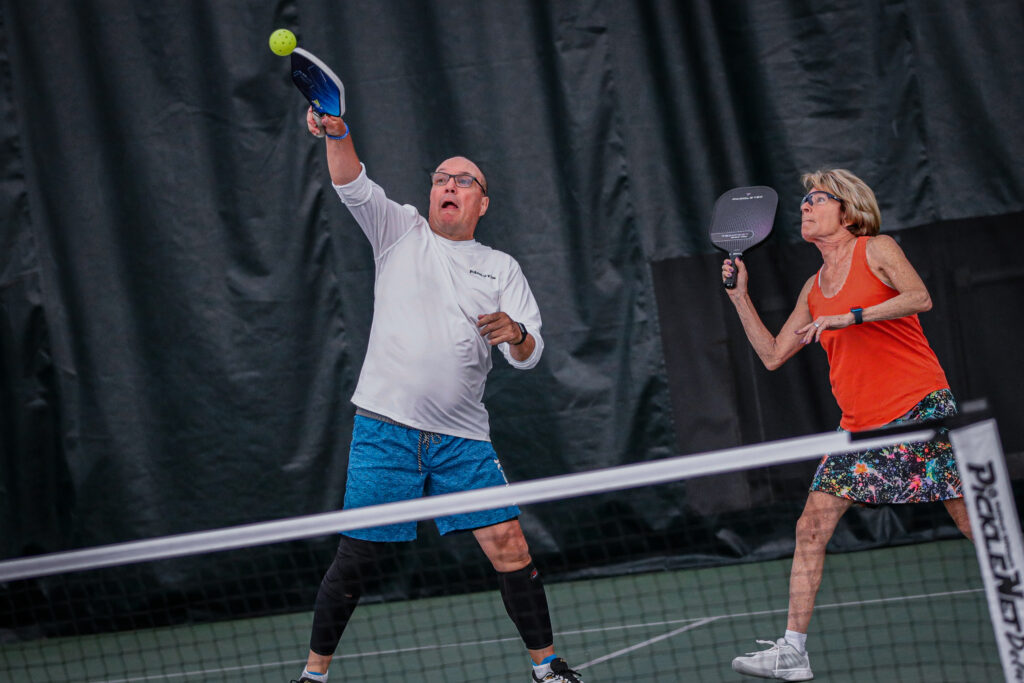
This is the uncomfortable conversation nobody likes having. The average recreational pickleball player is older than participants in most sports.
A lob doesn’t just test skill.
It tests:
- mobility
- balance
- confidence moving backward
- recovery speed
That makes it feel personal.
If someone beats your forehand, you think:
“Nice shot.”
If someone beats your legs with a lob, many players hear:
“You can’t move anymore.”
Those aren’t the same emotionally.
That’s why debates around lobs often become debates about respect instead of tactics. Many pickleballers accepted the lob as part of the game while also arguing players should consider mobility limitations in casual play.
Change the Question You Ask Yourself
Here’s one habit I’ve noticed in players who improve quickly. When they lose a point to a lob, they don’t ask: “Why would they hit that?”
They ask: “Why did that work?”
That sounds like a small difference, but it completely changes what happens next.
One question leads to frustration.
The other leads to improvement.
Maybe you were crowding the kitchen.
Maybe you leaned too far forward expecting another dink.
Maybe your partner should have taken the ball.
Maybe you backpedaled instead of turning.
Maybe it was simply a perfect lob.
Every one of those answers gives you something useful.
Complaining doesn’t.
If you genuinely hate playing against lobbers, make that your next practice goal. Spend 15 minutes working on drop steps, overheads, partner communication, or simply recognizing when an opponent is setting up to lob. Once you become comfortable defending it, you’ll probably notice something surprising:
You stop thinking about the lob altogether.
It becomes just another shot.
And here’s one more thing. If your partner starts complaining every time the opponents lob, don’t pile on. That usually makes everyone tighter and more frustrated. Instead, keep the conversation practical:
“Let’s back up half a step.”
“I’m taking the next one over the middle.”
“They’re looking for the lob now.”
Those comments solve problems. “That’s a cheap shot” doesn’t.
The best rec players aren’t the ones who never get lobbed. They’re the ones who refuse to let one shot control the mood of the entire game.
The Real Etiquette Problem Is Repetition, Not the Lob
A single lob can be smart. A fifth lob at the same player who has already shown they cannot safely pursue it is something else.
The etiquette question is not: “Is this shot legal?”
It is: “Is this still creating a game?”
Good recreational play has uncertainty. Both sides still have choices, adjustments, and a reasonable chance to solve the point.
When one shot produces the same automatic result over and over, the rally stops being tactical. It becomes a test with only one answer—and one player has already shown they cannot give it.
That does not mean you should avoid lobbing older players or assume someone is fragile. That can be just as disrespectful. Plenty of senior players defend lobs well and enjoy the challenge.
A better approach is to use the first few lobs as information. If the player turns, runs, switches, and competes for the ball, keep the shot available.
If they immediately let every lob go, look unstable, or clearly avoid the chase, you now understand the game you are in.
At that point, repeatedly going back to the lob may help you win, but it probably is not testing much pickleball skill anymore.
My rule is simple: Use the lob to reveal the matchup. Do not let it become the entire matchup.
That keeps the shot strategic without turning someone’s physical limitation into the only story of the game.
The Best Players Treat the Lob Like Every Other Shot
The lob isn’t cheap. It isn’t dirty. It isn’t automatically good strategy either.
It’s simply another shot.
Sometimes it’s brilliant.
Sometimes it’s reckless.
Sometimes it’s exactly what wins the point.
Sometimes it’s exactly what gets smashed back at your feet.
The players who improve the fastest stop attaching emotions to shots.
They stop asking, “Should people do that?”
and start asking, “How do I handle it better next time?”
That question is where improvement begins. Because the moment you stop arguing with the lob… you usually start beating it.