
Crosscourt dinking is one of the most important skills in pickleball. It’s the foundation of controlled kitchen exchanges, and it’s often where points are won or lost once players reach the kitchen line.
But many recreational players struggle with consistency when dinking crosscourt. The ball floats too high, drifts wide, or pops up into the middle of the court.
A big reason for this comes down to how the paddle is moving during contact.
Recently, pickleball coach John Cincola shared a quick but powerful tip on Instagram that highlights one of the most common technical mistakes players make when dinking crosscourt.
The concept is simple but extremely important: correct crosscourt dinks come from the elbow moving toward the target — while the paddle stays stable and doesn’t flip over.
It’s a subtle adjustment, but it dramatically improves direction, touch, and consistency.
The Common Crosscourt Dink Mistake
When players try to aim crosscourt, many instinctively manipulate the paddle face with their wrist.
You’ll often see players:
- flipping the paddle open
- rolling the wrist through contact
- “steering” the ball with the hand
The intention is good — they’re trying to create angle. But this approach usually causes problems like:
- inconsistent direction
- floating balls
- balls sailing wide
- pop-ups that get attacked
The reason is simple: too much wrist movement introduces too many variables.
Instead of a stable paddle face guiding the ball, the shot becomes dependent on timing and hand movement.
At higher levels of pickleball, players avoid this.
The Key Adjustment: Lead With the Elbow
Cincola’s tip focuses on a small but powerful mechanical change. Instead of flipping the paddle toward the crosscourt target, the elbow moves slightly in that direction.
That small movement does two important things.
First, it naturally guides the paddle path toward the correct angle without forcing the wrist to rotate. Second, it keeps the paddle face stable through contact.
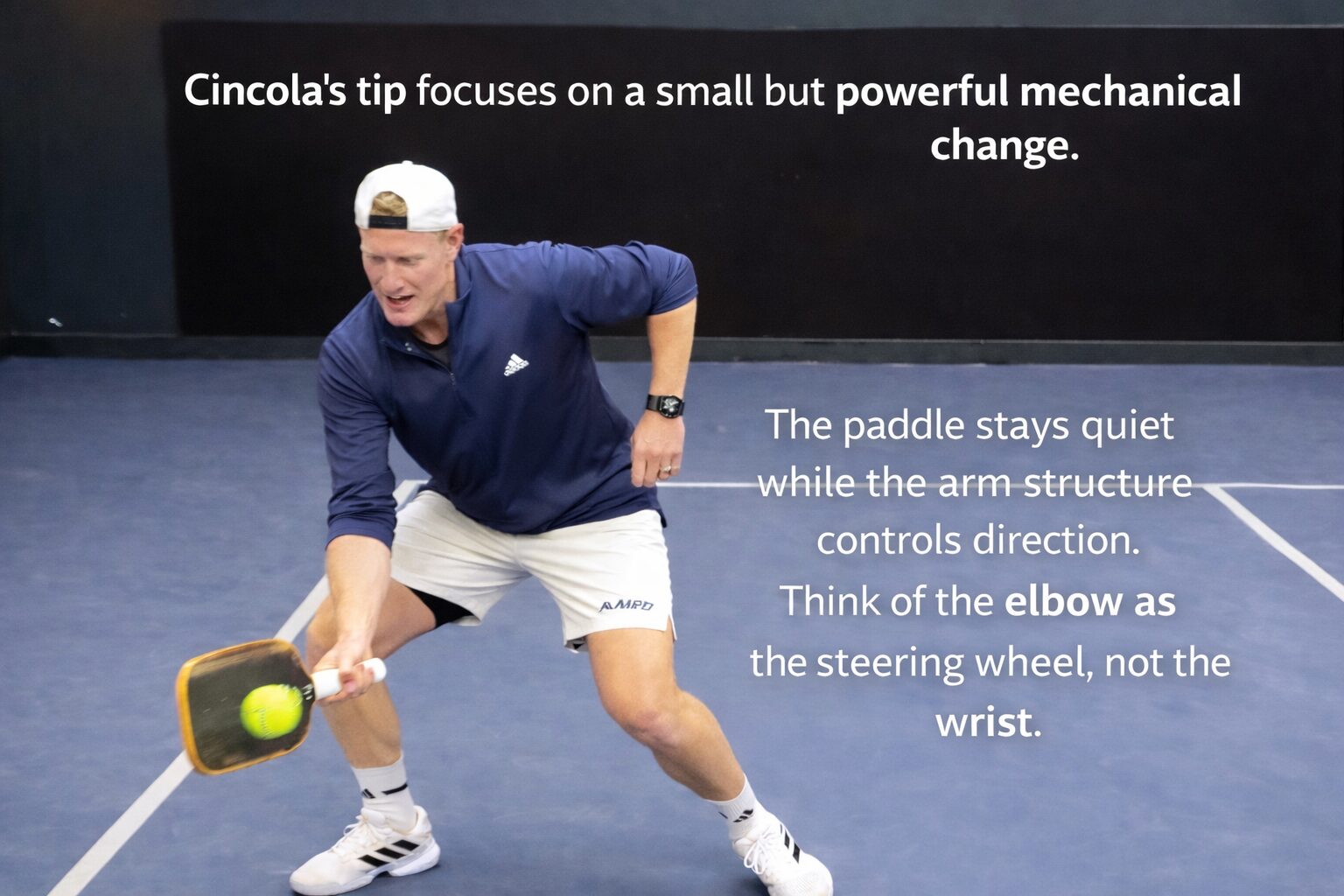
Think of the elbow as the steering wheel, not the wrist.
Watch the Tip in Action
Here’s the short clip where John Cincola demonstrates the concept.
Notice how the paddle face stays stable while the elbow subtly moves toward the crosscourt target.
It’s a small movement, but once you notice it, you’ll start seeing it everywhere in high-level kitchen play.
Why This Fix Works So Well
The elbow-driven movement improves three key areas of your dinking.
1. Directional Control
When the elbow moves toward the target, the paddle travels on a more consistent path. Instead of cutting across the ball with the wrist, the paddle stays square and stable.
This leads to cleaner and more predictable placement.
2. Softer Touch
Stable paddles create softer contact. When the paddle flips or rotates, the ball often jumps unpredictably off the face.
By keeping the paddle quiet, players gain much better control over:
- height
- depth
- spin
3. Fewer Attackable Balls
One of the biggest problems in rec play is accidentally popping up dinks.
This usually happens because the paddle face opens during contact. Reducing wrist manipulation helps keep the ball lower over the net.
And lower balls mean fewer opportunities for opponents to attack.
The Footwork Piece Most Players Forget
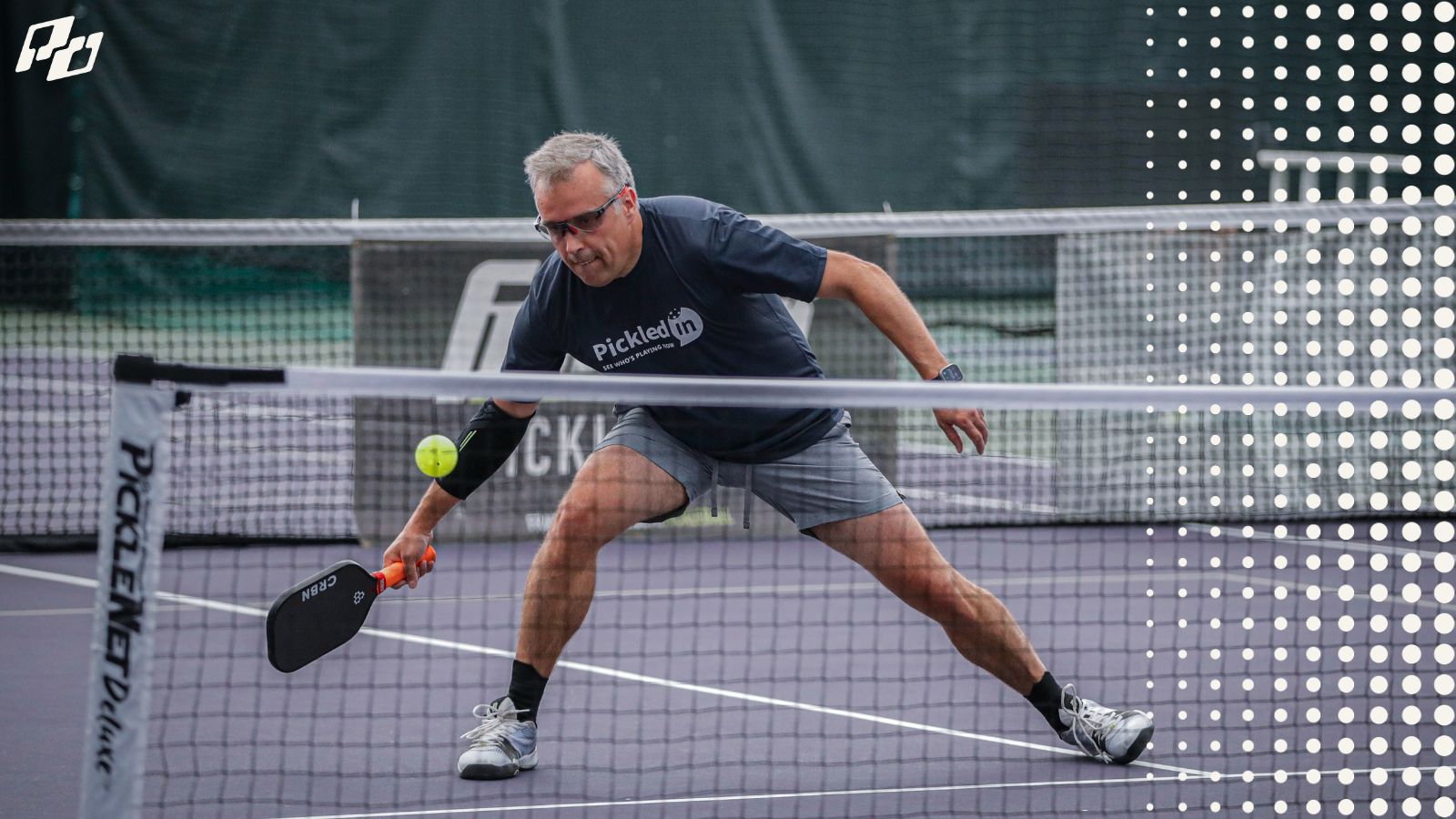
The elbow movement works best when the body is properly positioned behind the ball. If you’re reaching too far with your arm, even perfect paddle mechanics won’t save the shot.
Good crosscourt dinks usually include:
- a small lateral step
- balanced stance at the kitchen line
- contact slightly in front of the body
When your feet position your body correctly, the elbow movement becomes natural. When you’re stretched or leaning, players often revert to flipping the paddle with their wrist.
Why Pros Prefer Crosscourt Dinks
There’s a strategic reason most dink rallies start crosscourt. The geometry of the court gives you more margin.
Crosscourt dinks provide:
- more court length to work with
- a lower net height in the center
- better recovery positioning
Because of that extra space, players can build pressure gradually instead of forcing risky shots.
But that only works if your mechanics are consistent. Which is why stable paddle control becomes so important.
A Simple Cue to Try in Your Next Game
If you want to test this immediately, use a simple cue during dink rallies: “Elbow to the target.”
Instead of thinking about paddle angle, just guide your elbow slightly toward where you want the ball to land.
Your paddle will naturally follow the correct path.
Many players are surprised how quickly their crosscourt dinks become more consistent with this one thought.
One Mistake to Avoid
When players first try this tip, some exaggerate the elbow movement. That can create:
- oversized swings
- loss of touch
- awkward body positioning
Remember: this movement is subtle.
You’re not swinging your arm across your body — you’re simply guiding the direction of the paddle.
The Bigger Lesson Behind This Tip
Control direction with structure, not with the wrist.
When your elbow guides the shot and the paddle stays stable, your dinks become far more predictable.
And in kitchen battles, consistency wins far more points than flashy shots.
Master this small adjustment, and your crosscourt dink rallies will immediately start feeling calmer, more controlled, and much harder for opponents to attack.