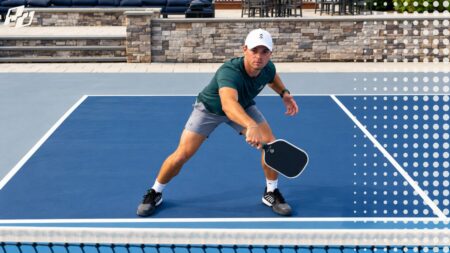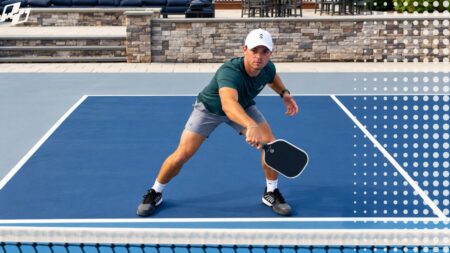
One of the easiest ways to tell a rec pickleball player’s skill level is by watching their forehand drive.
Some players muscle the ball with their arm. Others rotate their body a little. And a few players generate effortless power that seems to come from their entire body.
The difference isn’t strength.
It’s how efficiently the body transfers energy into the shot.
Our friend and pickleball coach Will East recently shared a short video breaking down three levels of forehand drives, and it’s a great framework for understanding how players develop power as they improve.
Because in pickleball, the best drives don’t come from swinging harder—they come from using your body more efficiently.
Let’s break down what these three levels look like and how intermediate players can start progressing toward the most powerful and repeatable version.
The Three Levels of the Pickleball Forehand Drive
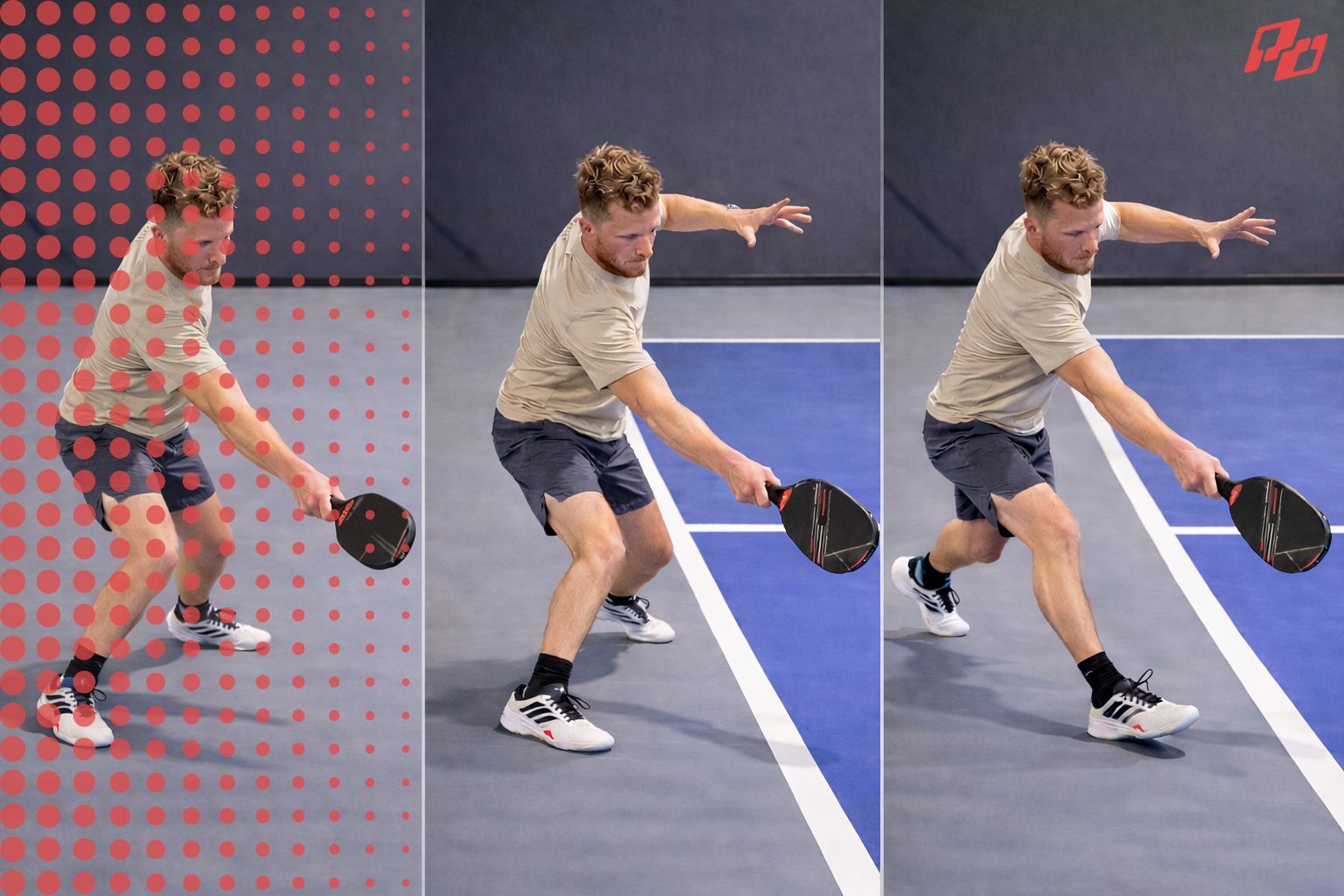
Coach Will East simplifies the forehand drive into three clear stages of development.
➡️ Level 1 players rely almost entirely on their arm.
➡️ Level 2 players start incorporating torso rotation.
➡️ Level 3 players use the full kinetic chain, where energy flows from the legs through the hips and into the paddle.
Here’s the short video where Will explains the concept.
Once you see these three levels side-by-side, it becomes much easier to identify where your own forehand currently sits.
Level 1: The Arm-Only Drive
At the beginner stage, most players hit their forehand drives using primarily the arm. The swing tends to look stiff and disconnected from the rest of the body.
You’ll often see:
- minimal body rotation
- very little weight transfer
- the paddle doing almost all the work
Because the arm is responsible for generating all the power, players often compensate by swinging harder.
That can create a few problems.
First, power becomes inconsistent. Some drives come off the paddle well, but many feel weak or float long.
Second, the swing tends to break down under pressure. When a fast return arrives or a player is moving forward, the arm-only swing doesn’t have enough structure to stay consistent.
Most importantly, this stage has limited long-term growth potential. Players eventually hit a ceiling because the arm simply can’t generate the same energy as the rest of the body working together.
Level 2: Arm Plus Torso Rotation
The next stage happens when players begin to incorporate upper-body rotation. Instead of just swinging with the arm, the torso starts turning into the shot.
This adds noticeable improvement.
Players begin generating more pace and better depth, and the swing feels less forced. However, many intermediate players get stuck at this stage. The shot is better—but still somewhat disconnected.
Without involvement from the lower body, players may experience:
- inconsistent timing
- difficulty generating power on the run
- less stability during contact
The torso helps add energy, but the swing is still missing the engine that powers elite groundstrokes.
That engine is the lower body.
Level 3: The Full Kinetic Chain
At the highest level, the forehand drive uses what coaches call the kinetic chain. Instead of the arm leading the swing, energy flows through the body in a sequence:
legs → hips → torso → shoulder → arm → paddle
When this sequence happens correctly, the body essentially unwinds into the ball.
That’s why pro players appear to generate effortless power. They’re not swinging harder—they’re simply transferring energy more efficiently.
The result is a drive that is:
- more powerful
- more repeatable
- easier to control
- quicker to recover from
In this stage, the hips play a particularly important role. As the player loads on the outside leg and rotates through the shot, the hips begin the chain reaction that ultimately accelerates the paddle.
This is what creates the snap you see in advanced groundstrokes.
Why the Kinetic Chain Matters for Power
Many 3.0–4.0 recreational players assume pros generate power by swinging their arm faster. In reality, advanced players create pace by using the kinetic chain—a sequence where the legs, hips, torso, and arm work together.
Pro players actually rely less on their arm and more on coordinated body movement. By loading the legs and rotating the hips first, energy travels up through the torso and into the paddle. This produces faster paddle speed, smoother timing, and less strain on the arm and shoulder.
When the whole body drives the swing, power comes naturally—and the shot stays far more reliable under pressure.
The Weight Transfer Most Players Miss
Another key component of Level 3 drives is weight transfer. Many rec players rotate their torso but remain stuck on their back foot.
Strong forehand drives typically involve a subtle but important shift:
- Load on the outside leg
- Rotate the hips forward
- Transfer weight toward the front foot
- Contact the ball slightly in front of the body
This forward movement adds both power and stability.
We recently discussed loading your outside leg first, then driving forward into the shot. This video below shows the move perfectly:
It also helps players recover faster for the next shot, which is critical in pickleball’s fast-paced rallies.
A Simple Coaching Cue
If you’re trying to move from Level 2 to Level 3, one cue can make a huge difference: “start the swing with your legs.”
Before you swing, feel your weight settle into the outside leg. Then allow your hips to begin rotating forward before the arm accelerates.
Think of the arm as the final link in the chain, not the starting point.
When players get this sequence right, the swing immediately feels smoother and more powerful.
What Intermediate Players Should Focus On
For players around the 3.5 to 4.0 level, the goal isn’t necessarily hitting harder.
It’s improving efficiency and consistency. That means focusing on:
- better weight transfer
- earlier hip rotation
- relaxed arm acceleration
When the body drives the swing, power comes naturally. And perhaps most importantly, the shot becomes repeatable under pressure.