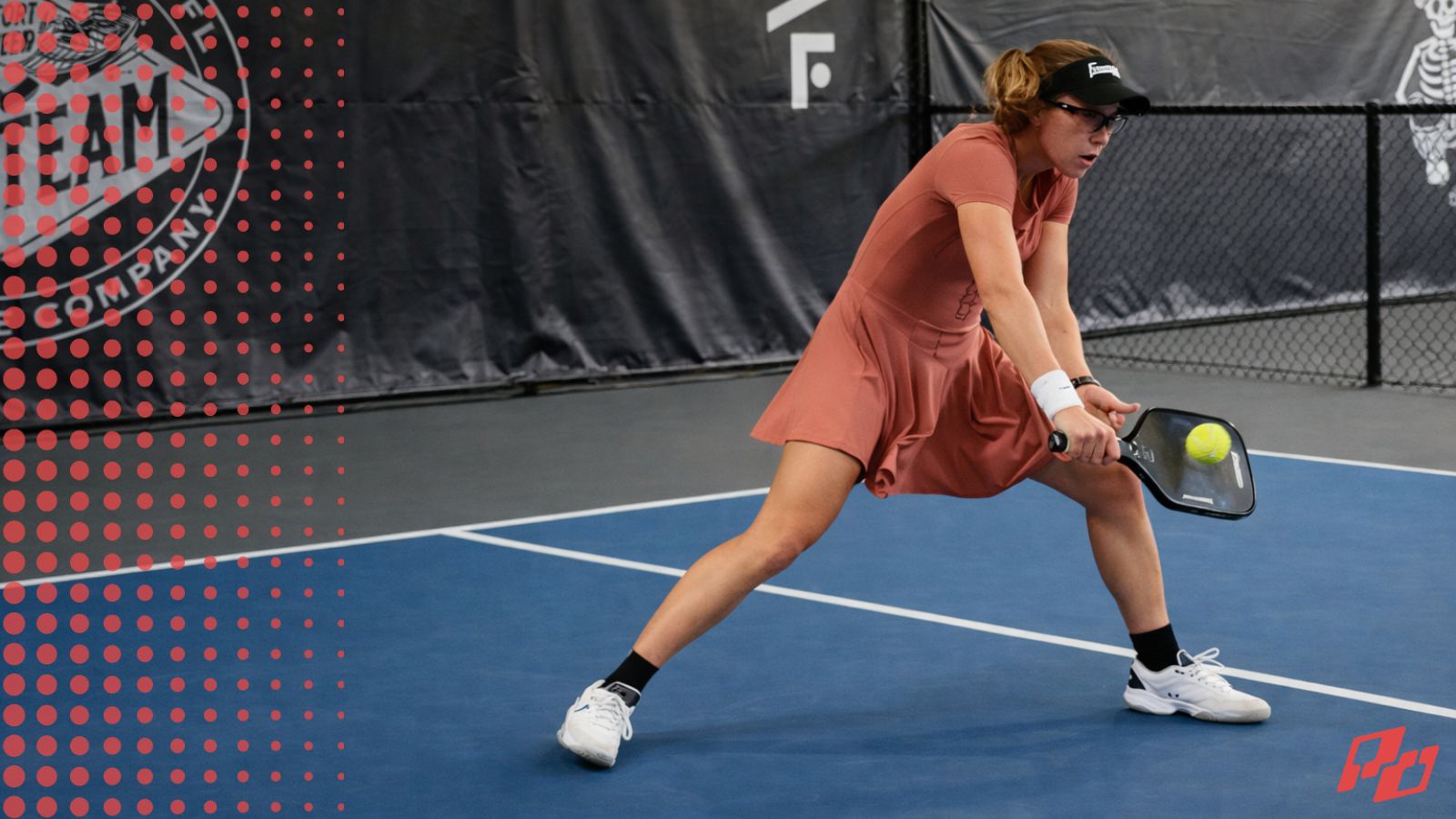
The transition zone is where a huge number of points are won and lost in pickleball. It’s also where many rec players feel the most uncomfortable.
Players get caught halfway to the kitchen, the ball comes fast, and suddenly they’re forced to make a split-second decision:
Should I attack this ball or reset it?
That moment of hesitation is exactly where many points fall apart.
According to pro player Meghan Fudge, the biggest mistakes players make in the transition zone aren’t technical—they’re decision mistakes.
In a recent Instagram video, she shared a simple rule that instantly clarifies those decisions:
Simple rule:
Above the hips → attack
Below the hips → reset
At first glance the advice seems almost too simple. But it reflects a core principle of high-level pickleball: ball height determines whether offense is possible or risky.
Below is the short video where Meghan explains the concept:
Once you start recognizing this pattern, the transition zone becomes far less chaotic.
Why the Transition Zone Is So Difficult
The transition zone is often called “no man’s land” for a reason.
You’re too far from the kitchen line to comfortably volley most balls, yet too close to the net to set up full groundstrokes like you would from the baseline.
That awkward middle ground creates a difficult environment for decision-making. Players often experience:
- less time to react
- awkward contact points
- faster incoming shots
- opponents already set at the kitchen
Because of that pressure, many recreational players default to one instinct: swing harder.
The problem is that aggressive swinging in the transition zone often leads to balls sailing long, drives into the net, or easy counterattacks from opponents at the kitchen line.
In most cases, the issue isn’t mechanics. It’s choosing the wrong shot for the situation.
Meghan Fudge’s Simple Rule: Hip Height
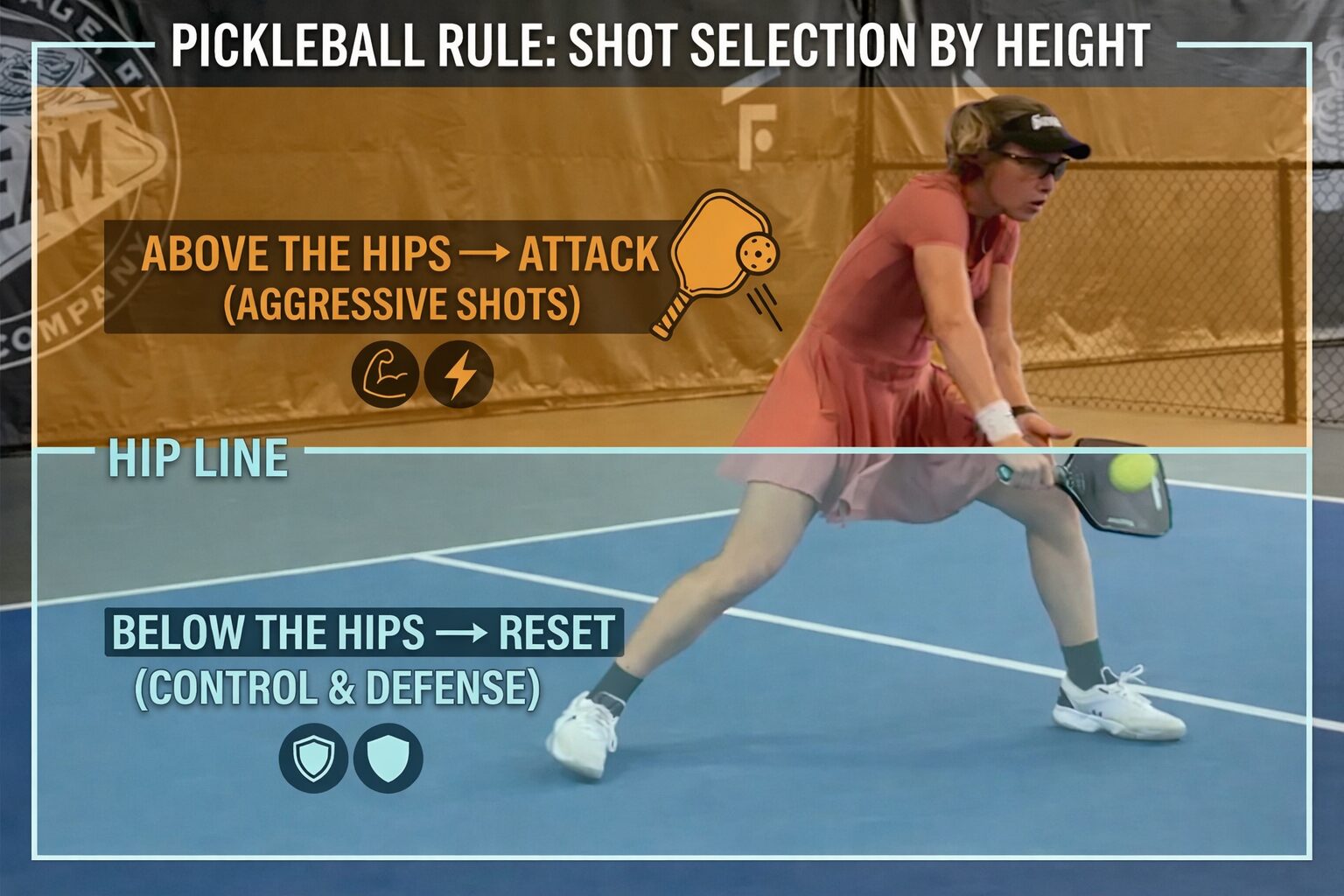
Fudge’s hip-height rule works because ball height directly affects your ability to apply pressure.
When the ball arrives above your hips, you’re in a strong position to generate pace and keep the ball down.
That higher contact point allows you to:
- swing forward instead of upward
- drive the ball with better margin
- apply pressure without taking unnecessary risk
But when the ball arrives below your hips, your paddle must travel upward to clear the net. That upward motion increases the height of the shot—and gives opponents at the kitchen the perfect opportunity to attack.
That’s why so many transition-zone drives backfire. The ball floats slightly higher than intended, and the opponent immediately puts it away.
Fudge’s rule eliminates that confusion.
What an “Attack Ball” Actually Looks Like
When players hear the word attack, they often imagine blasting the ball as hard as possible. But in the transition zone, attacks are usually controlled pressure shots.
Typical transition-zone attacks include:
- controlled drives through the middle
- topspin roll shots
- firm counters aimed at opponents’ feet
Notice the theme here: control first, power second.
The goal of attacking from the transition zone is rarely to win the rally immediately. Instead, the objective is to force a weaker reply so you can keep advancing toward the kitchen line.
Many strong players win points not with one huge shot—but with a series of smart pressure shots.
What a Reset Ball Looks Like
When the ball drops below hip level, the smarter play is usually to reset the rally.
A reset is a soft shot designed to land in the non-volley zone and neutralize the point, slowing the rally down, removing your opponents’ offensive advantage, and buying yourself time to move forward and reach the kitchen line.
Good resets usually feature:
- soft hands
- minimal backswing
- a slightly open paddle face
The goal isn’t perfection.
The goal is simply dropping the ball low enough that your opponent can’t attack it easily.
The Decision Problem Most Players Have
Many players actually know how to hit resets. What they struggle with is recognizing when they should reset instead of attacking.
A common scenario looks like this:
1️⃣ A low ball arrives in the transition zone.
2️⃣ The player attempts to drive it anyway.
3️⃣ The shot floats slightly high.
4️⃣ The opponent at the kitchen finishes the point.
This happens because players feel pressure to be aggressive.
But high-level pickleball isn’t about constant aggression. It’s about choosing the right moment to attack.
What Good Transition Play Actually Looks Like
If you watch high-level pickleball carefully, something becomes clear. Players rarely try to win points from the transition zone.
Instead, they focus on surviving the zone without giving away offense.
The pattern usually looks like this:
1️⃣ Reset low balls.
2️⃣ Attack higher balls.
3️⃣ Continue moving toward the kitchen.
You rarely win points in the transition zone. It’s really just where players stabilize the rally while moving forward to the kitchen.
The Footwork Side of the Transition Zone
Another overlooked factor is movement timing. Many players rush forward and hit the ball while still moving, which often leads to poor balance and rushed decisions.
A better rhythm looks like this:
- move forward
- briefly stabilize before contact
- make the shot decision
- continue moving
That small pause gives you time to read the ball height and apply Fudge’s rule correctly.
A Simple On-Court Cue
If you want to apply this concept immediately, use a quick mental reminder during rallies:
Hip high? Attack.
Below the hip? Reset.
This simple cue removes hesitation and helps players make better decisions under pressure.