Our friend and pickleball coach Will East recently shared a really useful tip about counter shots, and it gets at a mistake a lot of rec players do not even realize they are making. He explains that when the elbow gets over-committed, counters start feeling rushed, jammed, and weak — even if your hands are fairly quick.
A lot of rec players assume countering is mostly about reflexes. They think, I just need faster hands. But often the real problem starts earlier, with how the arm is organized before contact. If the elbow flares too far away from the body, reaches too early, or locks into one path, you lose flexibility. Tucking the elbow in gives you more freedom to adjust the paddle face, absorb pace, and redirect the ball more cleanly. That is the heart of East’s tip.
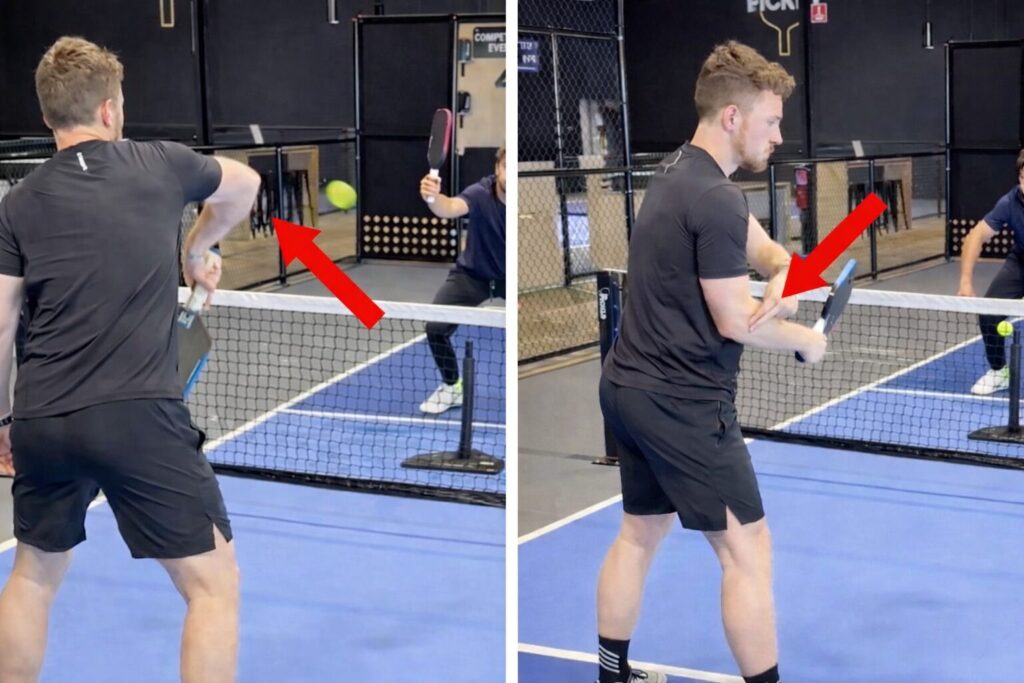
This matters most in kitchen hand battles, body speed-ups, and fast counters near your torso, especially for beginner and early intermediate rec players who tend to reach first and organize second.
What “over-committed elbow” usually looks like
It usually shows up like this:
- You see the speed-up.
- Your arm shoots out.
- Your elbow gets away from your ribs.
- Now the paddle path is locked, the contact gets jammed, and the ball pops up or dies in the net.
That is why this tip makes a difference. A tucked elbow creates a more compact volley shape, and compact shapes hold up better under speed. Better Pickleball’s volley instruction makes the same bigger point: volleys work best with a short, controlled swing, not a big reachy one.
Watch Will East explain it in this short video:
Why tucking the elbow helps
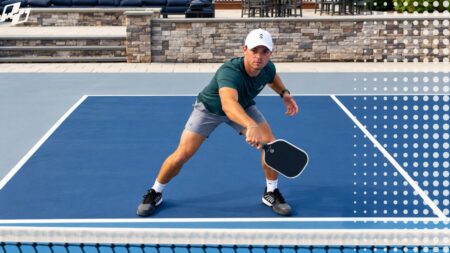
When your elbow stays a little closer to your side:
- your paddle stays more in front of you
- your contact point is easier to manage
- your wrist and forearm have more flexibility to adjust
- and you are less likely to stab at the ball
That does not mean pinning your elbow tightly to your ribs. It means keeping it connected, not flying. Think: compact, athletic, ready.
Who this tip helps most
This tip is especially useful for rec players who:
- get jammed on chest-high speed-ups
- pop counters up when the ball comes at the body
- feel late in hand battles
- swing too much instead of punching compactly
- or miss counters on their backhand-side shoulder line
It is less about “hitting harder” and more about giving yourself more adjustability.
How to apply it
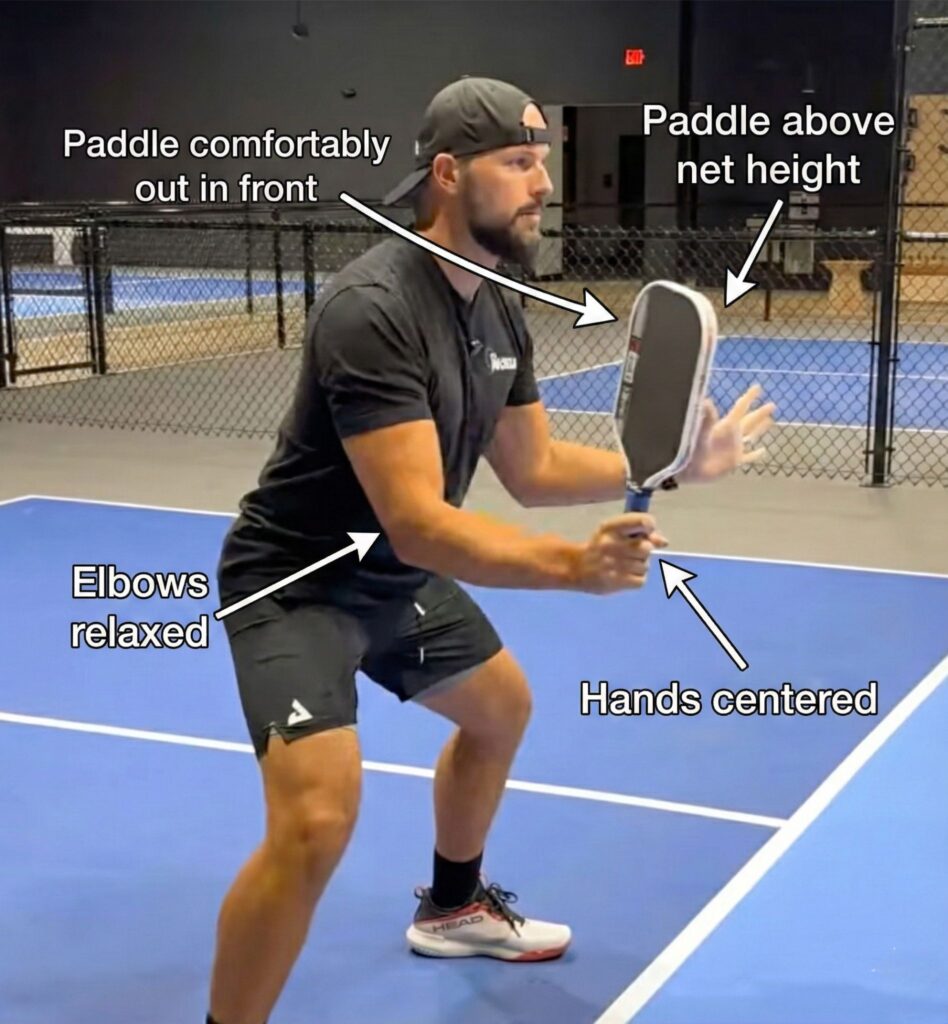
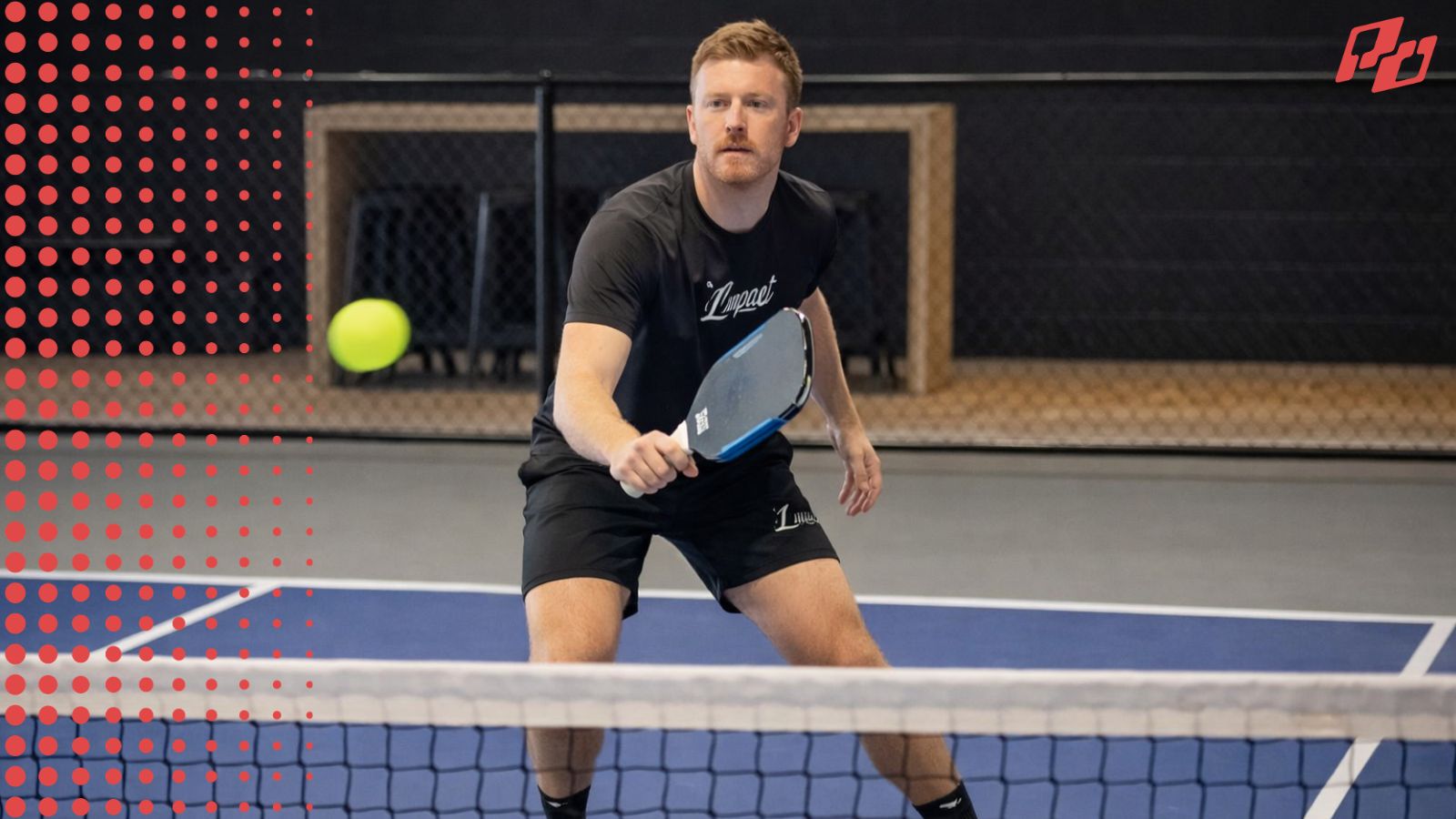
Start in a solid ready position: paddle up, out front, knees bent, eyes forward. Then use this sequence:
1. See the attack early.
Do not wait for the ball to get on top of you.
2. Keep the elbow connected.
Not glued in — just not flared out.
3. Let the paddle do less.
Counters are usually a punch, block, or short redirect, not a full swing.
4. Contact slightly in front when possible.
That gives you better control and keeps the ball from crowding your body.
5. Redirect with shape, not panic.
Middle, body, and feet are usually better than trying to paint a sideline winner.
The most common misunderstanding
Players hear “tuck your elbow” and then get too rigid.
That is not the goal.
You are not trying to freeze the arm. You are trying to avoid reaching so early that you lose flexibility. The elbow should feel organized and compact, not pinned and stiff.
A simple cue: “Elbow in, paddle out.”
That keeps the arm structure compact while still letting the paddle stay active in front.
One more thing rec players often miss
A better elbow position works best when it is paired with the right decision.
Not every hard ball should be countered aggressively. Some balls should be blocked or absorbed, while others are good counter opportunities depending on height, balance, and incoming pace.
So the full lesson is not just: tuck your elbow and swing.
It is: tuck your elbow so you have more choices — block, punch, or counter — without getting jammed.
Practical cues
Use these on court:
- Tuck, don’t reach
- Compact beats quick
- Elbow in, paddle out
- Short punch, not full swing
- If jammed, simplify
Will East’s tip matters because it fixes a problem that a lot of rec players misdiagnose. They think their counters fail because their hands are slow. Often, the real issue is that the elbow gets over-committed, which takes away the very flexibility a good counter needs.
Tuck it in a bit, keep the shape compact, and a lot of counter balls will suddenly feel less rushed, more controlled, and much more playable.