It starts before the first serve. Your heart thumps a little faster. Your mind drifts to who’s watching. And right before contact, that tiny voice whispers: Don’t miss.
That’s when the trouble begins.
Your drop floats long. Your dink dies in the net. Your arm feels stiff, your breath short. And suddenly, you’re not playing pickleball — you’re performing in front of an imaginary crowd.
What you’re feeling is something sports psychologists call fear of negative evaluation — the anxiety that someone’s judging you. It’s not losing that scares us; it’s being seen losing.
Why We Fear Losing (Even When It Doesn’t Matter)
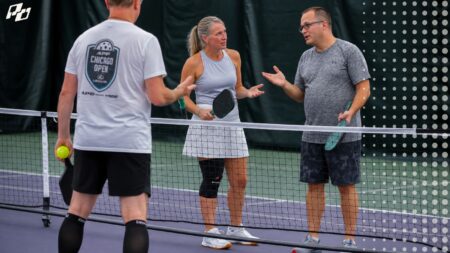
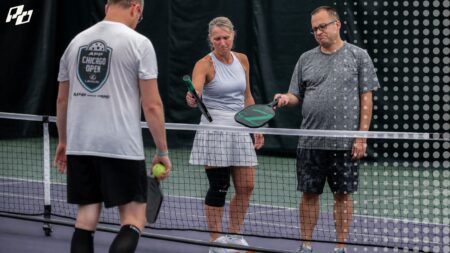
Pickleball is full of small audiences — the players on the next court, the stronger pair watching between points, even your partner’s silent sigh after a miss.
That’s why fear in pickleball doesn’t just come from competition — it comes from social evaluation. Studies show athletes’ stress levels spike higher when they think others are judging their performance, even in casual settings.
But here’s the twist: that fear isn’t a flaw. It’s proof that you care. The trick is learning how to turn that energy into fuel instead of friction.
Why “Choking” Happens (and What It’s Really About)
When the pressure hits, your body does exactly what it’s designed to do — it prepares for action. Your adrenaline spikes, your muscles tighten, your focus narrows.
That’s great if you’re sprinting. Not so great if you’re trying to hit a feathered dink over a 34-inch net.
Too much arousal sabotages fine motor control — the delicate touch needed for drops, dinks, and resets. That’s why even experienced players sometimes “push” the ball instead of swinging naturally when it matters most.
As performance coach Dr. Jim Afremow puts it:
“You can’t be fearless — but you can be fear-ready. Nerves don’t mean you’re weak. They mean you’re alive.”
The Reframe: Challenge vs. Threat
Whenever stress hits, your brain quietly runs a quick test: “Do I have what it takes to handle this?”
If the answer feels like yes, your body treats the stress as a challenge — it boosts focus, energy, and coordination to help you perform.
If the answer feels like no, that same stress flips into a threat — your body tightens up, breathing shortens, and your vision narrows to “survive,” not “execute.”
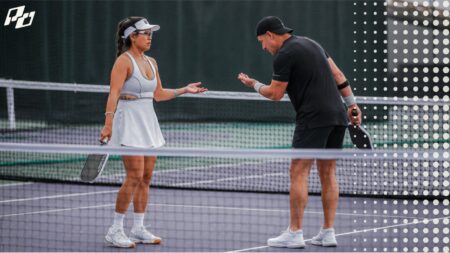
That’s why two players can face the exact same tiebreaker and react completely differently. One sees it as a test — an opportunity to step up. The other sees it as a trap — something to avoid.
The difference isn’t talent; it’s interpretation.
As Stanford psychologist Dr. Kelly McGonigal explains:
“Your stress response is your body’s way of getting you ready to perform. How you interpret it determines whether it helps or hurts.”
So the next time you feel that nervous buzz before a big point, remind yourself: This is my body getting ready, not breaking down.
Real Pickleball Scenarios for Each Mental Concept
| Mental Concept | Real Pickleball Moment | What to Practice |
|---|---|---|
| Fear of evaluation | You’re facing higher-rated players, and your drops start floating. | Focus on contact quality, not their reaction. Replace “don’t mess up” with “soft hands, full swing.” |
| Challenge vs. threat | You’re up 9–8 in a tight match, serving. | Say, “This is my moment to apply pressure,” instead of “Don’t blow this.” |
| Attentional control | You see your opponent poaching and freeze mid-swing. | Narrow your focus to one anchor — like the seam of the ball or your paddle face. |
| Arousal regulation | Your heart’s racing after two unforced errors. | Use a 4-in, 6-out breath and look at the net strap before the next serve. |
| Confidence reset | You miss an easy putaway in front of friends. | Smile, tap paddles, say “Right idea,” and move on. Confidence comes from recovery, not perfection. |
How to Practice Pressure (So It Stops Practicing on You)
You can’t avoid pressure — but you can train for it. Try building these drills into rec play or warmups:
- 0–5 Comeback Drill: Always start games trailing 0–5. Learn to climb back without panic. It conditions your brain to normalize pressure.
- Money Ball Point: Play to 7, but the last point counts double. Watch how your heart rate spikes — then practice slowing your breath and maintaining your normal routine.
- Serve/Return Bet: Whoever misses a serve or return does 5 pushups. Tiny stakes trigger mild stress — the perfect training dose.
- Partner Callouts: During rally drills, your partner yells “switch,” “middle,” or “line.” It simulates distraction, helping you build attentional control.
James Ignatowich once joked that he loves “when things get spicy” — because stress separates players who react from those who adapt. That’s what these drills are about: getting comfortable being uncomfortable.
Tournament-Specific Mental Prep
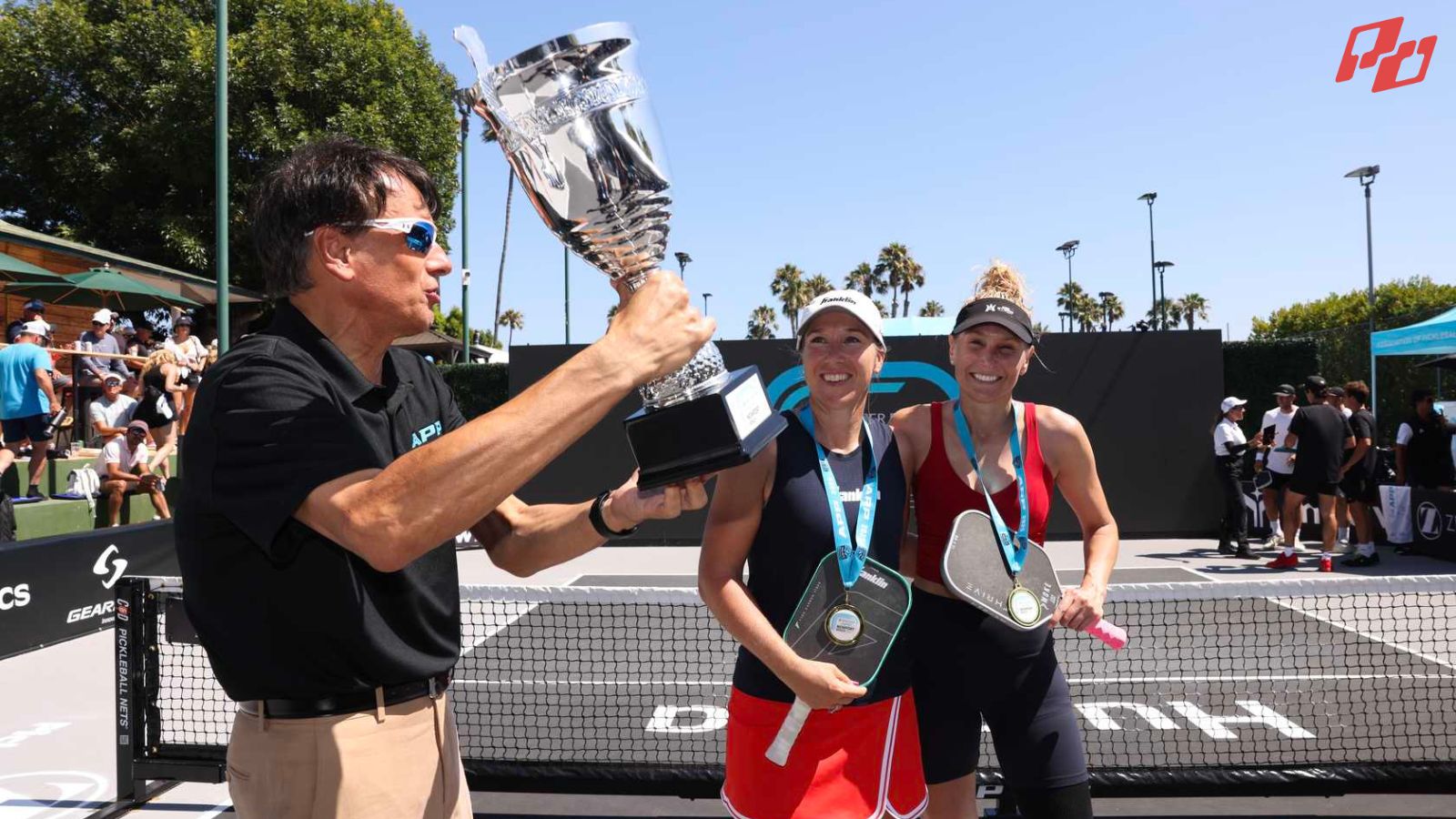
Tournament mornings can be chaos — long waits, noisy venues, unpredictable weather. The goal is to prep and protect your mental energy budget before you ever serve.
The Night Before
- Pack your gear, hydration, and snacks early. Decision fatigue drains focus.
- Write your cue words (“smooth,” “arc,” “hips through”) on paddle tape.
- Visualize yourself losing the first two points — and staying calm anyway.
The Match Routine
- Pre-serve: Two bounces, one deep breath, one cue word.
- After errors: One correction only (“earlier prep,” “softer hand”) — then reset posture and eyes to the horizon.
- Between games: Quick 3-point huddle with partner — one tactical tweak, one encouragement, one plan for the next start.
The Post-Match Rule
Never analyze results until you’ve cooled down. Your emotional brain isn’t a fair coach. Walk, breathe, hydrate, then reflect.
Rec Play Is Your Laboratory
The best part about rec games? Nobody’s handing out trophies. That makes them the perfect testing ground for mental skills.
Here’s how to use casual sessions to train composure:
- Set process goals. Instead of “win,” try “make 70% of third shots land past the kitchen.”
- Try body-language discipline. Stay neutral after every point, win or lose.
- Smile on purpose. It’s a physical cue that softens tension and keeps your nervous system calm.
- Compliment opponents. It shifts your brain from ego threat to connection — and confidence thrives on connection.
As one 4.0 player put it:
“When I stopped treating rec play like an audition, my game actually improved faster. I finally gave myself permission to learn.”
The Mindset Conversion Table
| Feeling | Old Story | New Story | On-Court Action |
|---|---|---|---|
| Nerves | “I’m not ready.” | “My body’s gearing up.” | Deep breath, small smile. |
| Judgment | “They’ll think I’m bad.” | “They’re too busy thinking about themselves.” | Focus on next contact. |
| Tightness | “Don’t miss.” | “Place it early and easy.” | Loosen grip, full follow-through. |
| Anger | “I blew it again.” | “Data point — not disaster.” | Step back, reset routine. |
| Pressure | “I have to win.” | “I get to compete.” | Eyes on target, trust swing. |
Tape this table inside your gear bag. It’s a cheat sheet for reframing emotions before they spiral.
The Bigger Picture: Ego vs. Identity
Your ego says, “Don’t look bad.”
Your identity says, “Keep getting better.”
When you tie your self-worth to the score, every miss hurts like a character flaw. But when you root your confidence in growth, each match — win or lose — becomes data, not judgment.
That’s what separates anxious players from composed ones. Not talent. Not DUPR. Just perspective.
Play the Ball, Not Their Opinions
You can’t control your opponent’s skill, the wind, or who’s watching. But you can control three things:
- The breath before your serve,
- The story you tell yourself after a miss,
- And how you show up for the next point.
You’ll play your best pickleball not when you stop caring, but when you stop protecting yourself from caring.
So next time you walk onto the court, say it quietly to yourself:
“I’ll play to win.
But if I lose, I lose.
That’s okay.”
Because the moment you stop fearing the judgment, you start playing your real game — the freer, faster, truer version of yourself that pickleball was meant to bring out.