
Pickleball Union earns a commission on purchases made through links in this article, at no extra cost to you. Our reviews are editorially independent – brands do not see or approve content before publication.
This article is brought to you by CURREX, the performance insoles trusted by the Pickleball Union team. Like us, CURREX is focused on helping players stay comfortable, move better, and keep playing longer. Use code PBUNION20 for 20% off CURREX products on Amazon.
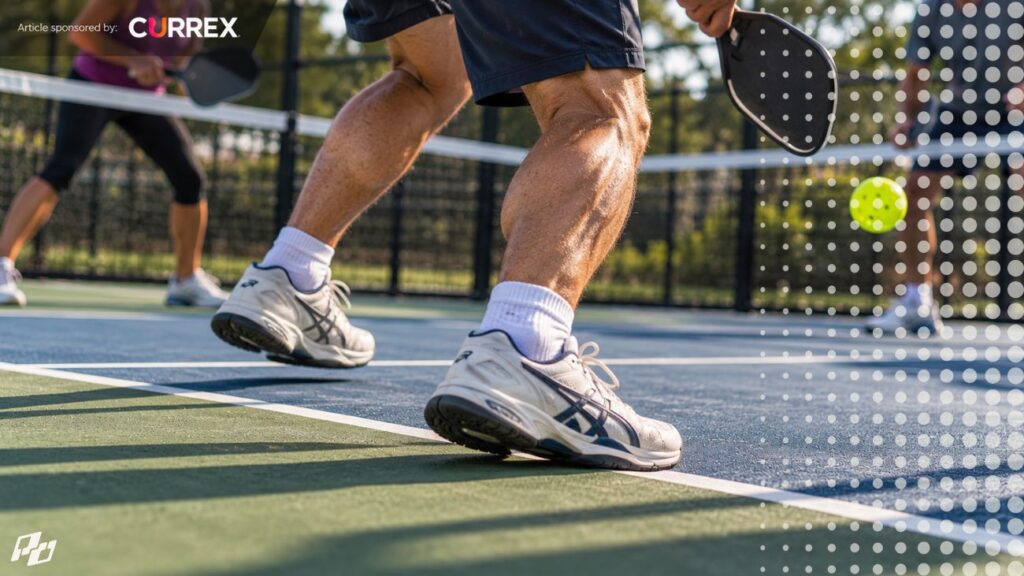
Your feet feel fine when you start. Thirty minutes later? They are hot, stinging, or downright burning.
The obvious reaction is to blame the shoes. Sometimes that is right. But “hot feet” in pickleball can come from four different problems: heat buildup, moisture, friction, or pressure.
And occasionally, persistent burning has nothing to do with footwear at all.
That distinction matters because the wrong fix can make things worse. A thicker sock, for example, may add cushioning—but it can also trap more heat and make an already snug shoe even tighter.
So first, figure out what kind of “hot” you actually have.
Hot everywhere, or burning in one spot?
If the whole foot feels uniformly hot and sweaty, start with ventilation and moisture management.
If one area—often the ball of the foot, heel, big toe, or little toe—feels like it is burning, think friction or pressure.
Friction, heat, and moisture are classic contributors to blister formation. Mayo Clinic specifically identifies all three as common causes.
And if the sensation is more like burning, tingling, pins-and-needles, or numbness—especially if it continues after you stop playing—pay attention. Cleveland Clinic notes that persistent burning feet can also be associated with nerve compression, neuropathy, athlete’s foot, tight footwear, Morton’s neuroma, and other conditions.
For normal court-related overheating, though, start with the gear.
Your sock may be making the problem worse
The instinct is often: hot feet = soft cotton sock.
For athletic play, that is not necessarily the best choice. Cotton absorbs moisture and tends to dry slowly. A major review of blister prevention notes that cotton holds substantially more moisture than many synthetic fibers and dries more slowly.
REI similarly recommends synthetic or merino socks for exercise because they move moisture away from the skin more effectively than cotton.
And one controlled running study found padded acrylic socks produced fewer and smaller blisters than otherwise similar cotton socks.
That does not mean every synthetic sock is automatically better.
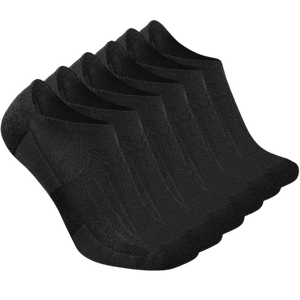
The useful target is: light or medium thickness, moisture-wicking fabric, ventilation over the top of the foot, flat seams, and targeted cushioning instead of maximum padding everywhere.
For hot feet, I would usually try less sock before more sock:

|

|
|
|
Pros:
|
Pros:
|
Pros:
|
- Cloud-like comfort
- Moisture wicking
- Relaxed support
- Soft & non-itchy
- Anti-blister cushioning
- Breathable & moisture-wicking
Merino can actually work in the heat
Wool sounds like a terrible choice for a hot court.
Lightweight merino is different. One field study comparing polypropylene socks with a merino-blend sock found participants rated the merino blend cooler, drier, and more comfortable, with lower skin moisture at some measured locations.
The key word is lightweight. Do not show up in thick hiking socks.
If the ball of your foot burns, look for sliding
Sometimes the shoe is not too hot. Your foot is moving inside it. Every hard stop can create shear between:
- foot
- sock
- insole
- and shoe
That friction produces heat. A useful clue is whether your foot slides forward when you stop aggressively or change direction.
Before buying anything, try a heel-lock lacing pattern and make sure the shoe is not simply too large.
If the fit is otherwise good, grip socks can help some players by reducing internal movement—but they are not automatically cooler, and some are thick enough to increase heat.
Use them for sliding, not just sweating.
Your shoe can feel comfortable and still run hot
Court shoes often prioritize lateral support, durability, and containment. That usually means more material than a lightweight running shoe.
So when hot feet are the main problem, look beyond cushioning. Check for:
- mesh through the forefoot
- a ventilated tongue
- less plastic coverage over the toe box
- enough room that your sock is not compressing the forefoot.
Try the “volume test”
This is especially useful if padded socks make your feet hotter.
Put on your normal sock. Notice how much room you have across the toes, forefoot, and instep.
Now switch to the thick padded sock. If the shoe suddenly feels tighter, the sock did not merely add cushioning. It changed the fit of the shoe.
That can increase pressure and friction.
Sports-podiatry guidance recommends fitting athletic shoes while wearing the same sock thickness you actually plan to use.
That is a small detail that can make a surprisingly large difference.
Where CURREX PICKLEBALLPRO can help
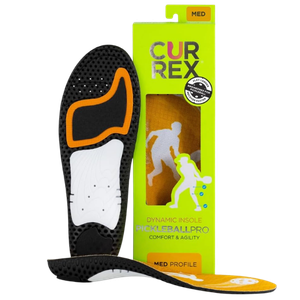
An insole will not make your shoes air-conditioned. But it can help if your burning comes from pressure or unwanted foot movement.
CURREX PICKLEBALLPRO is designed specifically for lateral court movement, with flexible arch support, targeted forefoot cushioning, a decoupled heel, and a grippy top layer intended to help limit sliding inside the shoe. It also uses a mesh top layer aimed at moisture management.
That makes it most interesting if your hot spot is:
- under the forefoot
- around the heel
- or associated with your foot moving inside the shoe
The potential benefit is not “cooling.” It is less movement + better pressure distribution = potentially less frictional heat.
One caution: an aftermarket insole takes up space. Remove the stock insole first and make sure the new setup does not make the shoe tighter.
The easiest fix for long sessions
Bring another pair of socks. Seriously.
If you sweat heavily during a two- or three-hour session, changing into dry socks halfway through can reduce the amount of moisture sitting against your skin.
Also:
✔ Take the insoles out after play.
✔ Loosen the laces.
✔ Pull the tongue open.
✔ Let the shoes dry before the next session.
Use this quick diagnostic
| What You Feel | First Suspect | First Thing to Try |
|---|---|---|
| Whole foot hot and soaked | Heat/moisture | Thinner wicking sock + better ventilation |
| Ball of foot burning | Pressure/friction | Fit check + insole or targeted cushioning |
| Heel burning | Sliding | Heel-lock lacing |
| Toes burning | Tight forefoot | Thinner sock or roomier toe box |
| One red hot spot | Friction | Reduce movement and protect the area |
| Burning + tingling/numbness | Possible nerve issue | Get it assessed if persistent |
Do not keep solving a medical problem with socks
Normal overheated feet should cool down after play.
If the burning continues long after you remove your shoes, becomes increasingly painful, causes numbness, spreads, or keeps happening despite changing socks and footwear, get it checked.
The useful rule
When your feet start burning, do not automatically add more cushion. Diagnose the problem first.
If it is heat, improve ventilation.
If it is moisture, improve wicking.
If it is friction, stop the foot from sliding.
If it is pressure, create more room or redistribute the load.
And if it is genuinely burning or tingling, not simply hot?
Do not assume the shoe is guilty.
Hot feet are a symptom. The useful question is what is creating the heat.