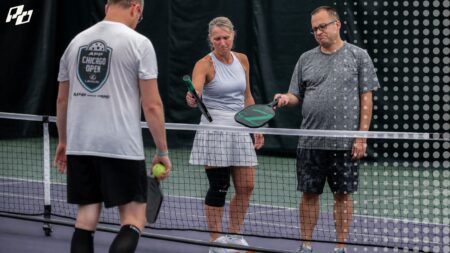

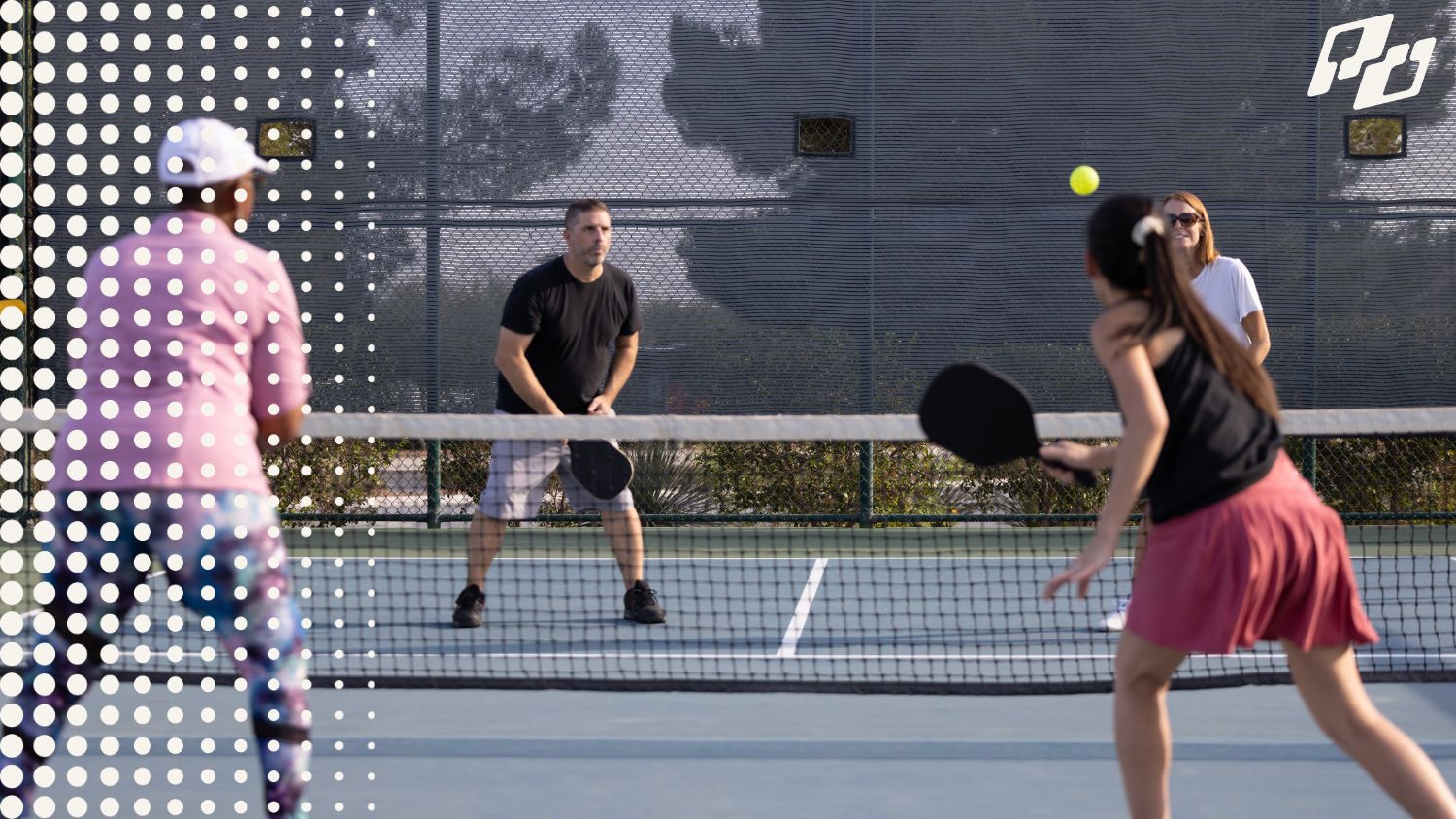
A buddy of mine asked me this recently after an awkward night at the park.
He and his regular partner are solid 3.5s. Competitive. They care about improving. But they also don’t want to be “those guys” — the ones who show up and blast beginners off the court before anyone’s even warmed up.
He said, “I never know how hard to go in the first game. If I start full throttle and they’re new, I feel like a jerk. If I start light and they’re really good, we’re down 5–0 before I figure it out.”
That’s the real tension in open play.
You want a good game.
You want to improve.
You don’t want a reputation.
And you definitely don’t want to look like you’re either sandbagging or showing off.
So what’s the move?
The First Game Isn’t About Dominance. It’s About Calibration.
Here’s my opinion: the first game with strangers should be diagnostic, not explosive.
Not soft. Not lazy. Not “I’m barely trying.”
Diagnostic.
Those first few rallies are information. You’re watching how they move, how they set up at the kitchen, how they handle a firm but not ridiculous serve. You’re seeing if they understand transition or if they just drive everything. You’re reading whether their dinks are intentional or survival-based.
You can tell a lot in three exchanges.
A friend once told me, “If someone can’t return your basic serve, why are you trying to ace them with spin?” That stuck with me.
If your opponent struggles with a normal, controlled serve, hammering them with heavy slice or body serves isn’t competitive maturity — it’s insecurity dressed up as intensity.
At the same time, easing everything over the net like you’re feeding balls to a junior clinic is just as awkward. Nobody wants to feel patronized.
The key is controlled honesty.
What Most Good Rec Players Actually Do
When you talk to experienced open play regulars, they usually admit the same thing. They start clean.
- Firm serve. Not wicked.
- Deep return. Not reckless.
- Third-shot drop with shape. Not a missile.
- Put away obvious pop-ups. Always.
And that last part matters.
If someone floats a ball chest-high in front of you, you finish it. That’s not rude — that’s respectful. It reinforces consequences. It keeps the game real.
What you don’t do is repeatedly target someone’s chest because you realized their reaction time is slow.
There’s a difference between finishing and bullying.
The 5–0 Fear
A lot of people hold back early because they’re afraid of misreading the room. No one wants to look silly starting slow and realizing halfway through that the other team is sharp and intense.
But here’s the thing — strong players reveal themselves immediately.
It’s in their return depth.
It’s in how they split step.
It’s in whether they transition after their drop.
It’s in how they handle pace without flinching.
You don’t need six games to figure that out. You need a handful of points.
And if you’re down 3–0 while you’re calibrating? That’s fine. It’s open play. There’s no trophy for the first game with strangers.
It’s much easier to ramp up intensity than to walk it back after you’ve already bodybagged someone’s spouse.
The Reputation Nobody Talks About
Open play has a memory. If you repeatedly:
- Serve people off the court when they clearly can’t return it
- Target the weaker player relentlessly
- Celebrate blowouts
- Keep the gas pedal floored against beginners
You’ll earn a label. And once you’re labeled, people avoid stacking with you. Or they avoid you entirely.
The best players at any park usually aren’t just skilled — they’re calibrated. They know how to adjust without making it weird. They can create competitive games out of uneven matchups.
That’s a higher-level skill than hitting hard.
My Personal Rule
First game with new opponents? I’m at about 70%.
Not coasting.
Not flexing.
If I see they can handle pace, I turn it up. If I see they’re overwhelmed, I shift the focus to longer rallies, placement, and working on parts of my game that don’t require blowing anyone off the court.
Sometimes that means more drops. Sometimes that means working my backhand under pressure. Sometimes that means practicing defense after intentionally giving them something to attack.
I still compete. I still try to win. I just don’t empty the clip in the first five minutes.
Because open play isn’t about proving you’re the alpha of Court 3 on a Tuesday night. It’s about creating good games — for yourself and for the people around you.
The Real Skill: Intensity Calibration
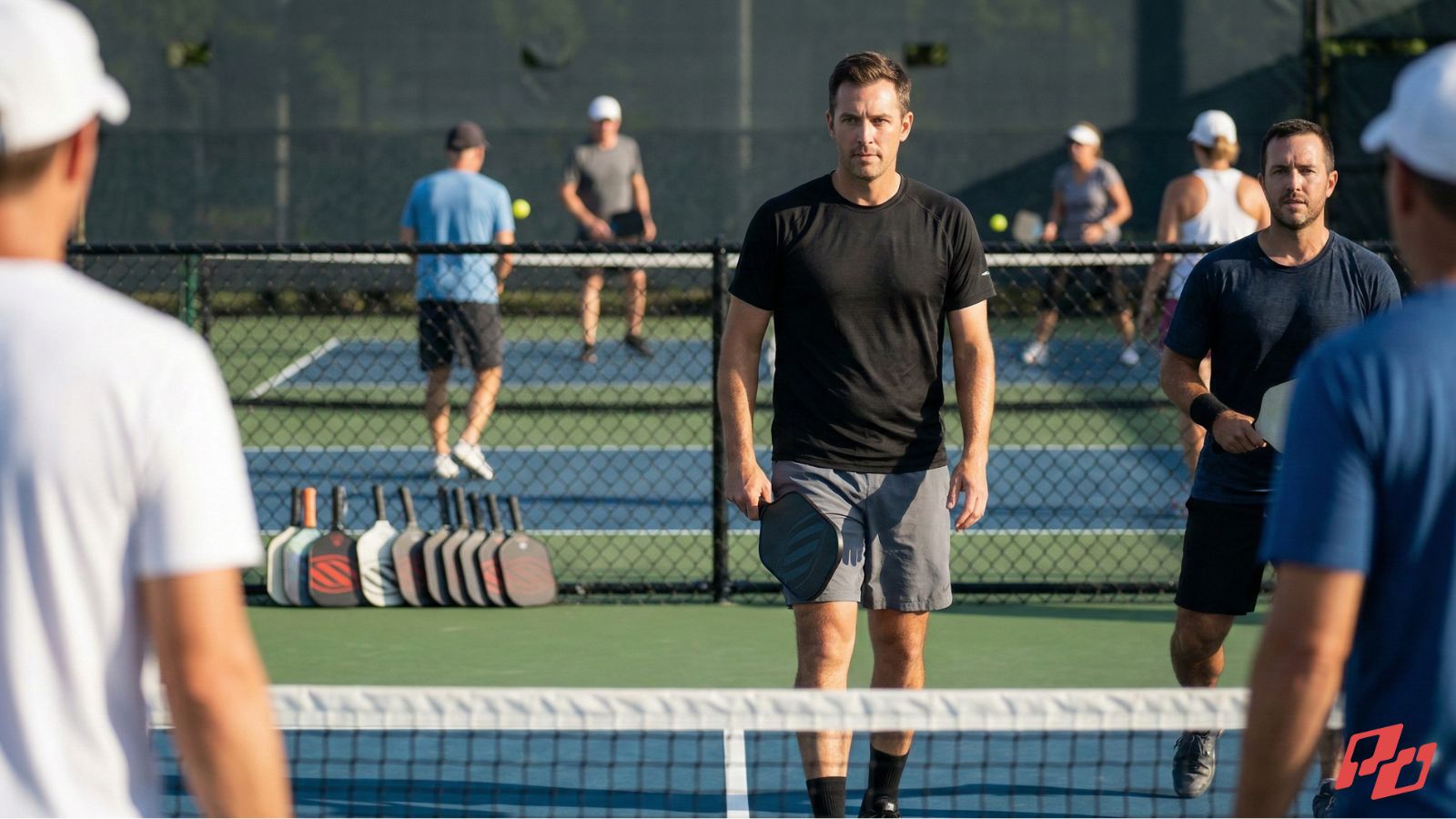
Here’s what I truly believe: adjusting your intensity is not politeness. It’s maturity.
It requires:
- Awareness of your opponents
- Control over your ego
- Discipline in shot selection
- Confidence in your own level
Anyone can swing harder. Not everyone can calibrate smarter.
So how hard should you play the first game in open play?
Hard enough to be honest.
Controlled enough to be aware.
Flexible enough to adjust.
Start solid. Read quickly. Turn it up when it’s earned.