
There’s a moment in pickleball that everyone experiences… but almost nobody actually talks about.
Your opponent hits a ball that clips the net cord. Instead of bouncing back, it dies softly and trickles over the net. Suddenly the ball is barely moving. You’re scrambling forward. Your opponent is already rushing in.
And in about two seconds you have to decide: what shot do I even hit here?
Most players react emotionally. They swipe at the ball, try to flick a miracle winner, or panic and pop the ball up.
That usually ends badly.
Net cord balls create one of the strangest situations in pickleball because they destroy the normal rhythm of a rally. The ball loses pace, lands extremely short, and forces you to improvise from an awkward position near the kitchen.
But there are smart ways to handle this.
Recently, our friend and pickleball coach Nicholas Wade shared a simple but effective framework for dealing with these situations.
Let’s break it down.
Watch Coach Nicholas Wade’s Net Cord Solutions
Coach Nicholas Wade recently posted a quick video explaining three practical options when your opponent’s shot clips the net cord and barely drops over.
His advice is refreshingly simple. When the ball trickles over the net, you typically have three realistic choices:
- Dink straight
- Dink crosscourt
- Lob
At first glance, that sounds straightforward. But the decision is more nuanced than it seems.
Let’s unpack when and why each option works.
Why Net Cord Balls Are So Awkward
Before we talk about the shots, it helps to understand why these situations are tricky. A net cord ball does three things that disrupt normal pickleball mechanics:
1. It removes pace from the rally.
Your opponent’s ball loses almost all momentum.
2. It lands extremely short.
You often have to sprint forward from the baseline or transition zone.
3. You contact the ball below net height.
That means aggressive shots become much harder.
Because of these factors, your goal isn’t to hit something spectacular. Your goal is to neutralize the chaos and regain control of the rally.
Coach Wade’s three options are essentially different ways of doing exactly that.
Option 1: The Straight Dink (The Safest Reset)
The straight dink is often the highest percentage response.
When you reach a dead net cord ball, the instinct is to angle it off sharply. But sharp angles require touch and margin. When you’re moving forward quickly, that touch can disappear.
Dinking straight ahead simplifies everything.
The paddle face stays more stable. The target is larger. And the ball travels over the lowest part of the net.
Coach Wade emphasizes an important point here: don’t pop the ball up too high. When players panic on these balls, they often lift the paddle too much and float the dink.
That gives your opponent an easy speed-up.
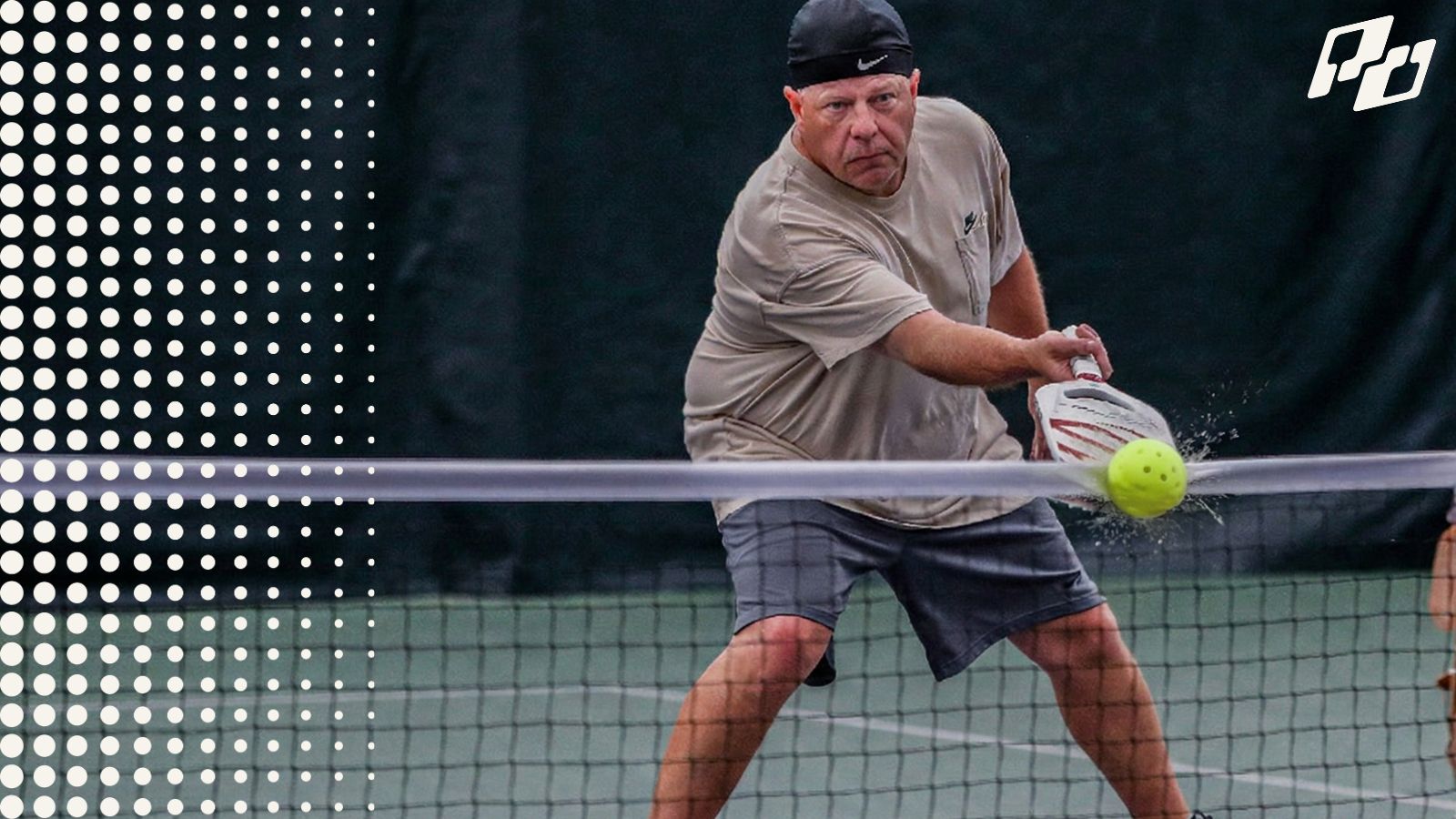
Instead, focus on a soft push with minimal backswing. Think of the motion as almost a gentle block. Your goal is simply to drop the ball softly back into the kitchen and buy time to recover your position.
And one more key instruction from Wade: get out of the kitchen quickly.
Because when you chase a net cord ball forward, your momentum often carries you too close to the net. After the dink, recover your balance and reset your feet immediately.
Option 2: The Crosscourt Dink (When You Have Time)
The crosscourt dink becomes attractive because it creates distance. The ball has to travel farther across the court, which gives you more margin and time to recover.
But this option requires better positioning. Coach Wade cautions players not to go too wide.
When players over-angle the ball, two problems occur:
- The ball travels higher over the net.
- The opponent gets a comfortable crosscourt counter-dink.
Instead of aiming for the sideline, aim three or four feet inside it. This still forces your opponent to move, but it keeps the ball safer.
Also expect the likely response: a crosscourt dink coming back at you. That means you should recover into a balanced ready position and prepare for the next soft exchange.
In many cases, the crosscourt dink simply transitions the rally into a standard kitchen battle. Which is exactly what you want after a chaotic net cord moment.
Option 3: The Lob (Aggressive but Risky)
Coach Wade’s third option is the lob. This is the most offensive choice, but also the most difficult to execute.
Why?
Because you’re typically contacting the ball very low.
A low contact point makes it hard to generate the arc needed for a good lob. If the lob doesn’t clear high enough, it becomes an easy overhead.
That said, there are situations where the lob makes sense. For example:
- Your opponents are already leaning forward.
- Both players are crowding the kitchen.
- You reach the ball extremely early.
In those moments, a quick wrist lift can send the ball sailing behind them. The key detail Wade highlights is height.
The lob must clear the opponent’s reach comfortably. If it’s even slightly short, you’re in trouble.
For most recreational players, the lob should be considered a situational surprise, not the default play.
The Real Skill: Decision Speed
Net cord balls happen fast. You don’t have time to analyze every variable.
Experienced players simplify the decision into one quick question: am I balanced or scrambling?
- If you’re scrambling, choose the straight dink.
- If you’re balanced with time, the crosscourt dink works well.
- If you arrive early and your opponent is leaning forward, the lob becomes an option.
That quick decision framework removes hesitation.
One More Tip Coaches Teach
There’s another subtle technique coaches often teach for these situations.
Lower your paddle speed.
Players often swing too fast at dead balls. But because the ball has almost no pace, a fast swing actually creates too much lift.
A slower paddle path produces better control. Think soft hands instead of quick hands.
Why These Moments Actually Matter
Net cord balls might seem like random luck. But they often decide points.
→ Players who panic give away easy putaways.
→ Players who stay composed turn chaos into a neutral rally.
That’s the real difference. The best players don’t complain about the unlucky bounce. They simply play the next shot well.
And when the ball trickles over the tape, having a simple plan—like Coach Wade’s three options—makes that decision a lot easier.