
A lot of rec players ask the wrong paddle question.
They ask:
- How much spin does it have?
- Does it feel gritty?
- What are the reviews saying right now?
Those are fair questions. But the better question is this:
⮕ How long will the spin actually last?
Because a paddle that feels amazing for the first few weeks can become a very different paddle after a couple months of real rec play. And that matters more than most buyers realize.
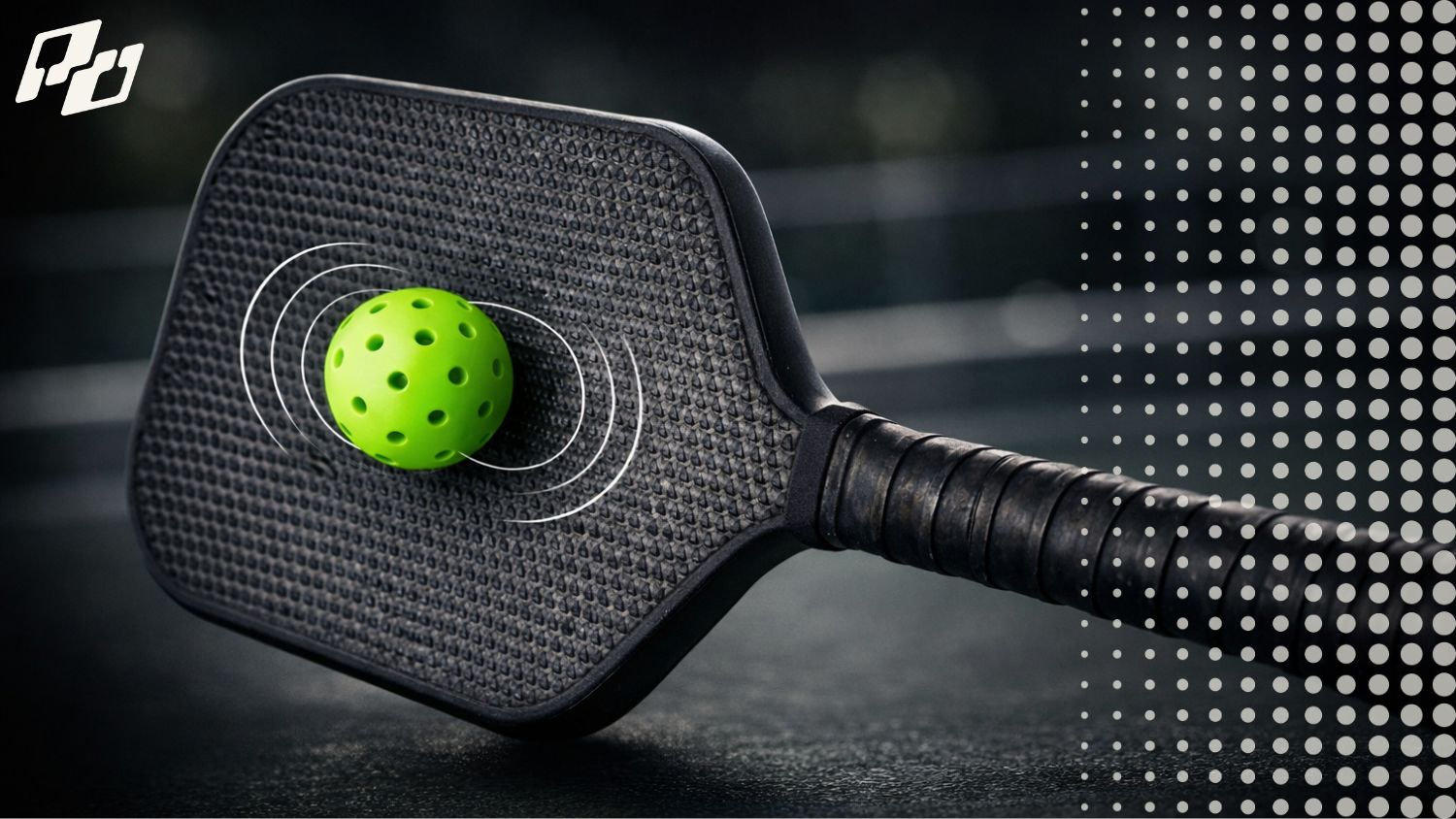
If you rely on topspin drives, heavy roll volleys, dipping thirds, or shaped serves, the surface of your paddle is doing real work. Once that surface starts smoothing out, your shots can start floating, sitting up, or feeling strangely less “grabby,” even when your swing feels the same.
Recent paddle-tech coverage has leaned hard into this exact issue: spin is not just a launch-day feature anymore, it is increasingly a durability question.
That is the angle most rec players miss. So the real buying question is: Will it still help my game after weeks and months of normal use?
Why this question matters more than players think
The first thing to understand is that “spin” is not magic. It comes from the interaction between:
- your technique
- your contact
- the ball
- and the paddle surface
Modern paddles often use textured carbon faces, peel-ply surfaces, resin textures, or newer durability-focused grit systems to help the face grab the ball better. But those surfaces do not all age the same way. Some wear down relatively quickly.
Newer technologies are being marketed specifically to solve that problem, with brands now openly saying traditional raw carbon faces can lose effective grit surprisingly fast.
That is a big deal for rec players because paddle reviews are usually done with fresh paddles. You are reading about day-one performance. You are buying for month-three performance.
Those are not always the same thing.
What “spin loss” actually feels like on court
Most rec players do not wake up one day and say, “My paddle’s surface roughness has degraded.”
They say things like:
- “My topspin serve isn’t biting like it used to.”
- “My roll volleys are popping up.”
- “My drops feel flatter.”
- “I feel like I’m slipping off the ball.”
- “I’m swinging harder, but the ball isn’t doing what it used to do.”
That matches current grit-wear explanations very closely. Recent paddle-wear coverage lists almost those exact symptoms: topspin serves that float more, drops that stop dipping the same way, drives and rolls that pop up more, and a growing feeling that you need to force the shot harder to get the same result.
That is why this topic matters. Spin loss is not just a gear nerd issue. It changes shot shape, and shot shape changes outcomes.
A ball that dips a little later stays safer.
A ball that grabs a little more can clear the net and still drop.
A roll volley that kicks down is a lot different from one that sits up.
So yes, this is about texture. But it is really about what that texture does to your confidence and your margin.
The uncomfortable truth: most paddles do not keep launch-day spin forever
This is where buyers need to get a little more realistic.
No paddle face stays brand new forever. Every contact with the ball creates wear. Dirt, ball fuzz, and normal friction all contribute to changes over time. Multiple recent sources now say this much more plainly than older paddle articles used to: grit is not permanent, and even good paddles eventually smooth out.
Traditional grit can wear down within a few months of regular play, while newer grit systems are being promoted as lasting longer specifically because that has become a pain point for players.
That does not mean every paddle becomes useless quickly. It means the smarter question is not just “Does it spin?” but “How well does that spin hold up after real use?”
That is a much smarter buying lens.
The real technical question: what kind of surface are you buying?
This is where the conversation gets more useful. Not all “spin paddles” create and maintain spin the same way.
Some rely more on traditional peel-ply texture.
Some use resin-based or infused grit systems.
Some newer products are explicitly designed around durability-focused surface tech.
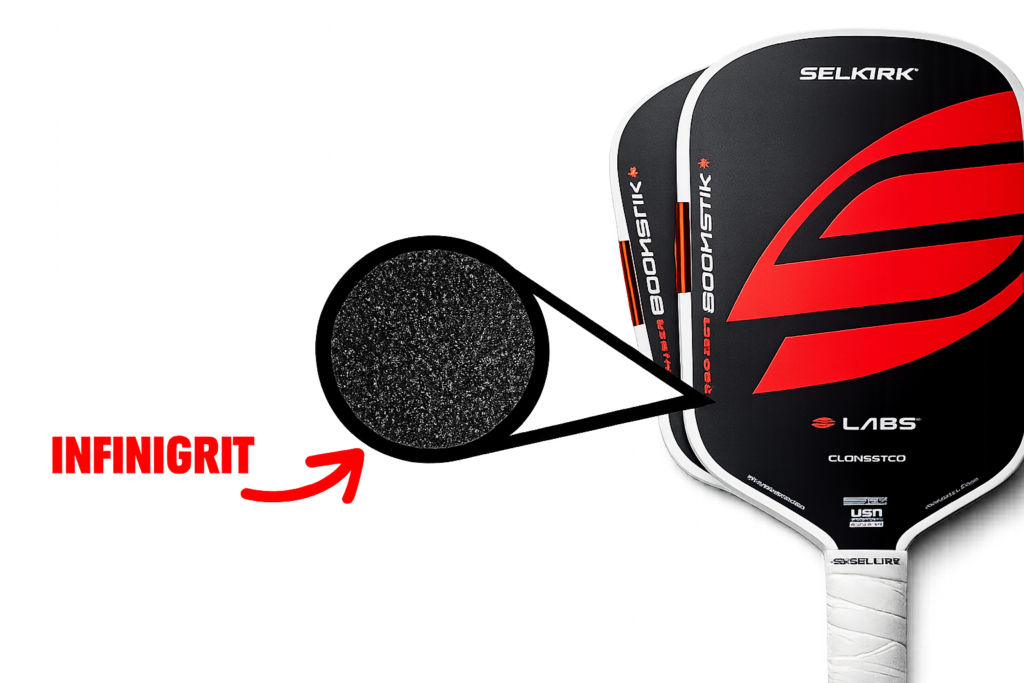
Selkirk is now openly marketing Infinigrit as a solution to one of the most common paddle complaints: losing grit after a short time on court. Recent reviews are also praising newer models for “grit longevity” rather than just raw launch-day spin.
For rec players, that means you should start looking for two separate ideas in paddle reviews:
1. How much spin does it have fresh?
2. What evidence is there that the surface holds up?
Those are not the same thing.
How long does spin really last?
| How often you play | What to expect |
|---|---|
| 1–2 times a week | Spin may stay fairly solid for several months |
| 3–5 times a week | You may notice some spin drop-off in about 2–4 months |
| Very often + heavy topspin | You may notice changes even sooner |
There is no perfect one-size-fits-all timeline, but here is a more realistic way to think about it.
If you play once or twice a week, a paddle’s surface may still feel pretty solid for several months, especially if you are not a heavy topspin player.
If you play 3 to 5 times a week, you are more likely to notice some drop-off in usable grit in roughly 2 to 4 months, especially if you hit a lot of topspin serves, roll volleys, and spin-heavy drives.
If you play a lot, hit hard, and rely heavily on spin, you may start noticing changes even sooner than that.
So the practical answer is this: if you are a frequent rec player, it is probably unrealistic to expect your paddle face to feel exactly the same six months later. Spin life is a moving target, and the more you play — and the more you rely on spin — the faster you are likely to notice a change.
5 simple checks if you think your paddle is losing spin
You do not need any special tools. Just do a few basic checks.
1. Look at the face in good light.
Check the part of the paddle you hit with most. If that area looks smoother or shinier than the rest, the surface may be wearing down.
2. Clean it first.
Before you assume the grit is gone, clean off ball fuzz and dirt. A dirty paddle can feel less grabby even if the face is still fine.
3. Feel the surface.
Run your fingers lightly across the main contact area and then another part of the face. If your usual hitting spot feels noticeably smoother, that is a clue.
4. Test your usual spin shots.
Hit a few topspin serves, drives, and roll volleys. If they are floating more, dipping less, or sitting up more than usual, that may not be your imagination.
5. Compare it to a newer paddle if you can.
This is the easiest test of all. If a newer paddle of the same model gives you noticeably more bite right away, your old one may have lost some useful spin.
Simple takeaway: clean it, inspect it, feel it, and test a few familiar shots. That is usually enough for a rec player to tell whether the paddle is wearing down or just needs a wipe.
Can cleaning fix it?
Sometimes a little. Not fully. So the honest answer is:
- Dirty paddle? Clean it.
- Actually worn paddle? Cleaning will not turn it back into day one.
That is important because many rec players keep “troubleshooting” a cooked paddle by wiping it and hoping.
What rec players should ask before buying
This is where the article should become practical.
Instead of asking only: “How much spin does it have?”
Start asking:
- What kind of surface tech is it using?
- Is there any evidence the grit lasts?
- Do reviewers mention durability, not just spin?
- Does the brand talk about longevity or only day-one feel?
- Am I a frequent enough player that grit durability should matter to me?
If you play once a week casually, you may not need to obsess over this.
If you play three, four, or five times a week and use topspin a lot, this absolutely should be part of your buying decision.
What to look for when buying a paddle if you want the spin to last longer
Here is the reader-friendly way to shop smarter.
1. Do not just look at launch-day spin numbers
A big RPM number in a fresh review is nice, but it only tells you what the paddle did when it was new. It does not tell you how the face will feel after weeks or months of rec play.
That is why this article’s whole point matters: out-of-the-box spin and long-term spin are not the same thing.
Recent paddle coverage has increasingly separated raw spin from grit durability for exactly that reason.
2. Look for mentions of grit durability or spin retention
These are the phrases that matter more than flashy marketing language. If a reviewer or brand keeps mentioning:
- grit durability
- spin retention
- longer-lasting texture
- durable surface tech
- slower wear
- maintains texture longer
that is a much better sign than generic words like “crazy spin” or “insane bite.” Brands are now explicitly marketing durability-focused surface technologies because traditional textured faces can lose effective grit faster than players expect.
3. Pay attention to the surface technology, not just the face material
A paddle saying “raw carbon” is no longer enough by itself. Tons of paddles say that.
What you want to know is whether the paddle uses some kind of durability-focused surface system rather than relying only on fresh peel-ply feel.
4. Look for reviewers who talk about the paddle after real play time
This is a big one. The best paddle reviews for this question are the ones that mention:
- how the face held up after a few weeks
- whether the grit faded quickly
- whether the paddle still had bite later
- or whether spin dropped off fast
That kind of follow-up language is far more useful than a single launch review.
5. If you see data, separate spin number from durability evidence
If a paddle review includes numbers, great. But use them the right way:
- High spin number = good fresh performance
- Repeated mention of retained texture or slower wear = better clue for longevity
In other words, the number tells you how it starts. The durability comments help tell you how it may age.
6. Do not ignore the warranty and replacement reputation
A warranty does not guarantee long-lasting spin, but it does tell you something about how confident a brand is in the product.
It is not the first thing to check, but it is a useful secondary signal when comparing similar paddles.
A simple buying rule
If you want longer-lasting spin, do not shop like this: highest RPM wins.
⮕ Shop like this instead: good fresh spin + repeated mentions of grit durability + surface tech designed for longer wear.
That is the smarter rec-player filter.
Paddle Buying Checklist
| What to look for | Why it matters |
|---|---|
| Spin retention / grit durability | Better clue than just launch-day spin |
| Surface tech built for durability | Some newer faces are designed to wear slower |
| Reviews after weeks of use | Helps you judge real-world wear |
| Not just “raw carbon” marketing | Too broad to mean much by itself |
| Fresh spin number plus durability comments | Best combo when comparing paddles |
The best paddle for spin is not always the one with the highest day-one spin. For most rec players, the better buy is the one that still gives you useful bite after the honeymoon phase ends.