
It’s game point in rec play. You’re on the return side, staring at an opponent who loves to rip serves like they’re firing a tennis ace. The ball rockets over, bounces heavy, and before you’ve even finished your swing, it’s already in the net — or worse, over the fence.
Every rec player has felt it: the frustration of trying to handle the “cannonball serve.” But here’s the truth: you don’t need faster hands to return these missiles. You need smarter habits.
And with the right adjustments, the very thing that feels overwhelming now can become free pace you turn against the server.
Why Big Serves Feel Unreturnable
Big serves do three things: they shrink your reaction time, jam your stance, and tempt you into swinging too much. As pro James Ignatowich says:
“The harder the serve, the lower the contact. If you don’t get your legs wide and low before the bounce, you’ll miss every time.”
That’s the hidden lesson: returns start with your body, not your paddle.
The 3 Foundations You Can’t Skip
Before you think about what type of return to hit, you need the body mechanics that make every return against a big serve repeatable.
1. Get Low and Wide
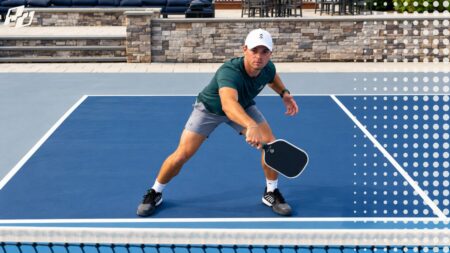
Start two to three feet behind the baseline, split-step as the server makes contact, and sink into your legs. A wide base automatically lowers your posture and steadies your balance.
Remember: hard serves usually bounce low — you don’t fix that with your arms, you fix it with your legs.
👉 Wider stance = easier low contact point and stronger base for control.
2. Shorten the Swing (and Stay Down Through Contact)
Big backswings are your enemy against pace. Present the paddle early, keep the stroke compact, and use the server’s speed instead of adding your own.
One common mistake is starting low but then standing up through the hit. That upward lift, combined with your forward momentum, often sends returns sailing long. The key is to stay down through the shot — glide forward, don’t pop up.
👉 Think: “compact block with forward flow,” not “mini groundstroke.”
3. Aim for Depth (and Keep Feet Open)
Depth buys you time. A deep return pushes the server back and gives you extra steps to close the kitchen gap. Don’t worry about driving it hard — even a looping ball with margin is more valuable than a risky miss.
And here’s a footwork fix many overlook: avoid crossing your feet as you return. A crossover step locks you in place and slows your transition. Keep an open stance so you can run through the ball and continue forward naturally toward the NVZ.
👉 Rule of thumb: return deep, stay low, and flow forward in balance.
Pro James Ignatowich sums it up perfectly—adding extra practical tips that pros use when returning big-time serves:
Choosing the Right Return
Now that you’re stable, here’s where you gain an edge: varying the type of return. Most intermediates try to drive every return and end up spraying errors. Smart players pick their reply based on the serve they receive.
- The Deep Drive. When the serve sits up waist-high or short, take a compact swing and send it deep to the opposite baseline corner. Quick, sharp, but controlled.
- The Loopy Reset. Against heavy pace, add height. A looping return crosscourt or middle lands deep but floats long enough for you to walk into the NVZ.
- The Slice Return. When pulled wide, carve under with a slightly open paddle face — just enough to skim under the ball. Overdoing it floats the ball high; done correctly, it slows pace, keeps the ball low, and forces a tough third.
- The Surprise Lob. Don’t overuse it, but if a banger is crowding the baseline, send a lob return high and deep. Watching them scramble backwards is both effective — and fun.
Here’s how to hit a slice return:
Where to Aim: Tactical Targets
Not all deep balls are equal. Good returners know where to put the ball:
- Deep middle. Safest, shrinks angles, and forces partner hesitation.
- Backhand corner. Tennis converts often lean forehand and hate moving into their backhand.
- Body jam. A return into the paddle-side hip (“chicken wing”) creates weak pop-ups.
As coach Jordan Briones likes to remind players:
“Your return isn’t just deep — it’s deep with intent.”
Mistakes That Feed the Banger
If you’ve struggled with cannonball serves, chances are you’ve fallen into one of these sneaky traps:
- Over-swinging to “match” their power. Trying to hit harder than the serve only magnifies errors.
- Standing tall at contact. Upright posture leaves you late, jammed, and forced to scoop instead of guide.
- Death grip on the paddle. Squeezing too tight stiffens your wrist and kills the touch you need to redirect pace.
- Floating to the middle. Aimless returns that land near center feed the server’s forehand — their favorite attack zone.
- Crossing feet after contact. Instead of gliding forward, players step across and stall in no-man’s-land.
- Admiring the shot. Many returners hit one “good” return, then pause for half a second. Against bangers, that pause means you’re stuck mid-court when the drive comes.
👉 Fix: Stay loose, stay compact, and aim with intent. Don’t fight fire with fire — fight it with placement and recovery.
Drills That Translate to Real Play
Here’s how to train without needing a pro-level banger on the other side:
- Wall Block Drill: Throw a ball hard against a wall, block it back softly with no swing. Teaches using pace, not adding it.
- Target Game: Place cones two feet inside the baseline. Practice looping or slicing returns into those zones. Score yourself out of ten.
- Serve Pressure Sets: Partner rips 10 serves at you. Your goal: land eight returns deep middle.
- Return + Transition: After every return, move forward immediately to the NVZ. Returning is step one — winning the rally starts at the line.
The Mental Side: Don’t Panic
One of the hardest parts of handling bangers is emotional. Miss two returns in a row and you feel like you’re sinking. That’s when servers tighten the screws.
Reset your mind: bounce on your toes, paddle up, take a breath, and remind yourself: “My job isn’t to win this shot — it’s to buy time for the next one.”
Another underrated trick: notice their rhythm. Most bangers serve at a steady cadence — same bounce, same toss, same pace.
Once you tune into it, their “cannonball” feels less like chaos and more like a pattern you’re ready for.
A Story from League Night
I’ll never forget one league match against a guy who served like he was playing Wimbledon. My first two returns? Straight into the net. My partner laughed and said: “You’re swinging like you’re mad at the ball. Just block it.”
So I did. Compact stroke, aimed deep middle. Suddenly, his weapon turned neutral. By the next game, he actually slowed down his serve because we weren’t panicked anymore.
That’s the moment I realized: big serves look scary, but they’re predictable once you stay calm.
Quick Return Checklist
✅ Start deeper behind the baseline
✅ Split-step before contact
✅ Get low and wide
✅ Short, compact swing
✅ Aim deep middle by default
✅ Move forward after the return
The Real Power Is Yours
Bangers thrive on fear. They want you over-swinging, rushing, and second-guessing. But once you learn to stay low, shorten the stroke, and return with intent, their best weapon becomes your free ball.
👉 Bonus Tip: Track your next session. If seven out of ten returns land deep, you’re not just surviving — you’re winning the rally before it starts.
Because in pickleball, it’s not the cannonball serve that decides the point. It’s how you answer it.