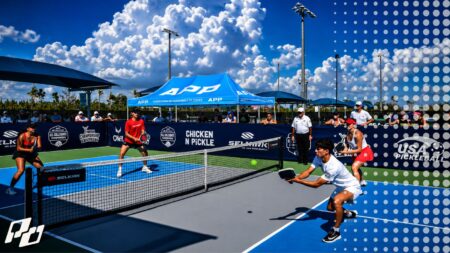
Walk onto any pickleball court and you’ll hear it: “Just get it over the net.” That’s the mindset most players bring to dinking. Keep it low, keep it safe, don’t pop it up. But if you stop there, you’re missing the hidden gear pros and high-level players use to pressure their opponents—the aggressive dink.
Unlike the defensive dink, which buys you time and resets a rally, the aggressive dink is designed to ask a question your opponent doesn’t want to answer. It’s not about hitting harder—it’s about hitting smarter.
Spin, placement, angle, and timing all combine to turn a “boring” dink into a shot that forces errors or sets up the ball you can finish.
Myth-Busting: Dinks Aren’t Just “Soft”
The biggest misconception at rec level? “Dinks should always be soft.”
Not true. A purely defensive dink keeps you in a rally but rarely wins it. Pros dink with intent — sometimes feather-soft, sometimes deep and driving, sometimes angled sharply. It’s not about soft vs. hard, it’s about control vs. chaos.
Or as one 4.5 player told me: “Once I realized dinking wasn’t about babysitting the ball but making them uncomfortable, everything changed.”
Why Aggressive Dinks Matter
Players often confuse “aggressive” with “fast.” But as one 4.0 player put it, “An aggressive dink isn’t about pace—it’s about making your opponent uncomfortable.”
That can mean:
- Adding a touch of topspin so the ball dips at their feet.
- Using sharper angles crosscourt to pull them wide.
- Driving the ball deeper into the kitchen so they can’t lean in.
- Targeting their non-dominant foot (often the left foot of a righty) to jam their stance.
Pro James Ignatowich explains it this way: “When I’m dinking aggressively with topspin, I finish on the same side of my body—never crossing over. That consistency keeps the ball dipping without using too much wrist.”
It’s not brute force—it’s precision with intent.
Technique: The Foundation of Aggressive Dinking
If a regular dink is about survival, the aggressive dink is about precision under control. The mechanics aren’t complicated, but they need to be disciplined.
Here’s how to build it:
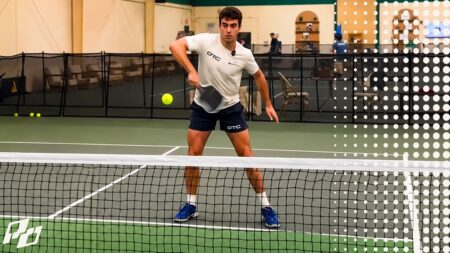
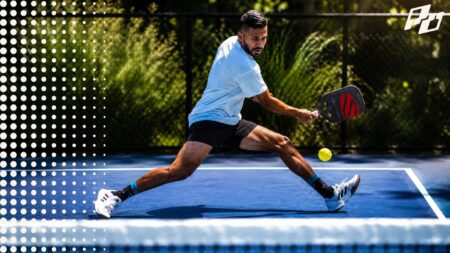
- Use Your Legs as Your Engine: Standing upright is the #1 reason players pop balls up. Drop your hips, bend the knees, and get under the ball so you can lift with your legs rather than flicking with your wrist. Imagine “squatting into the shot” — your paddle just guides the ball.
- Quiet, Locked Wrist (But Not Rigid): Aggressive dinks need stability. If your wrist is too loose, the paddle wobbles and sprays balls. Too stiff, and you can’t generate touch. Think “locked but relaxed” — a firm wrist with soft fingers. Your shoulder should drive the motion, not your wrist.
- Contact in Front, Not Beside: The sweet spot is just in front of your lead knee. Letting the ball drift to your hip or behind your body forces you to swipe, which ruins both angle and spin. Out front, you can brush up or carve across with intention.
- Aim Small, Win Big: Don’t think “hit to the open court.” Aggressive dinks work best when you pick micro-targets: shoelaces, the outside hip seam, or the chicken-wing shoulder. These spots force uncomfortable contact and set up a pop-up.
- Add Spin Wisely: A brush of topspin helps the ball dive into the court. A soft slice can skid low and wide. But spin is seasoning, not the meal. If you’re off balance, prioritize placement over flair.
Think of the aggressive dink as a hybrid: half soft touch, half offensive probe. You’re not swinging harder—you’re swinging smarter, with legs under you, paddle steady, and a target that makes your opponent uncomfortable.
@richard_pickleball This is the dink high levels players use to create pressure! 💥 Aggressive Topspin dink 💥 ⭐️ Allows you to create pressure on dinks without having to speed up the ball ⭐️ You can use the spin to hit sharp angles and force your opponents to move a lot ⭐️ This is a shot that requires time to get set so we don’t want to use it if we are stretched out or moving! ….. #propickleball #pickleballislife #pickleball #pickleballtips #pickleballcoaching ♬ original sound – Richard_pickleball
When to Pull the Trigger
Aggressive dinks aren’t for every ball. The right moments:
- Dead dinks that sit up.
- Balanced feet — never force it while off-balance.
- Opponent leaning in — push them back.
As one pro coach says: “The key isn’t having an aggressive dink — it’s knowing when you’re allowed to hit it.”
The Backhand Aggressive Dink
Once rare, the two-handed backhand dink is now everywhere at the pro level. Ignatowich admits: “Me and Riley Newman were the first guys hitting it consistently—and now everyone’s doing it.”
Why two hands? Stability. Most players overuse their dominant wrist on the backhand. With two hands, you keep the paddle face above your wrists and use your legs to get under the ball.
The result is repeatable, consistent topspin that makes the ball skid away from opponents.
Situations Where Aggressive Dinks Shine
- Crosscourt angles: A sharper crosscourt dink pulls opponents wide, opening the middle for your partner.
- Body jam: A deep dink into the opponent’s “chicken wing” (paddle-side shoulder) forces awkward volleys.
- Pattern setting: Two safe dinks followed by one aggressive push to change tempo.
Think of it as probing. You’re not hitting winners; you’re building pressure until the weak ball finally shows up.
Partner Synergy: Double the Pressure
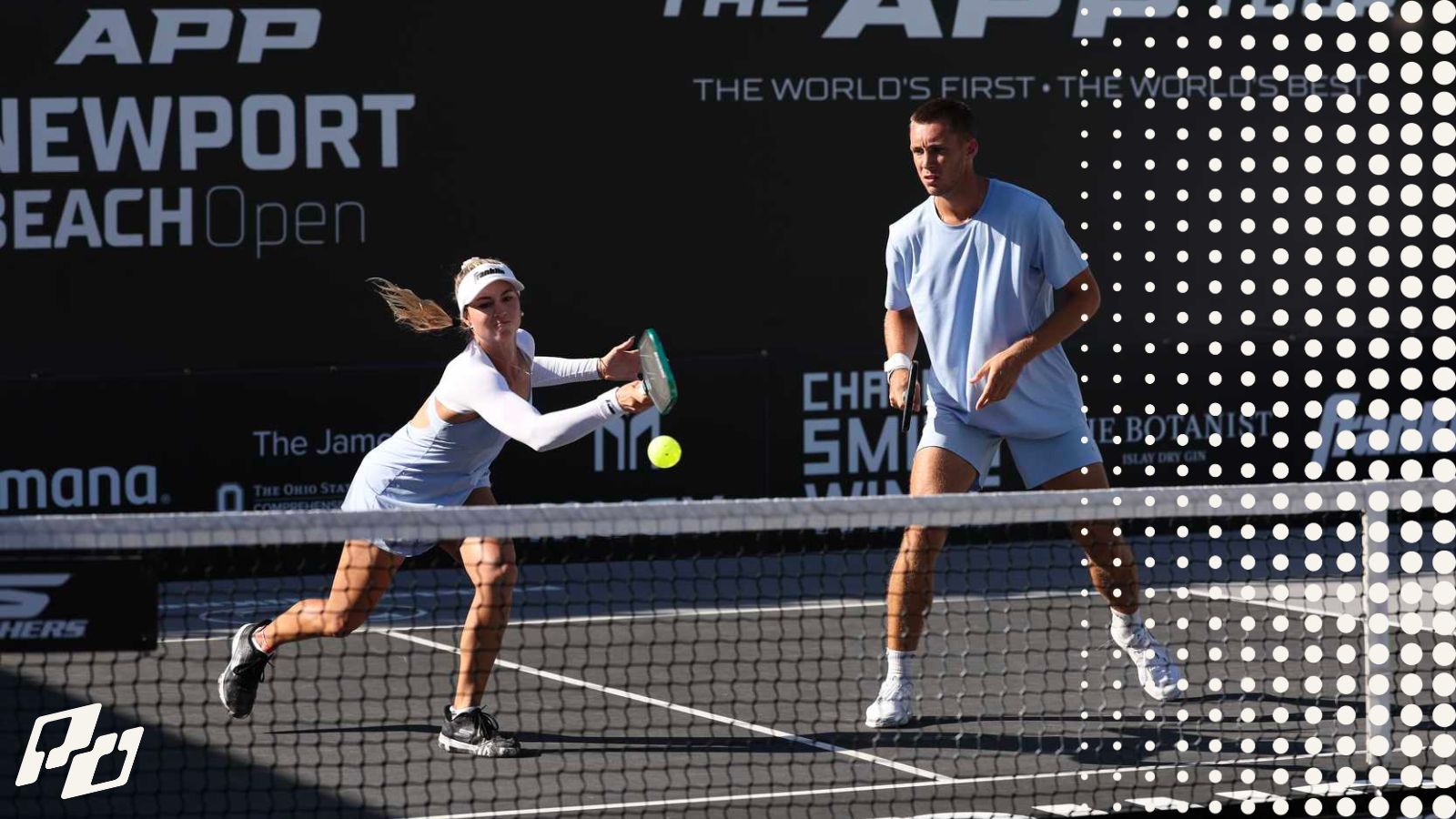
The aggressive dink isn’t a solo tactic. If you pull an opponent wide crosscourt, your partner should already be shifting middle, hunting for the next pop-up.
Pro player Jessie Irvine once said: “My best aggressive dinks aren’t the ones I finish — they’re the ones my partner finishes.”
Here’s how to make it a team weapon:
- Communicate before rallies: Agree that wide dinks mean your partner looks middle.
- Cover seams smartly: If you’re pulling crosscourt, your partner shades middle. If you jam middle, your partner holds wide.
- Build trust: Don’t overreach. Trust your partner to spring the trap you set.
Pro Cue vs. Rec Habit
One way to level up fast is to spot the habits that keep rec players stuck and swap them for pro cues.
Rec Habit: Standing upright, poking the ball flat.
Pro Cue: Knees bent, paddle out front, brushing up on contact.
Rec Habit: Admiring a “good” dink.
Pro Cue: Reset paddle in front instantly — assume the ball is coming back.
Rec Habit: Trying to roll every ball aggressively.
Pro Cue: Mix neutral dinks with occasional pressure shots — variety forces errors.
Mistakes We See at 3.0–3.5
Even when players understand the aggressive dink, execution at this level often breaks down in the same ways:
- Overcooking spin. Heavy topspin without control = floaters that get smashed.
- Forcing when off balance. If your feet aren’t set, aggression turns into desperation.
- Forgetting to reset. After one good aggressive dink, players admire the shot instead of preparing for the reply.
- Paddle tip too high. A vertical paddle face often sends balls long; keep it slightly angled forward and steady.
- Death grip on the handle. Squeezing at 8–10/10 grip pressure kills touch and makes dinks skid flat. Aim for 3–4/10 instead.
- Standing tall. Staying upright robs you of margin. Without knee bend, even a well-aimed dink can float.
- Late contact. Letting the ball drift behind your hip forces a swipe instead of a controlled brush.
👉 The fix: keep your paddle steady, grip loose, and body low. Aggression is not about muscling the ball—it’s about precision and balance.
Reader Challenge: Drill Game for Aggressive Dinks
Next time you’re on court, try this 10-minute game with a partner:
- Round 1: Play a crosscourt dink rally. Every third dink must be more aggressive — deeper, sharper, or spinnier.
- Round 2: Switch to straight dinks. Alternate neutral and aggressive.
- Round 3: Play points where you can only attack after an aggressive dink.
Track how many pop-ups you draw. You’ll start to see that pressure isn’t about swinging harder — it’s about choosing the right moment.
The Quiet Shot That Wins Loud
For the longest time, I thought aggressive dinking was about hitting “that one perfect ball.” What I eventually learned is that it’s about the cumulative effect. One dink won’t win you the rally—but five in a row aimed at shoelaces or the outside hip? That’s when opponents crack.
👉 Bonus tip: Count your dinks in a kitchen exchange. Most players lose patience after three. If you can stay sharp for four, five, six purposeful dinks, you’ll usually earn the first attackable ball.
It’s not glamorous, and you won’t hear cheers for it, but that’s the beauty of the aggressive dink. It’s subtle pressure that tilts the rally long before the crowd-pleasing winner. In other words: you don’t just survive the kitchen—you run it.