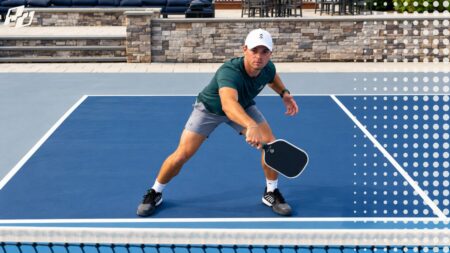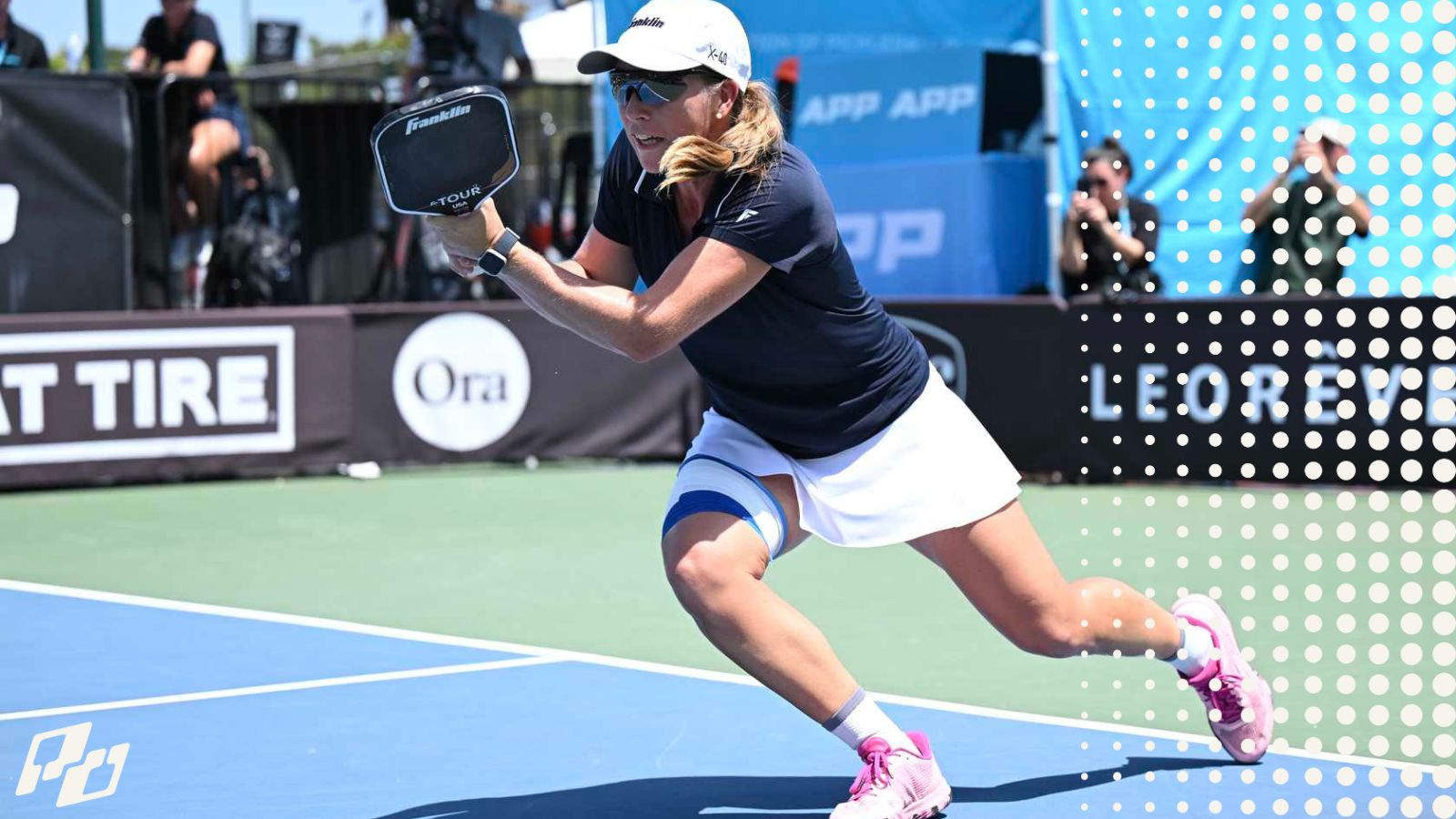
I can’t tell you how many times I’ve seen it; and done it myself. You chase down a shallow return, land in midcourt, and think, “Perfect, here’s my chance to drive it right past them.” You wind up, smack it hard, and then… watch the ball sail six inches long. Or worse, the net player eats it for breakfast with a counter at your feet.
Sound familiar? Welcome to pickleball’s Bermuda Triangle: the midcourt.
From the baseline, drives feel natural. You’ve got a long runway to build speed, margin to keep it in, and time to load your body. But once you step into midcourt, that runway is gone. It’s half the distance, half the time, and a whole new shot profile. Yet too many players treat it like “baseline, but closer.” That’s the fastest way to give away free points.
Here’s the truth: if you want to own the midcourt, you need a different mindset — one built around spin, balance, and knowing when to reset instead of rip.
Why Midcourt Changes Everything
Let’s do some quick geometry:
- Baseline to opposite baseline: ~44 feet.
- Midcourt to kitchen line: ~22 feet.
That’s literally half the distance for the ball to travel, and about half the reaction time for opponents. A flat, baseline-style drive that was safe from the back now goes long from midcourt. Or it lands shoulder-high — perfect counterpunch height for opponents at the NVZ.
What this means:
- From the baseline, pace wins.
- From midcourt, shape wins.
The players who figure this out stop handing away cheap errors and start turning midcourt into a weapon.
Spin Over Smash: The Midcourt Mantra
In midcourt, your #1 focus should shift from power to spin. Why? Because topspin does two magical things at once:
- Pulls the ball down into the court, even when you swing aggressively.
- Forces the ball to dip under your opponent’s strike zone, making their counters awkward or defensive.
That’s why the best players don’t “crush” from midcourt — they roll. The ball comes heavy, fast enough, and dipping just in front of their opponents’ paddles.
The adjustment is mostly in your swing path:
- Baseline drive: Long, flat swing, through the ball.
- Midcourt attack: Compact swing, low-to-high brush, vertical finish.
Think less “tennis forehand” and more “ping-pong topspin roll.”
Watch how it’s done:
When to Attack vs. Reset
This is the midcourt decision tree — and if you get it wrong, you’re in trouble.
✅ Green Light Attacks
- The ball is at or above net height.
- You’re balanced, weight forward, feet under you.
- One or both opponents are still in transition (not set at the kitchen).
- There’s an open seam between opponents.
This is your moment: roll heavy topspin into the gap and force a weak block.
❌ Red Light Resets
- The ball is below net height.
- You’re stretched or still running forward.
- Both opponents are already camped at the kitchen line.
Here, trying to drive is a losing bet. The smart play is a soft reset into the kitchen. It might not feel sexy, but it buys you the real prize: time to move forward and join the NVZ battle.
Pro tip: Resets aren’t “giving up.” They’re tactical investments. Every good reset is a deposit that pays off once you’re at the kitchen line.
Pro player Alyce Jones sums it up perfectly:
How to Execute a Midcourt Attack
1. Shorten Your Swing
You don’t have room for a big backswing. Keep it compact — paddle back only as far as your hip.
2. Brush, Don’t Blast
Contact the back of the ball with an upward brushing motion. Feel like you’re lifting it, not hammering it.
3. Use Your Legs
Bend your knees and lift through your legs. That creates the upward angle you need for topspin.
4. Finish High
Follow through above your shoulder. This ensures the ball dips back down instead of sailing long.
5. Aim Safe
Crosscourt or middle is almost always safer than sideline. Let the spin do the work, not the line-painting.
Midcourt Reset Mechanics
Sometimes, the smartest midcourt play is to neutralize and wait. A good reset is basically saying: “I don’t like this ball, let’s start over on my terms.”
- Soft hands: Loosen grip pressure (3 out of 10) to let the paddle absorb pace.
- Target middle kitchen: Safe margin, makes opponents decide who takes it.
- Stay low: The lower your knees, the softer your touch.
How to improve your midcourt reset:
Resetting from midcourt feels like surrender at first. But at higher levels, it’s the skill that keeps you alive long enough to win.
Common Mistakes in Midcourt
- Overhitting: Forgetting that you only have 22 feet to work with.
- Flat driving: Giving opponents shoulder-high missiles they love to counter.
- Off-balance attacking: Swinging while still running = guaranteed error.
- Wrong decision: Attacking balls below the net instead of resetting.
Real-World Scenarios
- Shallow return off your serve: You step midcourt. Instead of crushing, roll a topspin drive crosscourt that dips in front of the net player.
- Opponent floats a 4th shot high: Green light. Attack with spin middle seam.
- Opponent hits a dipping 4th at your feet: Red light. Reset softly to the kitchen, move forward, and get ready for the hands battle.
From My Own Bag
I used to hate midcourt. It felt awkward; not close enough to dink, not far enough to drive. My default was to blast, and nine times out of ten, it cost me points. Once I trained myself to roll with spin and embrace the reset, everything clicked.
Now I think of midcourt as my “ambush zone” — where I can steal points with smart spin or survive until I’m set at the NVZ.
The Midcourt Checklist
- Am I balanced?
- Is the ball above net height?
- Can I roll with spin, not just blast flat?
- If not, can I soften and reset instead?
Answer those in real time, and midcourt stops being a Bermuda Triangle — it becomes your launchpad.
Wrapping It Up: The Midcourt Truth
Attacking from midcourt isn’t about muscling the ball harder — it’s about choosing wisely with less space to work with. Think spin, not smash. Think control, not chaos.
When you step into midcourt, you’re playing a different game than from the baseline. The question isn’t, “Can I rip this ball?” but, “Should I?”
The Golden Rule of Midcourt
- Roll, don’t blast. Topspin is your best friend.
- Reset when stretched. Soft buys you time; hard just hands them the point.
- Attack only when invited. Above-net, balanced, and with a clear gap? That’s your green light.
Bonus Tips for Midcourt Mastery
- Practice patience: Train resets as deliberately as you train drives — they’re equal weapons.
- Target the middle: Safer margin, forces hesitation between opponents.
- Brush, don’t slap: Vertical swing paths create dip and margin for error.
- Check your balance: If your feet aren’t set, reset instead.
- Think transition, not winner: The real goal is getting yourself to the kitchen line.