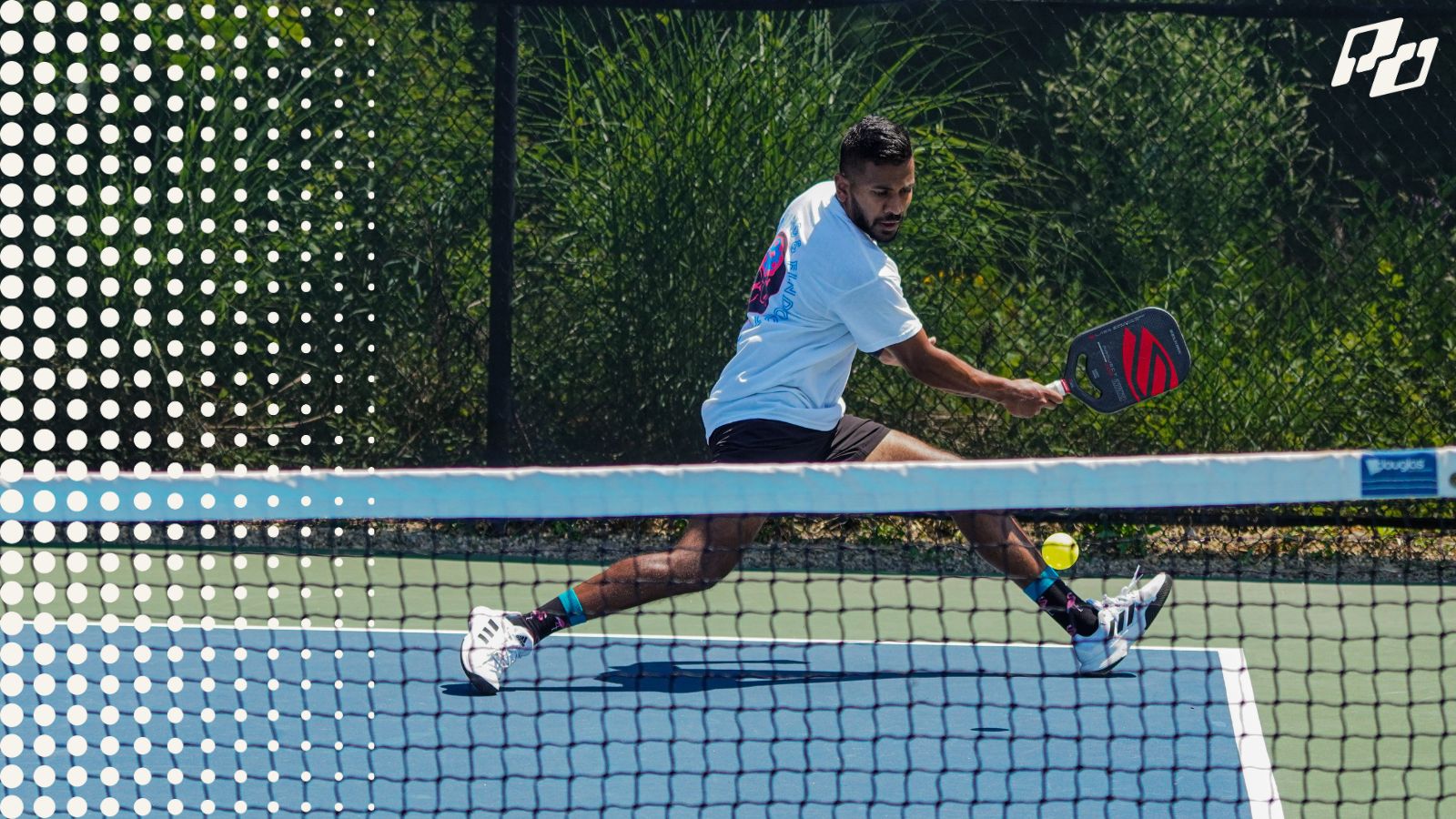
From 3.0 rec players to ex-tennis 4.5s, everyone has a backhand horror story. The ball feels awkward on that side, and without careful habits, it quickly becomes your opponent’s favorite target. Why? Because the backhand drive punishes late footwork, sloppy prep, and lazy mechanics more than almost any other shot in pickleball.
And here’s the truth: these mistakes aren’t just for beginners. New players tend to slap or poke at the ball, tennis converts forget to adjust to pickleball’s low bounce, and even advanced players pull their eyes up too soon under pressure.
The good news? Every one of these problems is fixable with awareness and targeted practice.
Mistake 1: Slapping Instead of Swinging
When panic sets in, many players flick their wrist across the ball, producing a weak slap. This “slap backhand” uses only the wrist and forearm with no body support.
- One-hander: Slapping is especially common here, because the wrist feels exposed.
- Two-hander: Slapping happens when the dominant hand (usually the right) tries to take over instead of letting the non-dominant hand lead.
The fix: Start with a full shoulder turn and coil. For two-handers, think of the non-dominant hand as the driver and the dominant hand as the guide. For one-handers, let the shoulder and torso—not the wrist—supply the swing.
Mistake 2: Separating the Arm From the Body
When the hitting arm floats away from your torso, the backhand loses its whip and power. Instead of stored energy, you get a weak poke.
- One-hander: Tuck the bicep against your body during the coil; release it as you uncoil.
- Two-hander: Both arms should stay connected to your torso in the takeback. If your elbows drift, you’ll lose stability and control.
The fix: Compact coil first, then uncoil and let the energy release. Think whip, not push. cracking a whip. Power and control come from the connection, not the reach:
Mistake 3: Not Dropping the Paddle Head
Too many players swing straight through without ever getting the paddle below the ball. With pickleball’s low bounce, that means straight into the net.
- One-hander: Drop the wrist and paddle head to get under the ball, then swing low to high.
- Two-hander: Use your legs to get low and let the non-dominant hand pull the paddle up through the shot.
The fix: Always start with paddle tip up, then let the paddle head drop beneath ball height before contact. That’s how you generate lift and topspin without floating the ball.
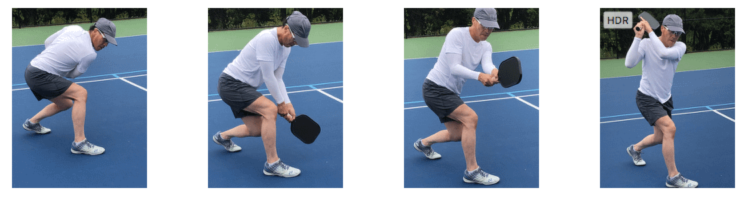
Mistake 4: Ignoring Your Non-Dominant Arm in a One-Handed Backhand
This mistake plays out differently depending on your style:
- One-hander: Too many players leave the off-arm dangling. Without counterbalance, your hitting arm slows down and feels cramped.
- Two-hander: The off-arm is the engine. Many players fail because they let the dominant hand lead. If the right hand squeezes too tight, it robs the left hand of power.
The fix:
For two-handers: Let the non-dominant hand drive the swing while the dominant hand stays relaxed and guiding.
For one-handers: Use the off-hand on the takeback to coil, then pull it back as a counterweight through the swing.
Mistake 5: Looking Up Too Soon
This one affects everyone: you strike the ball and immediately peek to see where it’s going. When the head comes up early, so does the torso, and the ball sails.
The fix: Keep your chin down and eyes on contact for a beat longer. One-handers especially need this to prevent high sailing shots; two-handers need it to keep their torso anchored through contact.
The Psychology of the Backhand
Why does the backhand feel like such a liability? Often it’s not mechanics—it’s mindset.
- Many players avoid it, running around to hit forehands instead.
- Miss a few backhands in a row and suddenly you’re steering the ball instead of swinging.
- Others play it “safe,” bunting it over, which only invites attack.
The turning point is when you stop treating the backhand as a weakness to hide and start training it until you can swing with trust. Once you decide to own the shot, confidence shifts your entire game.
Drills to Break Bad Habits
Here’s how to retrain your backhand with purpose. Some apply equally to both styles, while others are especially helpful for either the one-hander or the two-hander.
Wall Work (Both)
- Stand 8–10 feet back, groove 50 low-to-high swings.
- For one-hander: focus on paddle head drop and full shoulder turn.
- For two-hander: focus on footwork (shuffle in, get low) and letting the non-dominant hand lead.
Mirror Coil (One-Handed Emphasis)
- Shadow turn with bicep tucked and shoulder under chin.
- One-handers really need this “compact coil” to generate whip without losing control.
- Two-handers can use it too, but their power comes more from both arms working together.
Counterbalance Drill (One-Handed Emphasis)
- Exaggerate your off-arm pullback on 20 reps to feel how it frees your swing.
- This is critical for one-handers who otherwise collapse the swing.
- For two-handers, the off-arm is active in the hit, so counterbalance is less dramatic.
Target Clearance (Both)
- Place tape 6–12 inches above the net. Hit drives through that window with topspin.
- For one-hander: focus on brushing up for spin and margin.
- For two-hander: use non-dominant hand to pull paddle up and through the target.
Drive vs. Slice Drill (Both)
- Partner feeds two balls: one deep (drive it), one awkward/late (slice it).
- For one-hander: practice slice as the natural bailout when late.
- For two-hander: work on recognizing when to switch to one-hand slice for reach, versus staying with two hands for power.
Common Myths & Debates
Backhand drives spark plenty of debate. Here are a few myths worth busting:
- “Aim 3 inches above the net.” Good for drills, but in games it’s too risky. Most players need 6–12 inches with topspin for safety.
- “Better to miss in the net than long.” Wrong. Net balls are dead 100% of the time. Long balls at least force a decision.
- “A strong drive makes the slice unnecessary.” False. The slice is your bailout when you’re late or jammed—it buys time and keeps points alive.
The truth? Margin + spin beats perfectionist aiming. The best backhands aren’t the lowest—they’re the most reliable.
The Vision for Your Backhand
The backhand drive may never feel as natural as your forehand. That’s okay. It doesn’t need to be your flashiest shot—it needs to be a trusted one.
Fix these mistakes and suddenly:
- Opponents stop targeting your weak side.
- You handle deep returns with confidence instead of panic.
- Your baseline game becomes two-sided, opening angles and pressure.
Picture it: your opponent rifles a ball to your backhand corner, expecting a weak reply. Instead, you step in, coil, and rip a clean drive that pins them back. Now it’s their turn to scramble.
That’s what a disciplined, confident backhand unlocks. And the only thing standing between you and that shot are a few bad habits—habits you can change starting today.