If your pickleball drop keeps hitting the net, you may be hitting it too flat. Add more loft, use a soft grip, and let the ball peak early so it descends into the kitchen. From farther back, give the drop more arc rather than simply hitting it harder.
One question keeps coming up from our Pickleball Union readers: “Why can’t I consistently get my drop shot over the net?”
Usually, players assume they need to hit the ball harder.
But often, the real problem is the opposite of what they think: they’re so afraid of popping the drop up that they hit it too low and flat.
A good drop needs margin over the net. The key is making sure that extra height happens early enough for the ball to peak and start descending before your opponent can attack it.
In other words, the problem isn’t height.
It’s height that carries too far.
Why So Many Drops Die in the Net
A lot of 3.0–4.0 players hit their drop almost like a miniature drive.
The trajectory is flat.
The paddle moves mostly forward.
And because they are scared of popping the ball up, they leave almost no margin over the net. That works until contact is slightly late, the return is deeper, or the player is moving backward.
Then the drop disappears into the tape.
The better mental picture is not: “Keep it low.”
It is: “Get it rising early, then falling before it reaches them.”
A useful coaching reference is an apex roughly around your own kitchen line, often somewhere around 5–6 feet high on a baseline drop. That is not a rigid number, but it gives the ball time to reach its peak and start descending before it arrives at the opponent’s kitchen.
See What This Should Look Like
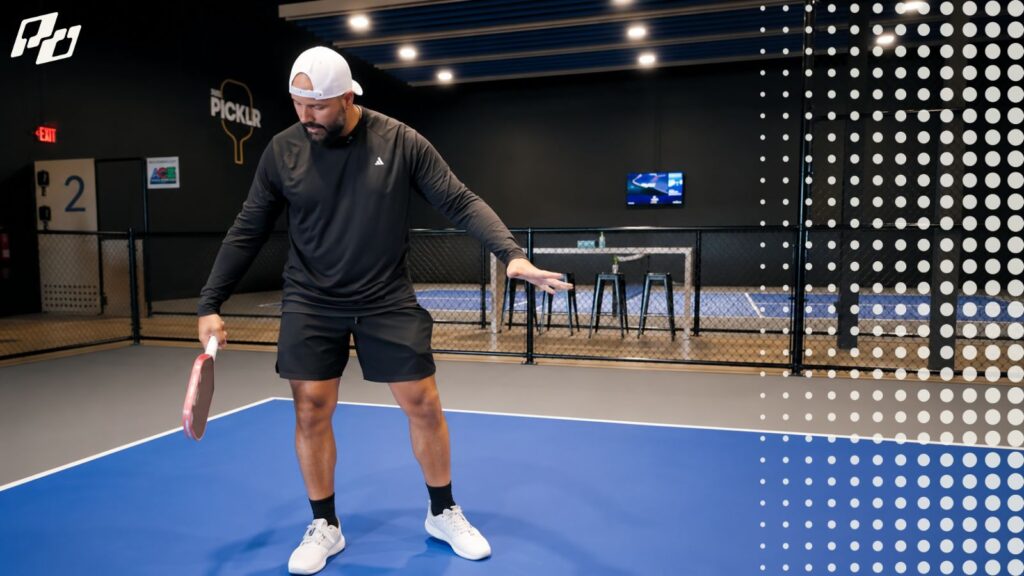
We asked our coach Marko Grgic to break down this exact problem and demonstrate how much height you can safely give your drop. His biggest message is one worth remembering: don’t be afraid of loft as long as the ball peaks early enough to descend into the kitchen.
You can see Marko demonstrate the technique in the video below.
The Real Goal: Descending Contact
The best drop is not necessarily the one that barely clears the net. It is the one that forces the opponent to contact the ball below net height. That can happen with a ball that clears the net by several feet.
Think about the flight in three parts:
Rise → peak → descend.
If your ball is still rising when it crosses the net, you have probably pushed the apex too far forward.
If it peaks early enough and is falling as it reaches the opponent, the extra height is much safer than it looks.
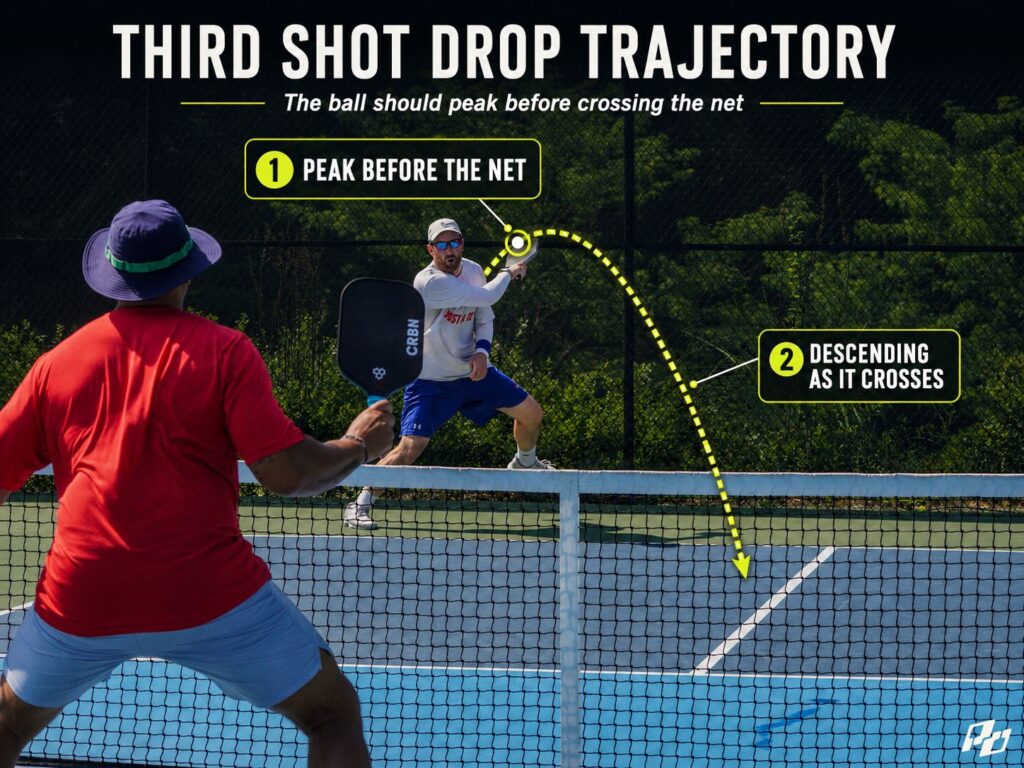
This is why the phrase “don’t pop it up” often creates the wrong correction. Players respond by flattening the ball. Then they hit the net.
Cue
Give yourself height early, not height late.
Why Distance Changes the Amount of Loft You Need
A drop from six feet behind the kitchen is not the same shot as one from the baseline. The farther you move back, the more distance the ball must travel.
That means you usually need:
- a little more loft
- a little more forward carry
- a longer, smoother acceleration
- more margin above the net
The mistake is trying to hit the baseline drop with the same low trajectory as a transition-zone reset.
From closer in, the ball needs less arc.
From the baseline, it needs more.
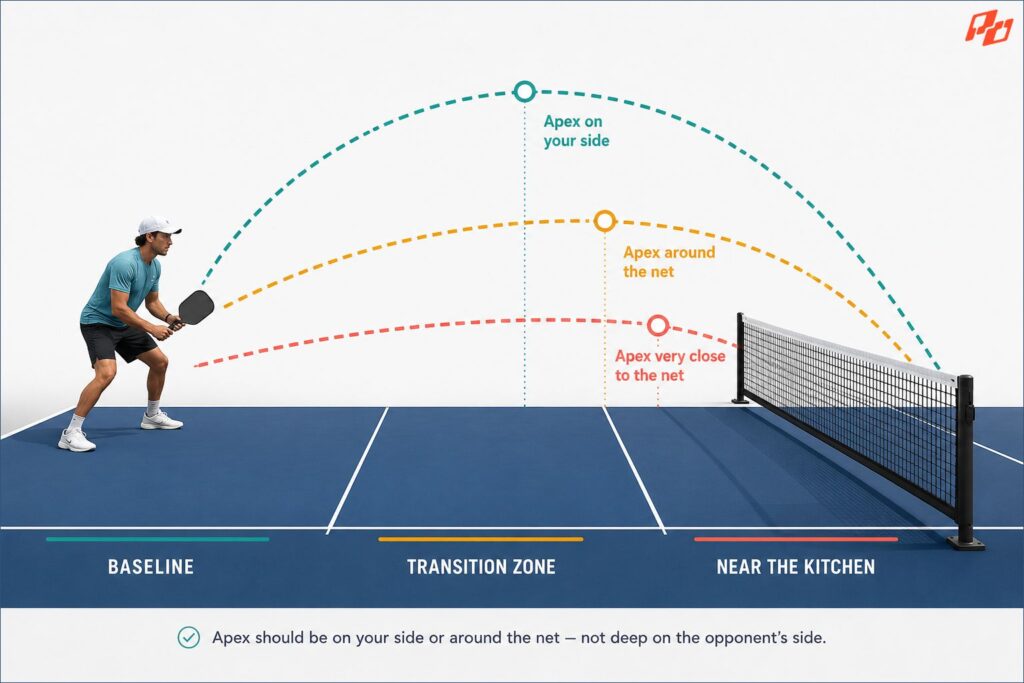
This is why Marko’s progressive drill is so effective: it teaches your hand what different distances actually require instead of asking you to guess from the baseline every time.
Use the “Underhand Toss” Feel
One of the best cues for a drop is to imagine underhand tossing the ball into the kitchen. If you were throwing a ball softly from the baseline, you would not fire it on a straight line. You would naturally create an arc.
The paddle motion should feel similar.
Keep the grip relaxed, allow the paddle to travel smoothly from low to slightly higher, and send the ball upward and forward rather than punching it toward the target.
The motion should feel more like carrying the ball than hitting it.
That does not mean scooping underneath it with an open paddle face.
The paddle should still move through the ball.
Cue
Toss it with the paddle. Don’t punch it at the kitchen.
Grip Pressure Matters More Than Most Players Think
If your grip suddenly tightens because you are nervous about missing the drop, the paddle becomes harder to control.
That often produces one of two misses:
- the ball comes off too fast and sails deep
- the arm decelerates and the ball dies into the net
For a basic neutral drop, think roughly 3–4 out of 10 grip pressure.
Firm enough that the paddle is stable.
Soft enough that you can feel the ball.
The goal is not to hold the paddle loosely throughout the entire swing. It is to avoid locking the forearm and turning a touch shot into a rigid push.
Cue
Soft hand, committed swing.
Your Legs Should Create the Lift
Another understated reason players hit drops into the net is that they try to manufacture the entire arc with their arm.
- Instead, lower your body into the shot.
- Bend your knees.
- Let the paddle begin below the ball.
- Then allow your legs and shoulder to lift together through contact.
That produces a smoother trajectory than flipping the wrist upward at the last moment.
Your wrist should remain relatively stable. If the paddle face changes dramatically just before contact, your launch angle changes too.
That is where inconsistency begins.
The Best Drill Starts at the Kitchen—Not the Baseline
If you struggle with drops, stop hitting 100 identical balls from the baseline.
Instead, work backward:
✔️ Start at the kitchen and hit several soft dinks
✔️ Take one step back and repeat
✔️ Keep moving backward through the transition zone
✔️ Continue until you reach the baseline
This teaches you how much height, arc and force each distance actually requires.
Kitchen: compact trajectory
Transition zone: slightly more arc
Baseline: more lift and carry
The goal is to feel how the shot changes as you move farther from the net, rather than treating every drop like the same ball.
Progressive transition-zone drills also help you learn to neutralize pace and advance gradually through the court.
Don’t Automatically Advance After Every Drop
This is another important piece Marko’s advice naturally leads into. Hitting a drop does not automatically mean you should charge the kitchen.
Watch what your drop does first.
If it:
- lands low
- forces the opponent to hit upward
- makes them contact below net height
then advance.
If it sits high or gives them an easy roll volley, stop and prepare to defend. It may take a third, fifth, and even seventh shot to reach the kitchen safely. That is completely normal.
Cue
Earn the next step.
What About Topspin?
Topspin can help a drop dive into the kitchen, but it is not the first thing I would fix.
One recent pickleball ball-flight study found that launch angle and ball speed influenced successful third-shot drops more strongly than spin. Spin still matters, but trajectory control matters more.
That is useful for recreational players. If your drop keeps hitting the net, do not immediately start trying to create more topspin.
First fix:
- launch height
- pace
- contact point
- spacing
- grip tension
Then add spin.
A clean neutral drop with good trajectory beats a heavily spun ball that never crosses the net.
One Simple Test for Your Next Practice
Put a visual target above your own kitchen line. Imagine a person around 5–6 feet tall standing there.
From the baseline, try to send your drop toward their chest or head area and let the ball descend into the opposite kitchen.
Then gradually lower the trajectory until you find the smallest arc that still gives you comfortable net clearance.
You are looking for margin, not perfection.
The right trajectory is the one you can repeat under pressure.
What I’d Focus On First
If your drops keep dying in the net, I would not spend your next session trying to make them prettier.
Make them higher.
Give yourself permission to clear the net comfortably. Once you consistently get the ball over, you can start reducing the arc, adding topspin, changing targets, and making the shot more aggressive.
But you cannot control a drop that never reaches the other side. That is the part recreational players often skip. They try to build the perfect drop before they have built a reliable one.
Start with margin.
Then earn precision.