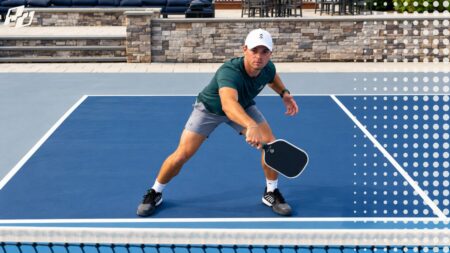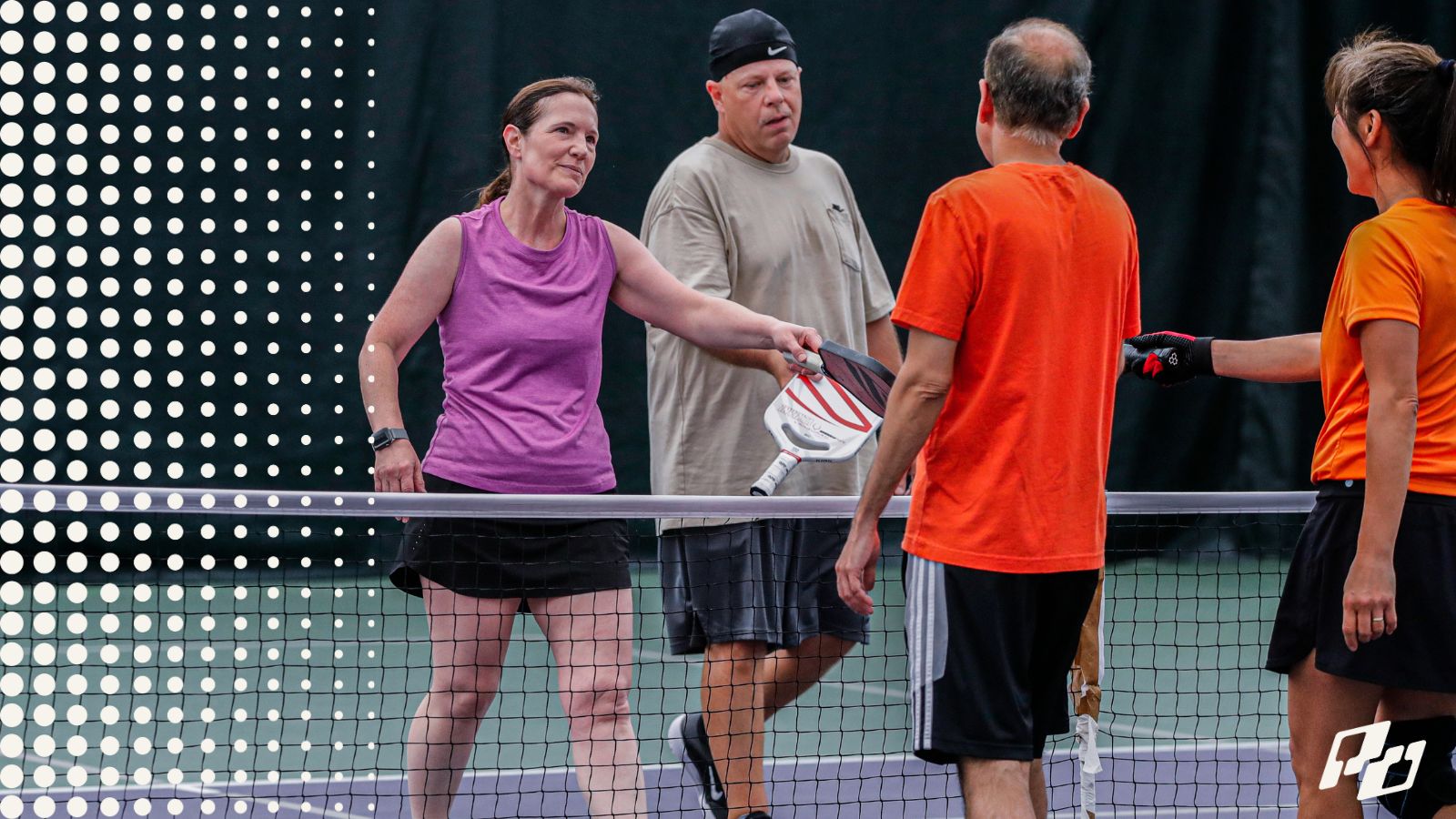
You and your partner step onto the court for a rec game. The warm-up felt good, the ball’s bouncing true, and you’re both eager to play. The ref (or maybe just your buddy with a coin flip app) asks: “Serve or side?” You quickly answer, but as the first points unfold, something feels off. You’re reacting instead of dictating, leaving gaps, and scrambling more than you’d like.
That’s the difference a tiny bit of pre-game strategy makes.
The question is: how much strategizing is necessary? Especially in rec play, where you’re often switching partners and not gunning for a gold medal.
The answer depends on your goals—but even two minutes of thoughtful planning can sharpen your play, protect your partner, and give you more fun points to remember afterward.
Do You Even Need to Strategize in Rec Play?
This is where players disagree. Some say rec is just about showing up and hitting balls. Others treat every game like a mini-lab for tournament prep. Both can be true—it’s all about your purpose that day.
- If you’re there for fun/social: Strategy should be light. Maybe just agree to try one thing—like aiming third shots at the backhand, or practicing lobs on friendlier opponents. That way you’re working on something but not overthinking.
- If you’re there to improve: Pick two clear priorities. For example: “Let’s keep all returns deep,” or “We’re both going to advance shoulder-to-shoulder.” That makes every rally a focused rep, not just a coin toss.
- If you’re prepping for competition: This is when you actually sketch a mini-game plan. Think serve and return targets, who covers the middle, when to stack, and what adjustments you’ll make if Plan A breaks down.
The key is to match your strategy talk to the stakes of the match. Nothing kills rec vibes faster than a partner running a tournament-level scouting report in your ear when you just came for exercise and laughs.
The Two-Minute Pre-Match Huddle
Here’s the beauty of pickleball—you don’t need a whiteboard to strategize. You just need 60–120 seconds of honest talk. The goal isn’t complexity; it’s clarity.
Here’s a simple structure that works at any level:
- Roles & Strengths: Who’s more comfortable hitting drops? Who poaches better? Knowing this avoids awkward moments where both players hesitate.
- Targets: Decide where serves and returns go most often. “Deep to the backhand” is a classic, but you can get creative: middle serves for confusion, body serves to jam.
- Movement & Ownership: Promise to move together. If one player charges the kitchen while the other stays back, you’ve just gift-wrapped the middle of the court. Call who owns the middle (usually forehand in) so there’s no debate mid-rally.
- Communication: Agree on quick calls: “Go!” if the drop is good and both advance, “Hold!” if it floats high. Less is more—short cues beat lectures.
- Adjustment Triggers: Pick one early-game signal to switch plans. For example: if your drops are dying in the net, switch to driving thirds and dropping fifths. If opponents are feasting on middle balls, switch targets wide.
That’s it. Less than two minutes, but it saves dozens of points.
Scouting During Warm-Ups (Without Being Weird About It)
You don’t need to stare down your opponents like an NFL scout. Just keep an eye on a few key things during warm-ups:
- Backhand comfort: Are they hiding it or leaning on it?
- Volley reactions: Do they stab at fast balls, or control calmly?
- Footwork on lobs: Smooth drop-step or clumsy backpedal?
- Dink height: Are their dinks consistently low, or do they float?
All you’re looking for is one weakness per player. That’s enough to nudge your early targets without overthinking.
The First Three Points Set the Tone
Even if you have no grand plan, the first three points are your mini-experiment.
- Point 1: Serve deep middle, drop to the backhand, move in shoulder-to-shoulder.
- Point 2: Change one variable—try a wide serve or a drive third. See how they react.
- Point 3: Mix it again—serve at the body, follow with a drop to open space.
Early variety gives you free data. You’ll quickly know if your opponents hate backhand drops, struggle with wide serves, or panic on body drives.
Doubles Strategy: Movement and Trust
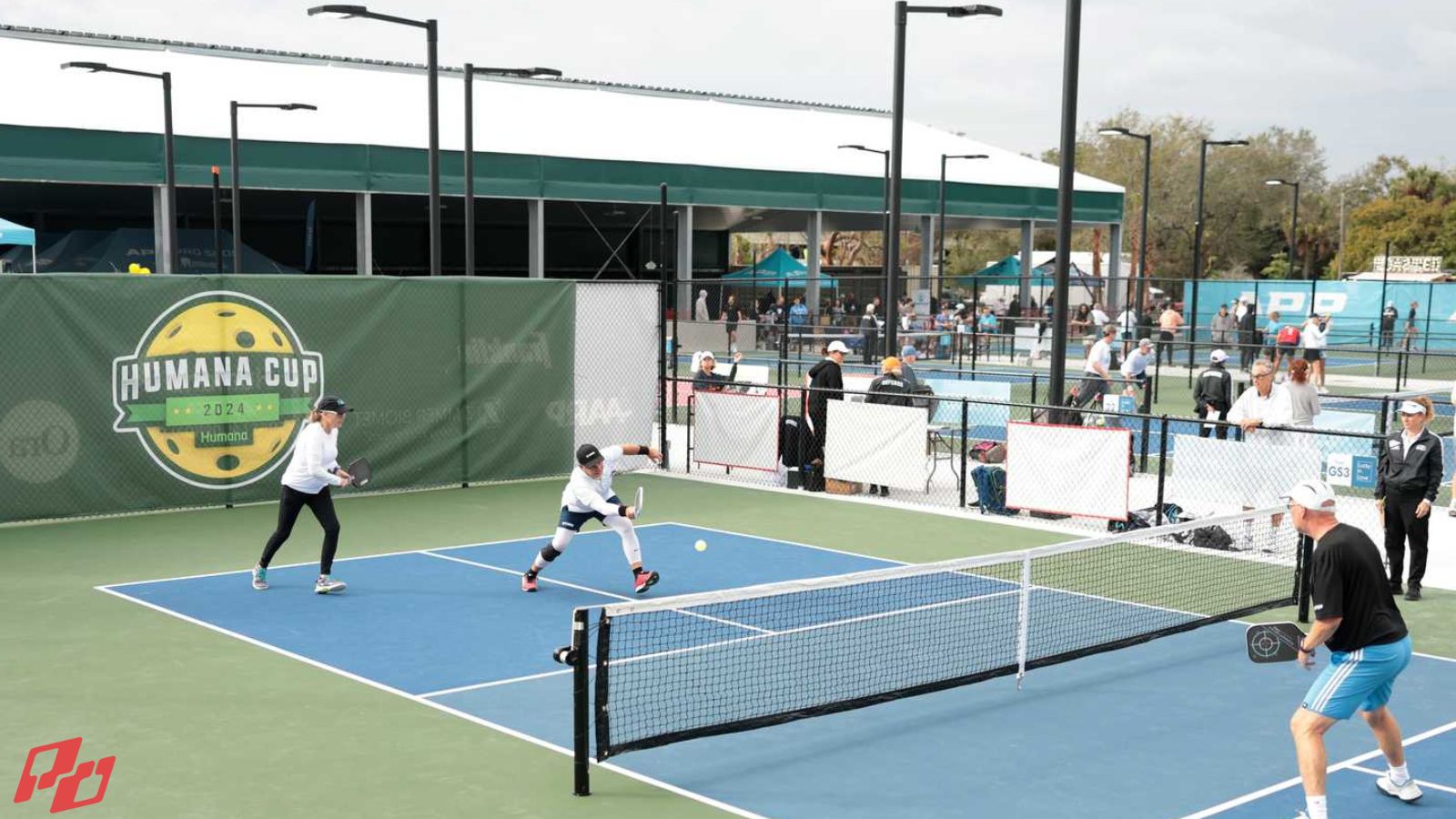
Most breakdowns in doubles don’t happen because of bad shots—they happen because of bad positioning. The classic mistake? One player charges the kitchen while the other hangs back at the baseline. That diagonal gap is the biggest gift you can give opponents.
Think of you and your partner as connected by a rope. If one moves forward, the other does too. If one pauses, the other pauses.
- Good positioning: Shoulder-to-shoulder through the transition zone.
- Bad positioning: One player stuck at the baseline while the other leans on the NVZ line.
Trust your partner more than your instincts. Even an okay drop looks good if you’re in sync. Even a perfect drop gets punished if you’re split apart.
What to Actually Talk About
Too much talk = paralysis. Too little = confusion. Aim for simple cues between rallies:
- “Nice height.” (positive affirmation)
- “Deeper returns.” (single cue)
- “Next third to his backhand.” (clear target)
What to avoid:
- Long post-mortems.
- Technique tips mid-match.
- “Why’d you do that?”
Save analysis for after. On-court talk should be quick and constructive.
Strategy for Different Contexts
- Rec night (fun focus): Pick one thing to try all game, even if it costs points. Example: “Let’s lob once a rally.”
- Rec night (improvement focus): Work on habits—deep returns, advancing together, controlling middle. Don’t worry about score.
- League/tournament: Nail down serve/return targets, transition movement, middle ownership, and one trigger for Plan B.
The more competitive the setting, the more detail you add.
Strategy Is About Clarity, Not Control
Pickleball is too fast and messy to script every rally. What strategy gives you isn’t control—it’s clarity. You and your partner agree on a few big rocks, then adapt together as the match unfolds.
So before your next game, take those 120 seconds. Pick your roles, agree on targets, commit to moving as one. You’ll be amazed how much smoother even a casual rec game feels when you start with the same map.