Every pickleballer has been there—mid-rally, sweat dripping, paddle twisting just enough to send a perfect setup ball into the net. It’s not always your swing that betrays you—it’s your grip. And yet, grips are one of the most overlooked pieces of gear in the game.
That’s why we put together this guide. Because choosing the right overgrip isn’t just about comfort—it’s about preventing blisters, reducing fatigue, adding spin, and keeping control in pressure moments. If your paddle doesn’t feel like an extension of your hand, you’re already playing at a disadvantage.
This breakdown will show you what works, why it matters, and how to pick the grip that actually fits your game.
Why the Grip Matters
Your grip is where hand meets paddle. A slippery, worn-out grip means…
- You squeeze too tight (hello, pickleball elbow).
- Your drops float because you can’t control the paddle face.
- Your drives feel inconsistent.
On the other hand, a fresh, well-fitted grip feels like the paddle is an extension of your arm. It lets you play relaxed, react faster, and focus on strategy instead of “don’t let this thing slip.”
If your hand slips mid-point, your grip setup is costing you more than you realize.
Base Grip vs. Overgrip: What’s the Difference?
When players ask me, “Should I change my pickleball grip?” they usually mean overgrip.
- Base (replacement) grip – the padded, durable layer that comes on the paddle. Think of it as the foundation.
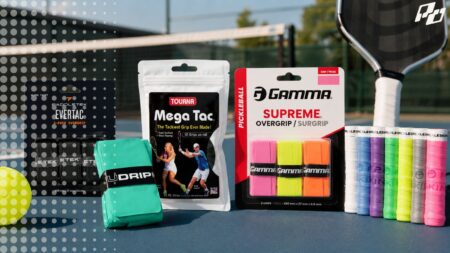
- Overgrip – the thin, replaceable wrap you put on top. This is the layer that gives you tack, absorbs sweat, and fine-tunes diameter.
Here’s the trick: you don’t replace the base grip often. You refresh the overgrip every few sessions. Sweaty players might swap weekly. Tournament players? Before every match.
Pickleball Grip Cheat Sheet
| Grip Type / Material | Key Benefits | Drawbacks | Best For |
|---|---|---|---|
| Continental Grip | Versatility for forehand/backhand/serves | Less spin/power | Beginners & all-court players |
| Eastern Grip | Forehand power, solid drives | Weak backhand, less spin | Intermediate forehand-heavy players |
| Western Grip | Heavy topspin, aggressive play | Unnatural feel, harder for beginners | Advanced spin-focused players |
| Polyurethane (PU) Overgrip | Cushioned, shock-absorbing, tacky, sweat-resistant | Wears faster with heavy play | Players with sweaty hands or sensitive wrists |
| Faux Leather Overgrip | Durable, sleek feel, firm control | Less moisture absorption | Players seeking durability & pro-level feel |
| Anti-Sweat Overgrips | Superior moisture control, non-slip | May need frequent replacement | Players in humid climates or long matches |
What the Materials Actually Mean
When I first experimented, I thought all overgrips were the same. Wrong. The material changes everything.
1. Polyurethane (PU)
Soft, tacky, slightly cushioned. Great for sweaty hands and players who like that “sticky” confidence.
- Best for: general use, humid climates, comfort seekers.
- Weakness: tack can fade faster outdoors.
2. Perforated/Dry Feel
Think chalky instead of sticky. Breathes better and absorbs sweat without feeling gluey.
- Best for: heavy sweaters, long sessions.
- Weakness: less initial grab.
3. Faux Leather (as base grip)
Firm, smooth, premium. Keeps bevel edges sharp.
- Best for: players who like precision and a classic feel.
- Weakness: not much shock absorption—usually paired with an overgrip.
Who Needs What? (Real Player Profiles)
- The Sweater: If your paddle feels like a wet fish after two games, you need perforated/dry-feel. Bring spares.
- The Blistered Beginner: If hot spots appear fast, cushion matters more than tack. PU with some thickness saves your hand.
- The Precision Player: Love your counters? Keep it thin. Thin overgrip over a leather base = crisp bevels and fast wrist action.
- The Veteran (60+): If your elbow or wrist feels sore, add a layer for diameter + shock absorption. It’s easier on the joints.
How to Wrap It (Without It Coming Loose)
This part’s practical, but worth learning:
- Peel off any old overgrip. Wipe the base grip clean.
- Anchor the tapered end at the butt cap.
- Wrap upward at a 30–45° angle, overlapping ⅛ inch per turn.
- Keep tension firm but not stretched.
- Trim clean at the top and secure with finishing tape.
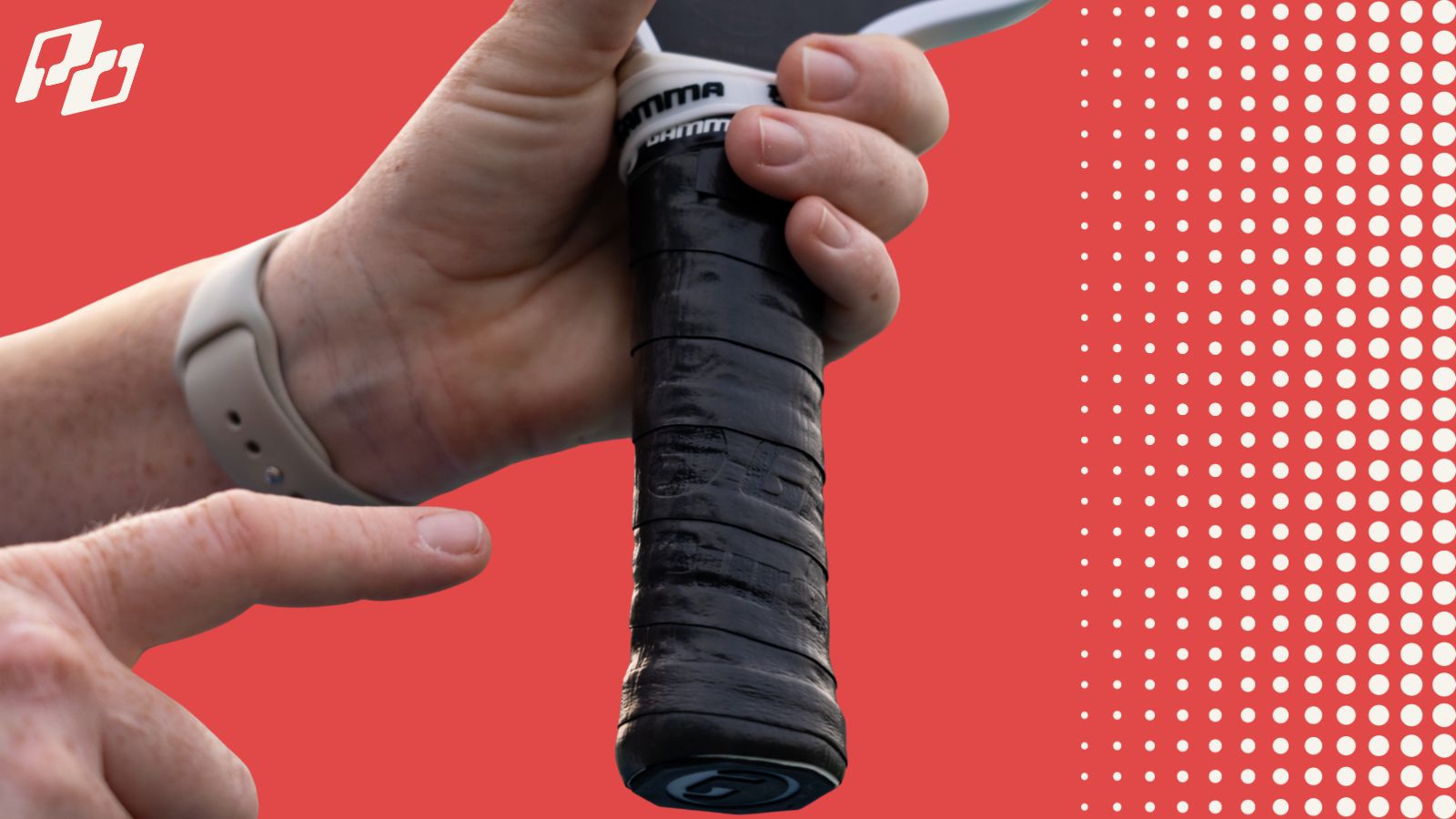
Pro hack: if you like a “reference ridge” for hand placement, overlap slightly more at your index/thumb pinch point.
Here’s a handy guide to overgripping your paddle the right way:
How Often Should You Change It?
Re-grip as follows:
- Heavy sweaters: every 6–10 hours of play.
- Average: every 10–20 hours.
- Light/social players: monthly or whenever it feels slick.
If your paddle starts rotating mid-rally—you’ve already waited too long.
Bonus Tips & Hacks
- Apply sunscreen before you leave home—not courtside. Oils destroy tack.
- Rotate paddles. Use one for drills, one for matches. Keep grips fresh on the match paddle.
- Carry extras in your bag. Think of overgrips as tennis balls—you don’t ration them.
- Test two styles in the same week: tacky vs. dry. Track which one reduces errors.
My Final Grip on It
At the end of the day, your grip isn’t just a strip of tape — it’s the handshake between you and your paddle. Choose the wrong one, and every rally feels like a battle with your own hand. Choose the right one, and suddenly the paddle feels like an extension of you — smooth, controlled, and reliable.
The good news? Grips aren’t permanent. They’re affordable, swappable, and customizable. That means you can experiment until you find the one that fits your hand, your sweat levels, and your style of play.
Once you do, you’ll wonder why you didn’t change it sooner.