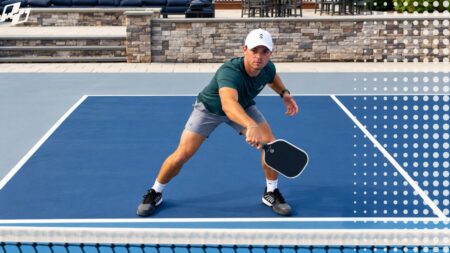


Last week, I played a rec game where one player looked like he was grinding through a tax audit. No smile, no laughter — just clenched jaw, laser eyes, and muttered stats about unforced errors. We weren’t in a final. We were playing for bragging rights and bragging snacks.
By game three, he was out of rhythm, missing easy dinks, and arguing line calls.
By game four, everyone else was smiling except him.
That’s when it hit me: fun isn’t a byproduct of pickleball — it’s a skill. And just like your third shot drop or your reset, it needs deliberate practice.
The Science: Joy Isn’t Optional — It’s Performance Fuel
Here’s something neuroscientists know that most players forget: fun sharpens focus.
When you’re enjoying yourself, your brain releases dopamine and serotonin — the same chemicals tied to motivation, rhythm, and learning. Dopamine doesn’t just make you feel good; it helps your neurons fire faster and form stronger connections.
Translation?
Smiling mid-rally literally makes you play better.
A 2020 study in Frontiers in Psychology found that athletes who trained with laughter, positive emotion, or music had improved reaction time, decision-making, and endurance. Their brains processed movement and timing with less effort.
It’s not fluff — it’s physiology.
When you play tight and serious, your brain shifts into threat mode. Cortisol rises, fine motor control drops, and you start swinging like your paddle weighs 12 pounds.
But when you laugh, joke, or high-five after a good point, you’re telling your nervous system:
“We’re safe. We’re allowed to be fluid.”
That’s when your game actually flows.
The Myth of Automatic Enjoyment
A lot of rec players assume fun just happens — that it’s the natural result of good rallies or friendly competition.
Wrong.
Joy fades under pressure unless you protect it. The more you play, the easier it is to let performance anxiety, ego, or comparison hijack what made you love the game in the first place.
You start chasing wins instead of rhythm. You start counting mistakes instead of laughing at them.
Here’s the uncomfortable truth: most people forget how to play.
Not how to hit a ball — how to play.
To joke after a shank.
To cheer for a great rally, even when they lost the point.
To dance a little when the warm-up playlist hits just right.
That’s not childish. That’s championship-level self-regulation.
Joy as a Tactical Skill
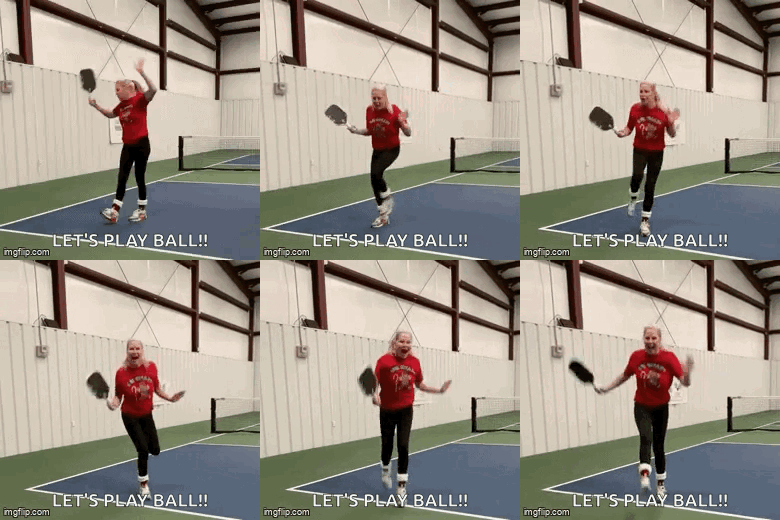
If you’re rolling your eyes thinking “cute, but I’m here to improve,” hang on — this is about performance.
Fun isn’t soft; it’s a mental framework for resilience.
Players who practice joy:
- Recover faster from errors.
- Adapt better under pressure.
- Stay in points longer because their nervous systems don’t overreact to stress.
Think of joy as a reset button for your emotional momentum. You can’t control every bounce, but you can control your reaction. And nothing stabilizes performance faster than a genuine laugh after chaos.
How to Practice Fun (Yes, Really)
1. Smile During Rallies
It sounds silly, but forcing a smile — even mid-point — tricks your brain into releasing dopamine.
Ben Johns once said he smiles before big serves to “stay loose.” It’s not showmanship. It’s self-hackery.
2. Celebrate the Rally, Not Just the Result
If you and your partner just played a 15-shot dink exchange, that’s the fun part! Win or lose, celebrate it.
You’re training your brain to value engagement, not just outcomes.
3. Add Music to Warm-Ups
Studies show rhythm and tempo training with music improves coordination by up to 20%. Plus, it lightens the mood and signals your brain: “This is playtime.”
So yes — warm up with your favorite playlist. (Bonus points if it’s 80s rock or Taylor Swift’s Ready for It?)
4. Laugh at the Chaos
A shanked return? A missed overhead that hit your partner’s paddle edge? That’s not failure — that’s a story.
Rec players who can laugh off bad shots maintain emotional momentum 3x longer, according to sports psychology data on “cognitive reframing.”
5. Play a “Joy Drill” Once a Week
Try this: for 10 minutes, play points where the only rule is to compliment your partner or opponent after every rally.
It rewires your focus from results to appreciation — and oddly, your shot quality improves.
When Fun Feels Forced
Not every day feels joyful. Sometimes you’re tired, off your game, or annoyed by the guy who calls everything out.
That’s fine. The goal isn’t fake positivity. It’s emotional range.
You can be frustrated and grateful.
You can miss a drop and laugh about the attempt.
You can compete hard and keep perspective.
The more you practice balancing those emotions, the steadier you get — both on the scoreboard and in your head.
A Story from Court 3
A few months ago, I played a woman named Dana — a retired teacher who had the most chaotic forehand I’ve ever seen. But she never stopped smiling. Every time she missed, she’d yell, “Oops! Teaching moment!”
At first, I thought it was schtick. Then I realized she meant it.
She was curious, not critical.
Playful, not performative.
By the end of the game, everyone was smiling too — including the quiet guy who hadn’t cracked one all morning.
That’s how joy spreads. It’s contagious. And it makes people better without them even noticing.
The Brain Science of Contagious Joy
Neuroscientists call this emotional contagion — when your mood syncs with the people around you. Mirror neurons in your brain literally fire in rhythm with the energy of others.
If your court vibes are tense, your body tightens. If they’re playful, your reaction time and movement become smoother.
That’s why joyful teams play better doubles — they move like a single unit because they’re emotionally aligned.
So yes, you can engineer chemistry. It’s not luck; it’s neurobiology.
Joy as a Competitive Advantage
Rec play isn’t just exercise — it’s training for how you handle life. Learning to stay light, flexible, and engaged under pressure builds what psychologists call psychological flow — the mental zone where peak performance feels effortless.
And that’s the real point:
Joy isn’t the reward for playing well — it’s the reason you’ll keep getting better.
Practice Fun Like You Practice Drops
The next time you step on court, set one secret goal: Not “win more points,” but “enjoy more moments.”
Smile after your first rally.
Compliment your partner.
Play music if the courts allow it.
Laugh at least once per game.
Because every time you choose joy, you’re training your brain to perform with freedom, not fear.
And if someone asks what you’re working on, tell them the truth — “My joy game. It’s getting pretty good.”