

Mental mistakes in pickleball rarely come from the point you’re playing. They come from the one you just lost. A simple reset routine, with one slow breath, one cue word, and one clear plan, can stop rushed decisions, hero shots, and passive play before they turn into a scoring run.
Let’s get real for a second. If you’ve ever dinked a ball into the net, tried to hero-smash your way back into a match, or stared helplessly at a ball sailing wide while doing absolutely nothing to stop it… congratulations. You’re just human.
After digging through a mountain of hilarious, honest, and sometimes downright poetic comments from pickleball players of all levels, one mental mistake stands out like a popped-up dink at the kitchen line:
Trying to fix the last point while playing the next one.
That’s the thread running through all ten mistakes below.
We’re talking overcorrection, mental spirals, and hero-mode panic shots that feel like therapy sessions waiting to happen. It’s that instinct to “make it right”, and make it right immediately, that wrecks your game faster than a 9-2 lead after a mental check-out.
Let’s unpack it. With solutions. And a few laughs.
Mistake #1: The Perfection Spiral
“I’m supposed to make every shot. When I don’t, I beat myself up.”
You miss one routine dink and suddenly it feels like your entire game is broken. The mistake itself usually isn’t the problem.
The problem is carrying it into the next point.
Fix:
- Give the miss one short diagnosis: “late,” “reached,” “too aggressive.”
- Then stop analyzing.
- Replace perfection with a simple next-point focus.
Try: “One mistake. One adjustment. Move on.”
Mistake #2: Hero Ball Mode
“I whiff a return, then try to win the next point in one shot.”
Ah yes, the revenge point.
You miss a drop, so suddenly the next speed-up has to save your reputation. You miss a return, so the next serve gets hit 15% harder.
You’re no longer responding to the ball. You’re responding to the previous point.
Fix:
After an ugly mistake, make your next shot deliberately boring.
- Deep serve
- Deep return
- Safe middle target
- Comfortable third
Get yourself back into the rally before trying to do something spectacular.
Ask: “Am I playing this ball—or fixing the last one?”
Mistake #3: Scoreboard Paralysis
“I get obsessed with the score and lose focus on the point.”
When the scoreboard becomes your emotional compass, you’re toast. Whether it’s DUPR anxiety, tournament nerves, or rec-game pride, focusing on point totals turns every shot into a mini meltdown.
Fix:
- Play the ball, not the scoreboard. The only thing that matters is the current rally.
- Try breath resets between points to bring yourself back into the moment.
- Steal this line: “The score is a side effect. My job is execution.”
Mistake #4: Admiring Your Own Shot
“Hit a perfect drop, stood there like a legend… then lost the point.”
We’ve all done it.
You hit the perfect drop and mentally replay it while your opponent is already hitting the next ball.
Fix:
Remember: every good shot gives you another job.
Good drop? Move forward.
Good drive? Expect the block.
Good speed-up? Prepare for the counter.
Good lob? Recover.
The point didn’t end because your shot looked nice.
Mistake #5: Rushing Under Pressure
“The second I feel pressure, I speed up. Then everything falls apart.”
Pickleball is fast, but your panic doesn’t need to be. When pressure hits, most players speed everything up, their shots, their footwork, their mental decision-making, and that’s when quality goes out the window.
Fix:
Watch for the physical signs:
❌ tighter grip
❌ disappearing split step
❌ hitting while still moving
❌ rushing the serve
❌ bigger backswing
If those start showing up, slow the routine between points.
- Take one breath.
- Loosen your hand.
- Pick your target.
- Then play.
Mistake #6: Playing Your Opponent’s Mind, Not Your Game
“I start worrying more about what they’ll do instead of what I should do.”
This one is sneaky.
You see them crowding the kitchen, attacking your backhand, or looking confident. Now you start inventing solutions before there’s actually a problem.
Fix:
Have an anchor, not a rigid script.
Maybe yours is:
- return deep through the middle
- avoid speeding up below the net
- make them hit one more ball
Adjust when the evidence tells you to. Not when your nerves start telling stories.
Mistake #7: Chasing the Perfect Shot
“I get mad even when I win the point if it wasn’t the right way.”
This one’s for the artists out there. You hit a less-than-glorious winner and feel disappointed. You wanted the crosscourt slice-drop hybrid, not a lucky poke that clipped the net.
Fix:
Don’t only judge the outcome.
Ask: “Was that the right decision?”
That’s how you avoid rewarding bad habits just because they happened to work once.
Mistake #8: Letting One Mistake Ruin the Next Three
“One bad shot, and now I’m doubting my entire strategy.”
Confidence in pickleball is fragile. One bad overhead, and you’re suddenly questioning your third-shot drop, your doubles partner, and your life choices.
Fix:
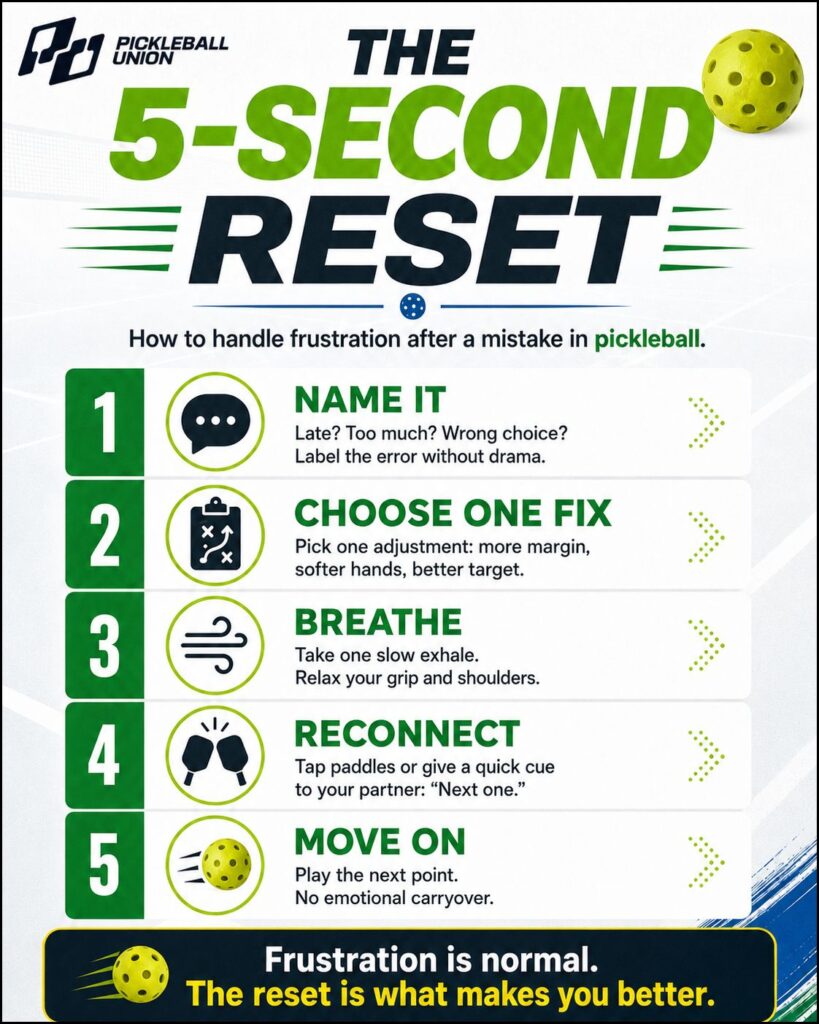
Use a 5-second reset.
- Turn away from the net.
- Exhale.
- Loosen your grip.
Pick one word:
“Next.”
“Deep.”
“Patient.”
“Middle.”
Then turn back around.
The goal isn’t to forget the mistake. It’s to stop giving it more points.
Mistake #9: Getting Conservative on Big Points
“The bigger the moment, the smaller I play. I try not to lose instead of playing to win.”
You’re up 10–7, serving for the game, and suddenly you go soft. The bold drives and confident drops disappear. Instead, you’re just “getting it in”, and letting your opponents get back in.
Fix:
❌ Do not become more aggressive just because it’s game point.
❌ Do not become more passive either.
✅ Keep your normal decision rules.
Same shots. Same targets. Same commitment.
Pressure should not make you play unfamiliar pickleball.
Mistake #10: Losing Focus After a Big Lead
“We were up 9–2… then they came back and won. My brain just left the court.”
This one’s painful because it feels like the game is already won. Your intensity drops, your shot quality dips, and the other team suddenly looks like pros. Momentum flips fast when you mentally check out.
Fix:
Give yourself a small task instead of thinking about the lead.
Try:
“Two deep returns.”
“No rushed speed-ups.”
“Make them earn the next point.”
Stay attached to the rally, not the scoreboard.
One More Thing: Your Partner Can Keep the Mistake Alive
Sometimes you’ve already moved on.
Then your partner sighs.
Looks away.
Shakes their head.
Or starts giving you a technical breakdown.
And now the mistake is alive again.
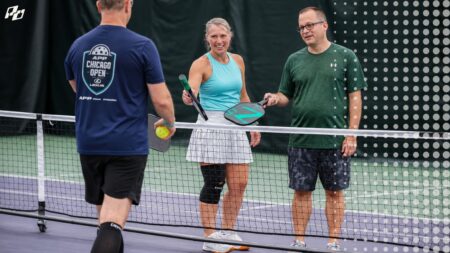
After your partner misses, give them encouragement or useful information—not a lesson.
Try:
“We’re good.”
“Same ball.”
“Next one.”
Save the coaching for later.
Recap: The 10 Mental Mistakes That Hurt Rec Players Most
- Chasing perfection
- Trying to make up for the last point
- Letting the score change your decisions
- Admiring your own shot
- Rushing under pressure
- Reacting to imagined threats instead of your plan
- Judging shots only by whether they worked
- Carrying one mistake into the next three
- Playing scared on big points
- Mentally checking out with a lead
The 5-Second Reset
Between points:
✅ Turn away.
✅ Take one slow breath, with an easy, complete exhale.
✅ Relax your grip.
✅ Choose one simple intention.
✅ Then turn back and play.
That’s it.
In Summary: Your Brain Is Not Your Coach
It means well. It wants to help. But left unchecked, your brain is like a toddler with a paddle, chaotic, emotional, and really bad at third-shot drops.
The key isn’t to eliminate mental mistakes. It’s to recognize them faster and have tools ready to respond.
Your Comeback Kit:
- Breathing cues to reset.
- Mantras like “play the ball, not the story.”
- Movement habits like always resetting your paddle after a shot.
- Game plans to stay anchored.
And most of all?
Forgive yourself faster.
Because the real win isn’t hitting the perfect shot, it’s playing the next one with clarity and confidence.
Keep reading: Tips for facing better players and How to beat better players than you.